History made, seismic semis and a festival of tennis: What we learned at AO 2026
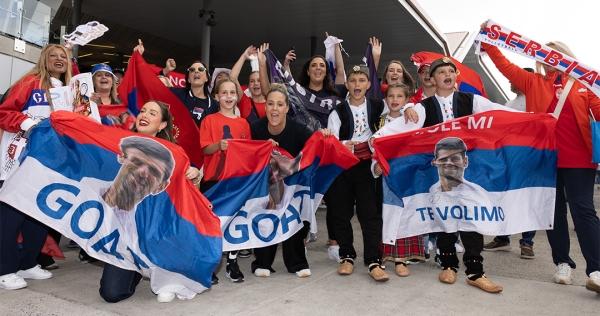
AO 2026 once again differentiated itself from the other Grand Slams on the calendar, using its vast space to create a festival environment that catered for every demographic, with content creators taking to social media about the attractions outside of matches – from live music acts to marquee food stalls, bars, inflatable waterslides, retailers, and family-friendly outdoor games.As you walked through the precinct on that final day, Spanish accents outnumbered Aussie colloquialisms, and Djokovic paraphernalia was around every corner. Alcaraz embodied the exuberance of youth, an explosive and muscular ball of enthusiastic force throughout the tournament. As a 13-year-old, he watched the now 38-year-old Serbian compete at the Madrid Open.Djokovic, who last year made buoyant cameos in the press conferences of rivals and made headlines for hiring Andy Murray as a coach, went one step further in the draw at AO 2026. Meticulous, thoughtful, cunning and confident in the way statesmen are, and using doubters who suggested he was past his prime as fuel, he proved age is just a number when you have his dedication and drive.Australian Open 2026 entertained record crowds, but it was tennis that remained the primary drawcard for young and old, bringing together cultures and communities in a way only international sports can.The biggest winner of the first Grand Slam of the season was not any one person, team, or corporation, but the game itself.Here's what we learned from AO 2026.Quietly determined Rybakina is a forceHer name had been whispered around the grounds at the beginning of the main draw as a major title contender, and ultimately Elena Rybakina proved why.The Kazakhstani ended world No.1 Aryna Sabalenka’s otherwise flawless campaign to claim the women’s singles title – her second Grand Slam victory following Wimbledon in 2022.Every player in both the men’s and women’s singles draw was fallible at AO 2026, with cramps, retirements, high emotions and injuries among the talking points. But Rybakina was perhaps the strongest of them all, navigating a physically-demanding second week and a final played on narrow margins.Her victory ended Madison Keys’ tenure as defending champion – Keys went down in the fourth round to compatriot Jessica Pegula – and underlined consistency.Sabalenka may have finished runner-up, however, her streak remains one of the major talking points of the women’s game, with the 27-year-old boasting four consecutive Australian Open finals (2023-26), the first to achieve that since Martina Hingis.Festival atmosphere hits record heightsMelbourne Park drew record foot traffic, setting a new all-time attendance benchmark of 1,360,043. The schedule allowed fans to follow popular emerging talent like Alexandra Eala and Zeynep Sonmez, see top players practice on outside courts and soak up the precinct’s food, fashion and music offerings.RELATED: The young players energising new fan bases worldwideSophie Ellis-Bextor was a highlight, performing her hit track Murder on the Dancefloor prior to the men’s singles final. It remains a banger that was turned up all around the precinct.The entertainment didn’t overshadow the sport, rather compliment it. Rod Laver Arena remained the focal point and show courts attracted atmospheric crowds long before marquee names walked on. The festival has grown, but the tennis was still what pulled people through the gates.Men's semifinal day will live long in the memoryThe men’s singles final between Alcaraz and Djokovic arrived after two semifinals that will sit among the most dramatic in tournament history.Alcaraz defeated Alexander Zverev in a five-set, five-hour-plus epic, battling cramps and momentum swings to reach his maiden Australian Open final.Djokovic got the better of two-time and defending champion Jannik Sinner in another five-set contest to become the oldest men’s singles finalist in the Open Era.Their meeting for the title represented a generational crossroads: the world No.1 of the new era versus the most decorated champion the sport has produced, while another great in Rafael Nadal watched from the stands. Melbourne got a match for the record books, one that saw Alcaraz win a maiden AO title and rewrite history, a smile right before he clinched the championship point saying more than words could.Doubles deliversDoubles once again provided some of the tournament’s most compelling moments.Elise Mertens and Zhang Shuai claimed the women’s doubles title, defeating Anna Danilina and Aleksandra Krunic 7-6(4) 6-4. It was their first Grand Slam title as a team, with Mertens reclaiming the No.1 doubles ranking in the process.In mixed doubles, Australians Olivia Gadecki and John Peers successfully defended their title, beating France’s Kristina Mladenovic and Manuel Guinard 4-6 6-3 [10-8]. Gadecki and Peers became the first team to retain the mixed doubles crown at Melbourne Park since 1988-89 and the first all-Australian duo to do so since 1963-64.Christian Harrison and Neal Skupski won the men’s title, defeating Australians Jason Kubler and Marc Polmans in straight sets.


Most Popular