Spain’s World Cup win: Yamal’s return, Rodri’s role, decisive De la Fuente - and a tattoo promise

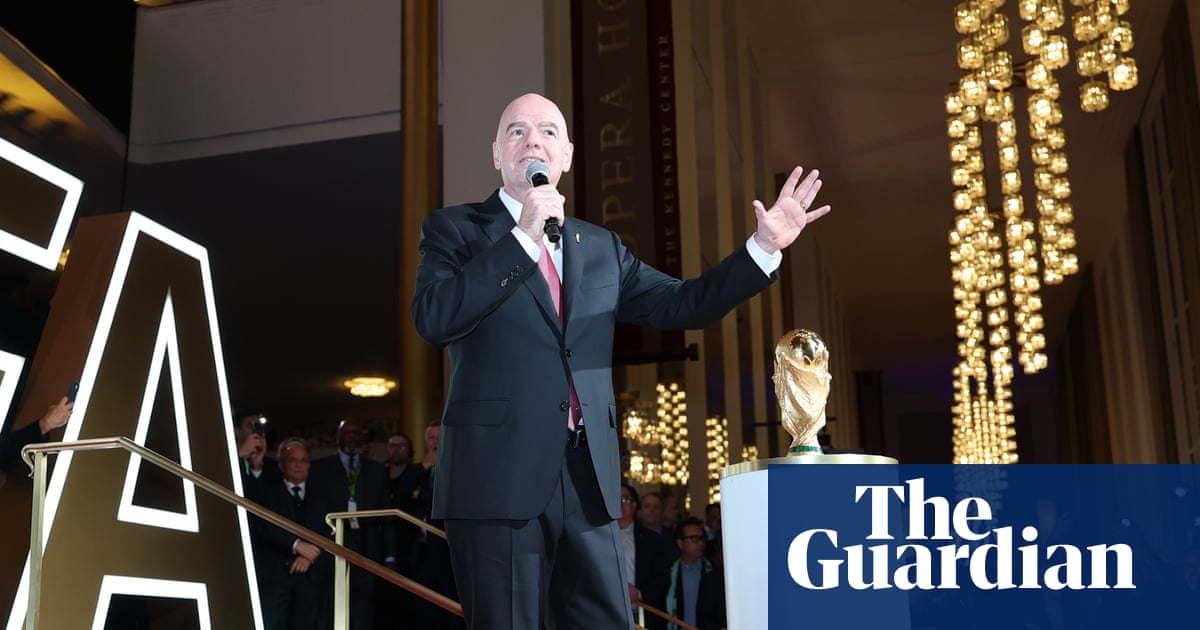
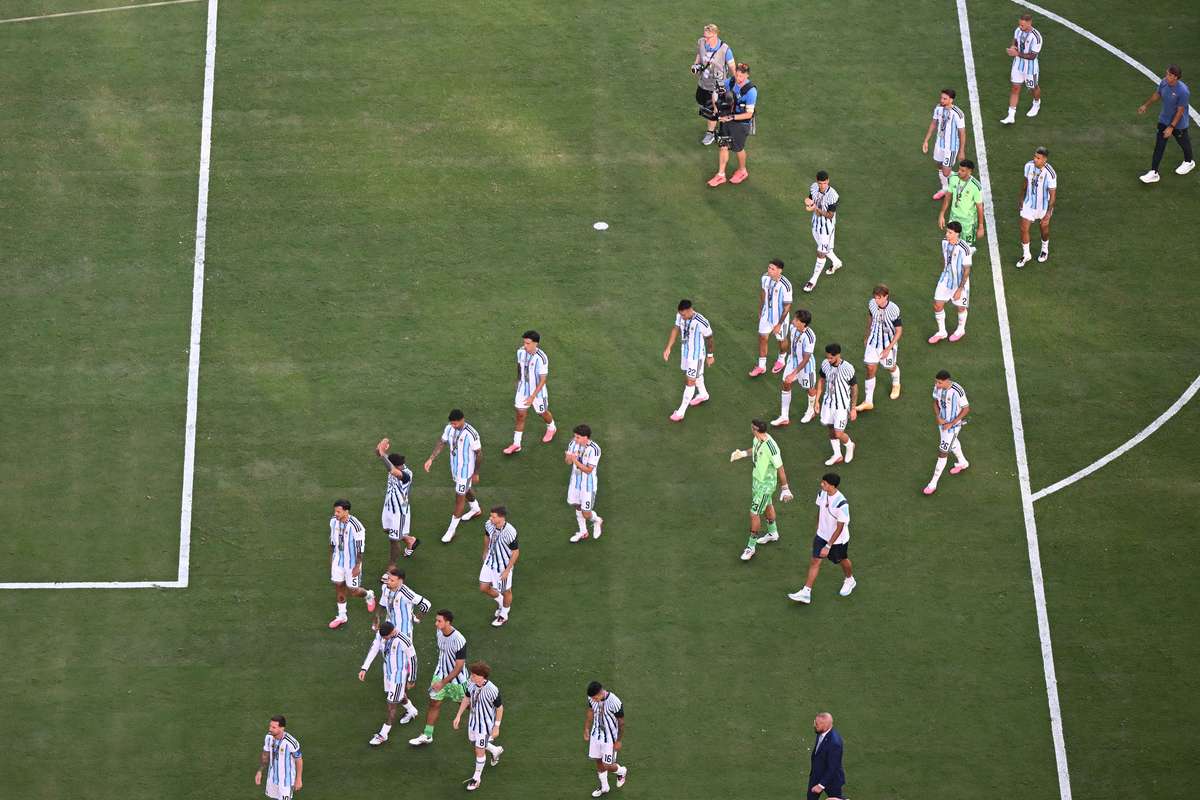
As Spain celebrated winning the World Cup, captain Rodri fell to his knees in tears.The 30-year-old was understandably exhausted after a fine performance at the heart of midfield, controlling the game in New Jersey against an aggressive but outclassed Argentina side. “Football won,” was how Toni Kroos, the former Real Madrid and Germany midfielder who knows a thing or two about winning world and European titles, put it.Moments earlier, Nahuel Molina had taken a swipe at Rodri as the substituted midfielder ran onto the field with his team-mates at the final whistle. Tensions then briefly boiled over when Leandro Paredes grabbed Eric Garcia by the throat, just one of the ugly reactions from the beaten finalists.But the joy returned as players and their loved ones celebrated Spain winning their second World Cup title, 16 years after their first in South Africa.U.S. president Donald Trump and FIFA counterpart Gianni Infantino handed the trophy to Rodri, who waited for Trump to be ushered away. Mikel Merino tried to catch Trump’s attention by imitating his dancing. The president lingered as Rodri finally lifted the trophy, until Infantino collected him. Spain’s social media team chose a celebratory shot without Trump when posting to their platforms.Players danced arm in arm, draped in the flags of their home regions. Lamine Yamal and his three-year-old half-brother Keyne — who captured hearts in the tournament — played with the trophy. Pedri carried on a long-held tradition of taking a penalty kick against his father Fernando.Spain’s celebrations were long, ecstatic and deserved — Luis de la Fuente’s team were by far the best at this World Cup. They conceded just one goal, never went behind, and dominated possession and territory against all eight opponents they faced.So, how did “football win”?The Athletic spoke to multiple sources with knowledge of Spain’s campaign, who all spoke on the condition of anonymity to protect their positions, to understand how a complete belief in their way of playing and an unbreakable faith in each other made them world champions again.Spain’s record at the World Cup since their victory in 2010 had been poor. They exited in the group stages in Brazil 2014, lost on penalties in the first knockout round against hosts Russia in 2018 and again at the same stage by Morocco in Qatar four years ago.Yet this squad came into these finals with real confidence — buoyed by a long run of great results under De la Fuente and their European Championship victory in Germany two years ago.There was an awareness that a group including World Cup debutants Cape Verde, Saudi Arabia and Uruguay gave the team a chance to ease their way into this tournament. It allowed players who had suffered injury-affected seasons — especially wingers Yamal and Nico Williams — to build up their fitness.Spain were lethargic in their opener against Cape Verde, who defended superbly in a goalless draw in Atlanta which made a hero of 40-year-old goalkeeper Vozinha.De la Fuente’s side dominated possession (74 per cent) but were unable to score, bringing to mind their exits in the last two World Cups.The following morning, the Spanish capital’s two biggest sports newspapers reflected surprise and disappointment among fans and pundits. “Historic letdown,” said AS. “Huge shock,” was Marca’s front page.These knee-jerk reactions did not go down well within the squad, who felt that one middling performance in their opening game did not merit such a harsh response.“It’s better to just keep our mouths shut, as we did at the Euros,” a clearly upset Williams told radio show El Larguero. “Nobody gave us a chance (then), and people were talking. Then I gave the winner’s medal to my mother.”Positive voices around the squad recalled that Spain’s 2010 vintage received heavy criticism after being beaten 1-0 by Switzerland in their opener.Sources familiar with the thinking of De la Fuente say the draw did not change a thing.“The internal message remained one of calm and confidence,” one said. “The players understand the game, they know how they want to play, there’s no doubts,” said another.But De la Fuente did make four changes to his XI for game two in Atlanta against Saudi Arabia and a revved-up Spain were 3-0 ahead by the first hydration break — thanks to two neat finishes from Mikel Oyarzabal, who also set up a goal for Yamal on his first World Cup start.“When your work is being questioned, you have to have courage to react and respond to those criticisms,” De la Fuente said after his team won 4-0. “You can have bad days. But doubting this team is crazy.”The squad’s togetherness was further strengthened during the bruising final group game against Uruguay, when Alex Baena’s selection on the left wing was vindicated as he scored the game’s only goal in Guadalajara, Mexico.Many of these Spain players have known each other for over a decade, forming tight relationships on and off the pitch, including with their coach.“A lot of their chemistry is down to having played together for many years in youth ranks,” one source told The Athletic.In 2015, De la Fuente guided a Spain team including Rodri and Merino to the Under-19 Euros title. Next came the Under-21 Euros in 2019 with Dani Olmo, Oyarzabal and goalkeeper Unai Simon. With Pedri and Marc Cucurella now on board, Spain won silver at the Covid-delayed 2021 Tokyo Olympic Games, again under De la Fuente.“The atmosphere (during this World Cup) was phenomenal, among the families and the players themselves,” said another source. They described how partners, parents and children had spent two or three hours chatting together at the team hotel at various points throughout the tournament.That importance of family shone through during the 3-0 win against Austria in the round of 32.Oyarzabal celebrated his first goal by stuffing the ball up his jersey and looking to his pregnant wife in the stands. Fabian Ruiz did the same when he scored against Belgium in the quarter-finals.Tottenham Hotspur full-back Pedro Porro told DAZN after the Austria win that his goal celebration — his first in a Spain shirt — was for his 10-month-old baby son Pedro Jr, who had not been able to attend that game due to a fever. In a video later posted to Spain’s social channels, Porro’s grandfather told the defender he had pushed the ball into the net for him.While other contenders for the trophy featured superstar forwards with massive profiles such as Lionel Messi, Kylian Mbappe, Erling Haaland, Harry Kane and Jude Bellingham, Oyarzabal and most of his Spain team-mates had no such reputation — even if some fans took to calling him “Oyarhaaland” on social media.“I’m not worried about these comparisons,” Oyarzabal said after the Austria win in Los Angeles. “What matters to me is having my family here with me, my wife, child, sister and parents. The healthy atmosphere in our dressing room is most important for our common objective.”The Spanish Football Federation (RFEF) wanted to lower the noise and tension around the squad, given the feeling that Luis Enrique’s abrasive approach as coach at the 2022 World Cup had worked against the team.Federation media and other backroom staff took an open approach with journalists around the squad, fixing relationships, offering access and inviting reporters to small parties in Los Angeles and Dallas. “This had a big positive impact on the mood,” a federation source told The Athletic.A tight round-of-16 game against Portugal and ageing superstar Cristiano Ronaldo followed, which was decided when Merino came off the bench to score the 91st-minute winner.It was an especially sweet moment for the Arsenal midfielder. He had barely played for his club since a foot operation in January, but appreciated how De la Fuente had shown no doubts bringing him to the World Cup. Merino had proved to be a player for the clutch moments — a late goalscoring hero in their Euros quarter-final win against hosts Germany two years ago.“Life has ups and downs, good moments and bad moments,” Merino told Spanish channel TVE that night. “When they told me about the injury, we thought I’d not make it back for the World Cup. Now I’m back on top of the mountain.”“He’s someone with a lot of experience behind him,” Merino’s father Miguel told The Athletic at the team’s celebrations in Madrid on Monday, while still visibly emotional.“That’s why Luis de la Fuente wanted him in the squad — despite the fact he hadn’t played since February because of a fractured right foot. It wasn’t only because of his footballing ability, but because of the person he is and what he brings to a dressing room.”Multiple sources close to the squad say the win against Portugal in Dallas reinforced the idea that Spain could win this tournament, with one voice comparing it to victories against Italy in the quarter-finals of Euro 2008, and Paraguay at the same stage of the 2010 World Cup.There had been nerves among staff during the group stages, particularly after the performance against Uruguay, which one of them labelled as “poor”. But, according to that person, “it was against Portugal that everyone said, ‘Watch out!’.”De la Fuente continued to say in public and private that the team could improve and play better. He made a big selection call for the quarter-final against Belgium, replacing Barcelona midfielder Pedri with Paris Saint-Germain’s Ruiz.Dropping someone seen by many as the most similar player to 2010 midfield duo Andres Iniesta and Xavi was a surprise to many on the outside. But, in and around the squad, everyone knows De la Fuente does not play favourites. Pedri was aware his form had not been sparkling and team-mates have quietly admitted the 23-year-old and Rodri have rarely clicked on the pitch.It took half an hour for that selection to be vindicated, with Ruiz making it 1-0. After Belgium equalised, Merino was the hero again, capitalising on a mistake by substitute goalkeeper, Manchester United No 1 Senne Lammens, to score the late winner.Once more, the coach’s knowledge of his players and uncanny ability to read their moods and moments had proved crucial, multiple sources around the squad said.That connection between De la Fuente and his players came through in many ways, most entertainingly when Cucurella promised COPE radio he would get a tattoo of his coach’s face should Spain win the tournament. It is still unclear where.“I’m not so horrifically ugly that he has to put it in a place where people don’t see it,” De la Fuente joked with reporters after the final. “If you say something, you have to go through with it.”France awaited Spain in the semi-finals — a fearsome team with attacking superstars in Mbappe, Ousmane Dembele and Michael Olise, leading many pundits to make them favourites.Within the Spain squad, the feeling was different. Even before meeting France in Dallas, families and friends of players had started thinking and planning to go to the final.How Spain viewed France’s supposed favouritism was summed up by Yamal’s comments on Spanish TV after the quarter-final.“If anyone should be afraid it should be France — we knocked them out of the Euros (semi-finals),” the teenager said. “We’re two great teams but we’ve no fear.”That confidence was merited — Spain outclassed France.Yamal’s intelligence and application forced a penalty which Oyarzabal converted to go ahead. After half-time, Porro made it 2-0 by finishing a move which began near their own corner flag and involved most of their outfield players. The final score did not reflect Spain’s dominance.“Almost four years ago when we began, we had an idea, and we’ve remained faithful to that idea and it’s brought us this far,” a hoarse De la Fuente told TVE after the final whistle, before rushing to the dressing room to take a call from King Felipe VI.Key to Spain’s control was Rodri. The 2024 Ballon d’Or winner has experienced two injury-affected seasons with Manchester City, but was nearing his best form just as the World Cup entered its decisive phase. Centre-backs Pau Cubarsi, 19, and Aymeric Laporte were again excellent, as they had been throughout, earning praise from multiple team-mates who spoke to The Athletic.Cubarsi, a quiet character who often prefers to be away from the spotlight, was deservedly named young player of the tournament after the final. “As he walked out of MetLife Stadium, we had to help him carry all the stuff he had won,” an RFEF source told The Athletic. “His trophy, medal, the clothes and stuff he brought with him. What a tournament he had.”Simon had conceded just once, contributing to the longest run without shipping a goal in World Cup history (649 minutes). The Athletic Club goalkeeper was playing well, but was not being called upon to make multiple saves per game.Instead, the Spain team — loyal to their idea — were keeping the ball far away from his goal, frustrating and tiring opponents.Before the final against Argentina, there was huge focus on the two biggest individuals on either side — Yamal was facing Messi for the first time, 19 years on from a remarkable photo of the Argentina captain bathing the future Barcelona starlet.Yamal had arrived at the tournament having not played for Barcelona in almost three months due to a muscle injury. The plan had always been to work his way back to sharpness but it was taking time. His only goal had been a simple finish against Saudi Arabia, and he was clearly keen to stamp his superstar quality.De la Fuente had been making tweaks to his team to get the best out of a player who only turned 19 on July 13. Dressing-room sources say Yamal felt a better on-pitch connection with Porro than other right-back options.The teenager’s eagerness still sometimes counted against him — snatching at chances and making runs a fraction early. He was offside after he thought he had made it 3-0 against France.“Lamine’s motivation is very dangerous for the opponents, but we need to keep him calm,” De la Fuente said between the Portugal and Belgium games. “His best is yet to come, he’s not yet shown the brilliance we expect.”Before the final began, Messi saluted Yamal in the tunnel, and they shared an embrace on the pitch. Once the game started, both attacking superstars were outshone by Rodri, whose performances secured the Golden Ball, given to the tournament’s best player.De la Fuente’s team dominated possession at MetLife Stadium, but found it difficult to score. Yamal had an early chance saved by goalkeeper Emiliano Martinez.With 90 minutes played, Martinez had made 10 saves, while Simon had been barely involved — aside from coming out of his box to sweep up a Messi chance at the back, a significant feature of his tournament.Spain forced Argentina to chase the ball, and defend for so long, provoking frustration from opponents already playing a physical style. Enzo Fernandez’s red card — after a second yellow for sending Cubarsi flying — was key to how the game unfolded in extra time, but De la Fuente’s substitutions were even more influential.Pedri gave his best display in probing against the Argentina defence. Williams thought his tournament was over in the group stages, but sprang from the bench to first score a goal which was disallowed in controversial fashion, and then set up the winner with a header back across goal to Ferran Torres.Torres was heavily criticised for big misses against Cape Verde and Saudi Arabia. A video went viral on social media after the Saudi Arabia game, appearing to show Torres saying “please let it be a goal” to himself during a VAR check for a goal he scored that was ruled offside.Yet De la Fuente kept faith in the Barcelona forward, who had scored crucial goals for Spain in the past. It happened again — with the ‘Shark’ (his self-given nickname, adopted when he was struggling for confidence) showing the composure and technical ability required to hammer the ball home.Even Martin Zubimendi and Eric Garcia, two players who had not played a minute, came off the bench in extra time to thwart Argentina’s frantic attempts to equalise. “Luis has made every player feel important,” said a source around the squad.Torres was the hero though — joining Iniesta, his country’s winning goalscorer from 2010, in the history books.Speaking on Spanish TV afterwards, he said the goal had been scored by “47 million people”.“I’ve been criticised a lot during this World Cup,” Torres said. “It was our destiny to win. We trusted in ourselves, our football.”Sources around the squad admit all successful tournament teams need luck. Portugal’s Nuno Mendes suffered an injury in the round of 16. Thibaut Courtois’ inability to continue in the quarter-finals cost Belgium. France’s key defender William Saliba limped off in the semi-finals. Both Argentina’s starting centre-backs left the final injured.Perhaps superstition played a part, too — former left-back Joan Capdevila filmed a video from the stands of Cucurella digging up a coin he had buried under the pitch for good luck, just as Capdevila had done before the 2010 final.Sources who have worked within the RFEF for more than two decades — and who were close to both World Cup-winning dressing rooms — describe this one as special in the way players mixed.“In the 2010 group, you could spot two big groups, the Barcelona guys and the Real Madrid guys,” the source said. “They got along well, but the groups were clear.“Today’s team also has different groups, but they mix a lot more. You can see Gavi spending time with Cucurella, and both will be rivals in La Liga from now on (after Cucurella’s Real Madrid signing).“Yamal has his group with Nico Williams, Victor Munoz, Aymeric Laporte, but then he blends in with Eric Garcia, Olmo, Pedri, Yeremi Pino, Mikel Merino. The same applies for the Basque guys with a Real Sociedad background. Zubimendi, Merino and Oyarzabal are close, but they blend with everyone. It did not happen to that extent in 2010.”De la Fuente, a devout Christian who read Marcus Aurelius’ meditations during the tournament, has said more than once during his time as national team coach that he does not believe in luck.But the 64-year-old does believe in the value of hard work and human relationships. And he never doubted Spain’s footballing idea.“I feel so much pride, for this generation of footballers, they are great footballers, with exceptional talent,” he said on Sunday night.“But above all, I’m proud to have accompanied them on this journey, it is an honour. Together we are stronger.”After the celebrations in New York, it was back to Madrid — where De la Fuente and his players landed at 2.30pm on Monday for a trophy parade in which an estimated two million people lined the streets of the capital.The squad made a customary visit to Zarzuela Palace and Moncloa — the official residences of the Spanish Royal Family and Prime Minister Pedro Sanchez. King Felipe shared a particularly warm embrace with Yamal.On the open-top bus, a journey that would normally take less than 10 minutes by car to the Plaza de Cibeles lasted more than two hours, such was the crowd.Torres wore a red cap which said “Make Spain Great Again”. A cardboard cutout with De la Fuente’s face edited onto the World Cup trophy was thrown onto the bus and held up by the coach. Another thrown to Yamal showed his half-brother Keyne as Jesus; on the back, it promised a boxing rematch between Paredes and Gavi. “We’ll see you,” Yamal said to the camera.In scorching temperatures of 35C+ (95F), Torres, Marcos Llorente and Marc Pubill sprayed each other with champagne to cool off. The Athletic saw many supporters — particularly elderly and young fans — receive treatment for heat exhaustion.Players such as Pedri were swept up in the celebrations — the Barcelona midfielder, who has expressed his wish to go bald when he is older, kissed De la Fuente on the head.The team’s relatives and fans gathered in front of the Cibeles stage, where the champions were introduced one by one. The effects of a transatlantic flight and a gruelling month and a half away appeared to have caught up to some.“Dani was euphoric,” Olmo’s uncle David told The Athletic. “And imagine how much I’ve cried. When we went down onto the pitch after the final, he was so emotional. They realise what they’ve achieved.“We need a few more days. We’ve barely slept, we’ve got terrible jet lag and we haven’t stopped moving. But they’re incredibly proud, and so are we. Just look at the country. This is an extraordinary achievement.”There were still plenty of unforgettable moments: Rodri leading the show, Cucurella playing the drums, Borja Iglesias taking over the DJ booth — a role he has played throughout the tournament for Spain — and a hoarse De la Fuente leading the crowd in a rendition of Julio Iglesias’ hit song Quijote.The crowd joined in too, at one point chanting, “Whoever doesn’t jump is Argentinian!” — adapting the Argentina song aimed at the English.But the loudest roar of the night came right at the end, when Spanish pop star Aitana performed the song that has become the team’s soundtrack: Superestrella (“Superstar”).The most important part of that title is ‘star’ — Spain now have two on their shirts.

Most Popular