Ireland Going Ahead With Israel Matches Against Everybody's Wishes
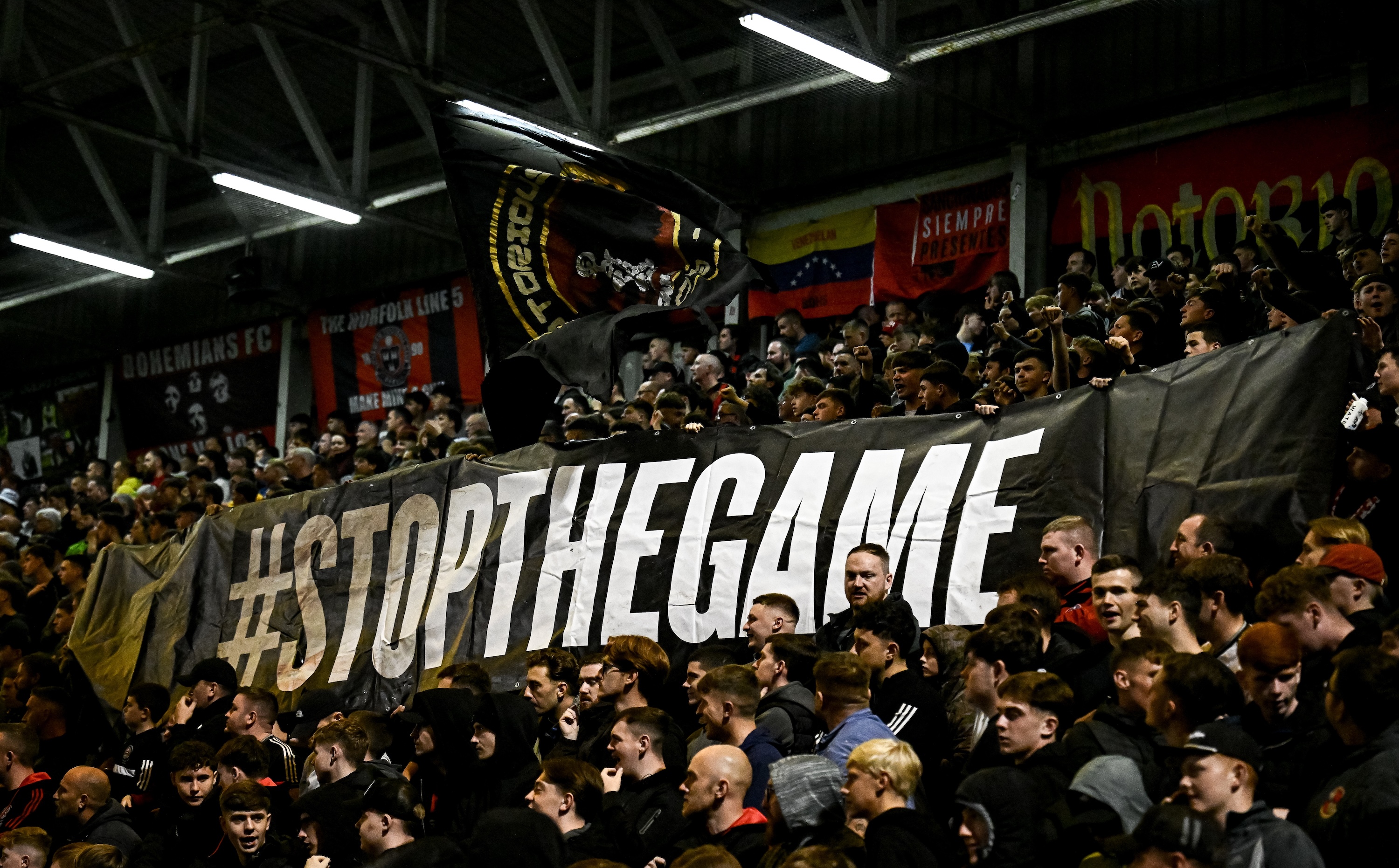
Ireland and Israel are, at least for now, set for some really weird soccer matches. Unfriendlies, you might say. Their national men’s teams have a home-and-home series scheduled to open this weekend, only there are no home games for either side. Both matches will be played in Central Europe: one in an empty stadium, the other with only Israeli fans. The top story in Ireland these days, sports or otherwise, is that the games will be played at all.“I think we all agree we shouldn’t be in the position where we have to play the game,” John Martin, head of the Football Association of Ireland (FAI), said last week.And Ireland manager Heimir Hallgrimsson said he’d personally polled all his players, and "none of us feel comfortable playing in these games."The first faceoff is scheduled for Sunday in Debrecen, Hungary. And they’ll play again in Bačka Topola, Serbia, on Oct. 4. RTE, Ireland’s government-owned broadcasting network and news service, announced this week it will air the games, but will simply relay the UEFA feed and use international commentators. RTE is not sending any sports reporters to cover the match. There will be no commercials or any commentary from an Irish panel in a studio during the telecast.“These arrangements reflect RTE’s decision to fulfil its contractual broadcasting obligations while limiting the additional production and commercial activity associated with the fixtures,” the network said in a statement.Soccer has been a, well, political football in Ireland for centuries, even before the forming of the republic. In the late 19th century, back when England occupied the island and the word “genocide” didn’t yet exist, even though the invaders were practicing it on the indigenous population, the Gaelic Athletic Association wouldn’t let members play or even watch soccer. Alongside rugby and cricket, soccer was dubbed a “garrison game,” a pastime foisted on the Irish by the colonizing oppressors to replace the existing culture. (The GAA also banned members of the British Armed Forces and sympathizers from playing hurling or Gaelic football, traditional Irish games.) The first soccer game at Croke Park, the massive Dublin stadium that opened in the 1880s, didn’t happen until 2007, and it was a really big deal to allow that even then.The Irish aren’t big fans of sportswashing genocide, either. So there was lots of pressure on the FAI to call off the matches with Israel when Ireland was put in the same bracket by UEFA earlier this year as part of the group stage of the Nations League competition. But UEFA denied Ireland’s request to remove Israel from the event, and subsequently rejected Ireland’s plea to cancel the matches, saying there’s no precedent for separating non-warring countries even if, as Keith Jackson would say here, they just plain don’t like each other. The Irish association’s board voted by a nearly 2-to-1 margin to go ahead with the Israel matches, after reporting that a boycott would cost the program at least €5.5 million. The October game was originally scheduled to be played in Dublin, but in June, the Irish soccer authorities got permission from UEFA to move it to a neutral venue. Israel has not hosted international matches since 2023.The Israel Football Association is the official host of Sunday’s game in Hungary, and the group is allowing fans of its team to attend. But the Irish federation has not requested any tickets to that match. No spectators from either side will be allowed in to see the followup a week later in Serbia, where Ireland is designated as the home team.Protests, many organized by a group called Irish Sport for Palestine under the Stop the Game umbrella, have been held all over Ireland recently. But for now, the games must go on. The pressure seems to be getting to Hallgrimsson. When trying to explain exactly why it’s worth going ahead with the games nobody in the country wants to see, he said, "We're not playing with genocide. We're playing against genocide."The Ireland manager took heat from all sides for the remark. Ruth Coppinger, a member of Dáil Éireann, the lower house of the Irish parliament, who has been vocal about not playing the games, was among those to take issue with the manager’s words.”The idea that you have to go in and fight against genocide–it's also a silly comment because what if the team lost? They lost against genocide?” Coppinger said. “The best statement against genocide is not playing.”In response to Hallgrimsson’s statement about playing against genocide, Israeli soccer authorities used the opportunity to sound even sillier. "We have contributed to the world and humanity in countless fields, earning an impressive number of Nobel Prizes along the way,” read the statement released on Twitter by the Israel Football Foundation. That group was founded in the 1920s as the Palestine Football Association.The Israeli federation also announced after the Irish manager’s comments that its players won’t be swapping jerseys with their counterparts after the upcoming matches. Have they read an Irish newspaper lately? That’s like saying they’re not going to sell the Irish their Ed Sheeran tickets.There is precedent in Ireland for sitting out soirees where Israel’s been invited. Ireland will not have an entry at the 2027 Eurovision song competition because Israel is taking part, continuing a boycott that began with this year's event. RTE also just announced that it would not broadcast the event."RTE feels that Ireland's participation cannot be justified given the appalling and ongoing loss of lives in Gaza and the humanitarian crisis there,” the network said.Play ball!




Most Popular