Why sunbaked clay is a power play
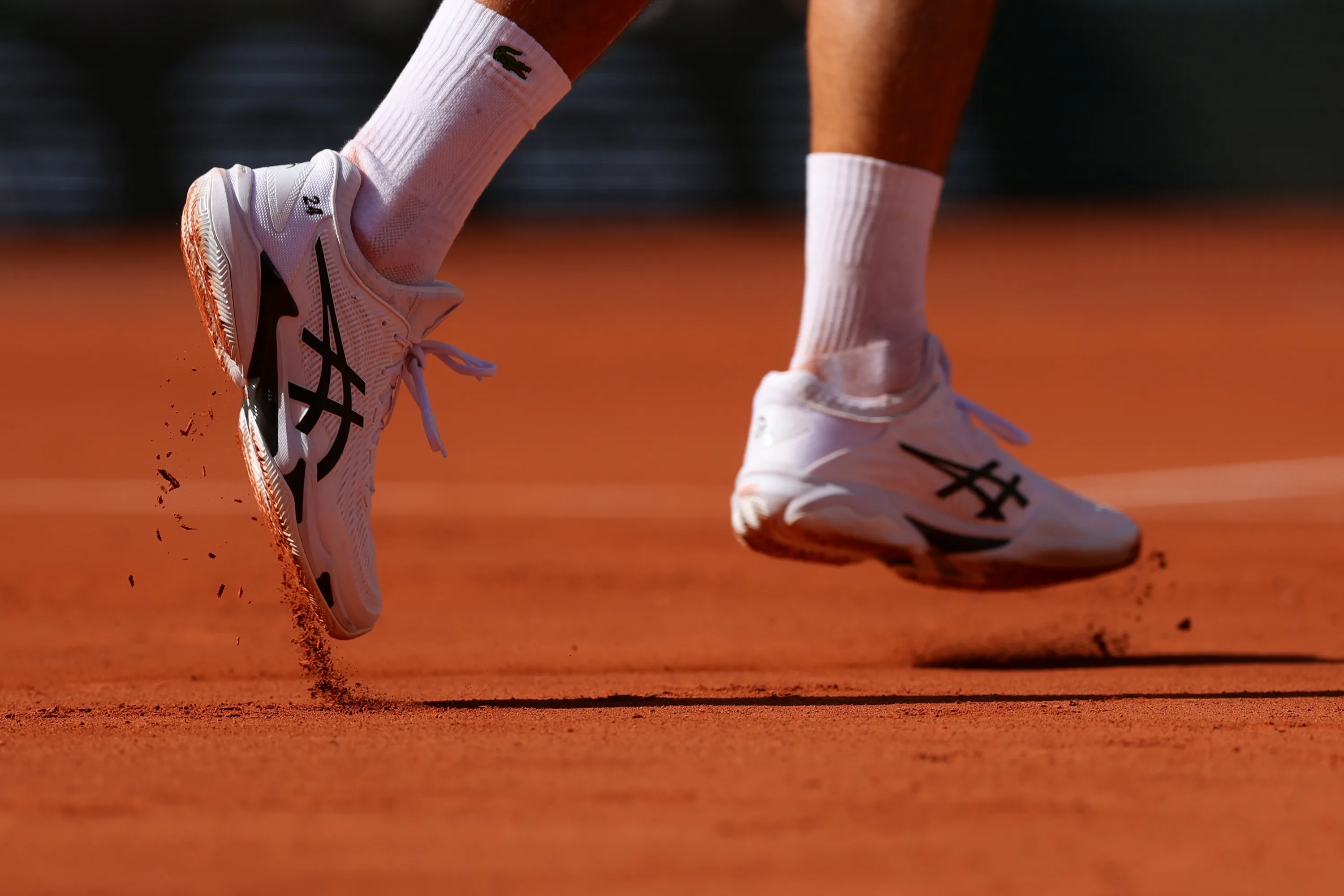
It's downright balmy in Paris this week. The sweet smell of jasmine perfumes the air and the banks of the Seine are crowded with rosé-sipping revellers who look like they are modelling for a Matisse still life.Meanwhile, chez tennis in the 16th arrondissement, the sun-drenched clay courts of Roland-Garros are playing fast and bouncy. With temperatures set to hit 30 degrees Celcius or higher through to Saturday, the first three rounds of this year’s event will produce unique conditions.“It is much different,” said four-time champion Iga Swiatek. “When we arrived here, it was like 16 degrees and the ball was super heavy. You literally could put your whole body and whole power into the ball, and you would still feel like you controlled it.”Swiatek, known for her topspin forehand, says the heat has made the ball harder to control, but more explosive.“Now you need much more touch, and you can't go for too much,” she said. “Also, it's a bit easier to play higher and with spin. The ball is bouncing off the court faster, so that gives you more advantage.”Lindsay Davenport, a three-time major champion who made 11 career appearances at Roland-Garros, says that the warm weather is a boon for aggressive players.“It plays faster and it plays bigger,” Davenport, who is commentating on this year’s event for TNT, said. “That’s the beauty when it is 90 degrees (Fahrenheit), it is going to go through the air faster.“You still have to move on the clay, you still have to get in and out of the corners, but you might get a few more free points and you might be able to end points a little bit sooner.”For first-strike enthusiasts like Frances Tiafoe, the speed of the courts and the high bounces are a welcome development.“It’s nice, you don’t have to hang back and rally so much,” the 28-year-old said after his first-round win. “There were a lot of short points. The kick serve was jumping a lot, the forehand was really heavy, and it bounces a lot.”Former finalist Stefanos Tsitsipas hopes the warm weather helps him embark on a revival of sorts. The Greek made the second week six consecutive times from 2019 to 2024, but had the streak snapped last year in the second round.“The heat gives me a little bit of an extra edge to my game,” he said. “It allows me to have a heavier ball, a more lively ball, and I feel like my strengths are amplified in those sorts of conditions.”Tsitsipas says the pace of play changes dramatically when temperatures cool down. He notes that in the heat, the ball bounces higher because the 1-2 millimetres of crushed red brick topdressing on the court dries quickly in the heat.“I think the heat always makes a court bouncier, it makes the clay dry up quicker, and a dry court has the tendency to have more of an effect ultimately,” Tsitsipas explained.“When we had rain here for a few days in a row in the past, I have always felt like the ball stays lower, it doesn't penetrate as much throughout the court, and you have the tendency to play longer rallies. You can definitely see it visually and experience it as a player.”American Hailey Baptiste, a Washington, D.C. native, loves the heat. Even better, she loves the high bounces.“My ball is going through the court a lot quicker, and the kick serve and heavy forehand is jumping a lot higher. So I'm not complaining,” she said.California native Alex Michelsen isn’t complaining either. In fact he’s overjoyed about the heat.“I was so happy when I saw the forecast was going to be so hot for the rest of this week,” he said. “Also, the Roland-Garros courts are so perfect. It's not taking any bad bounces or crazy high bounces like on pretty much every other tour stop that we have.”


Most Popular