World Cup 2026: How Cape Verde made history on their tournament debut
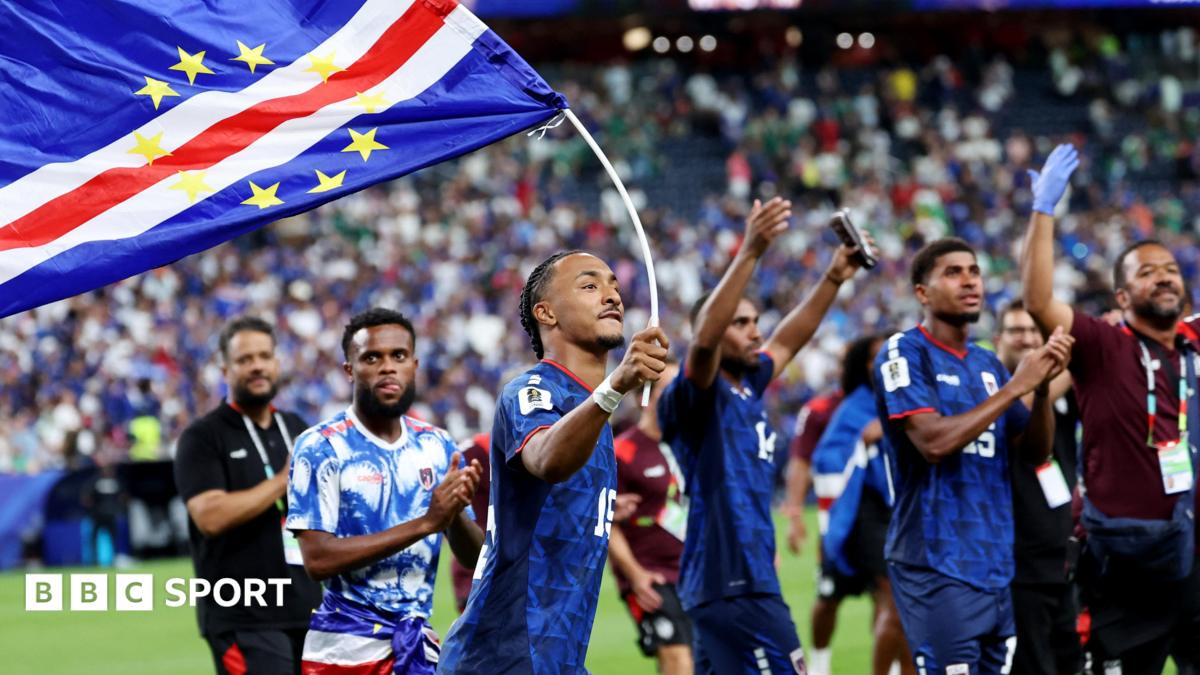
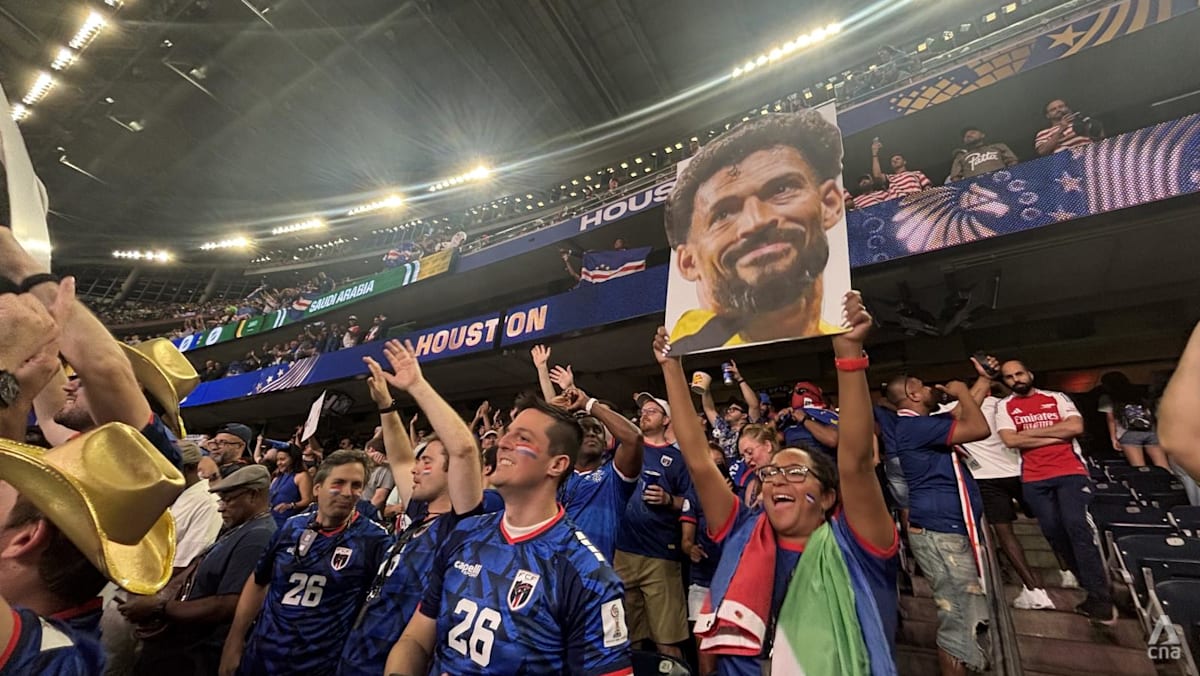
Cape Verde have made history by becoming the smallest nation to reach the knockout stage at the World Cup.The prize for a side representing a group of 10 islands in the Atlantic Ocean will be to face defending champions Argentina in the last 32.Players huddled around a mobile phone on the pitch following their goalless draw with Saudi Arabia to watch the final moments of Spain's win over Uruguay - a result that confirmed Cape Verde finished as Group H runners-up."Tears of pride and joy all around the stands," said BBC Radio 5 Live commentator Rob Law in Houston."There was a beautiful moment where they were all huddled around waiting on their phones, waiting for the full-time whistle to go."When it did, tears flowed on the pitch and in the stands as well. What a moment. The moment of the World Cup so far."That followed an incredible goalless draw in their opening game against Spain, where 40-year-old goalkeeper Vozinha was the hero, and a 2-2 draw with two-time World Cup winners Uruguay."It's incredible what they are doing, it wasn't just one game against Spain, it is three games at the highest level," said Spain's former World Cup winner Juan Mata on ITV.How has a nation of just 525,000 inhabitants, who qualified ahead of five-time African champions Cameroon, made it this far?The main reason behind the Blue Sharks' success has been the decision by Cape Verde's football federation (FCF) to draw on players from the country's diaspora.There are strong links to the former colonial power Portugal, with a series of severe droughts last century prompting heavy emigration from the islands, while a seafaring tradition and involvement in the maritime trade mean there is a sizeable population with Cape Verdean roots in Rotterdam.Fourteen members of their 26-man World Cup squad were born abroad, with six of them hailing from the Dutch port city.One of that number, forward Dailon Livramento, who spent last season playing for Casa Pia in Portugal's Primeira Liga, scored the only goal in their vital qualifying win over Cameroon last September."The FCF has made significant progress through passion, commitment and a clear technical plan," Josina Freitas Fortes, a member of Cape Verde's parliament, told BBC Sport Africa."The results we are seeing are largely the product of years of consistent work, strong belief and people who have given their heart to the project."The recruitment of Dublin-born centre-back Roberto Lopes via business networking website LinkedIn in 2019 is a well-told story, while former Manchester United winger Bebe was part of their 2023 Africa Cup of Nations (Afcon) squad after representing Portugal at under-21 level."There is an inner confidence in this team that we are good enough to mix with the best teams in the world," Lopes said."It's not something that's just been fabricated out of nothing. Since I've been involved, and before that, there's been an ongoing plan to get Cape Verde up at the big table with the big football nations of the world."Much credit for Cape Verde's performances must go to coach Bubista, a former international himself who has been in charge since January 2020.A stable coaching set-up has allowed the 56-year-old former centre-back to build a compact and well-drilled side with an organised defence, technical midfielders and gifted forwards who upset Ghana and drew with Egypt during a run to the quarter-finals at Afcon 2023, having only made their tournament debut 10 years earlier.They may have had Vozinha to thank for the seven saves the veteran goalkeeper made in the goalless draw with Spain, but their discipline was underlined by the fact the Blue Sharks only conceded one foul against the 2010 champions - the fewest recorded by a team in a World Cup match since 1966."We always train and play as one unit, so everything we did in the game was not our first time that we did it," defender Sidny Lopes Cabral told the BBC World Service."For us, it's our game. This is how we play, this is who we are."This is our personality as a team and as defenders."Cape Verde took a more attacking and expansive approach in their second Group H outing against Uruguay, but also demonstrated their steely resolve by grabbing a second-half equaliser."More important than the result is to be able to show our identity as a team, our strength, our unity, and also our resilience," Bubista said.Bubista was recognised for his achievement in delivering World Cup qualification by being named the continent's coach of the year for 2025 by the Confederation of African Football.He has always believed that his side had the potential to mix it with the world's elite."We have done really well considering how small our country is," he told BBC Sport Africa before the 2021 Afcon, when the Blue Sharks reached the last 16."I think in the future we'll be at the World Cup."That bold prediction has come to pass, and now Bubista hopes Cape Verde's achievements at the expanded tournament can inspire other underdogs around the globe."I believe that football belongs to everyone, or is for everyone," he said.Cape Verde's reward will be to face Lionel Messi's Argentina in Miami in the last 32 on Friday.Midfielder Deroy Duarte, named man of the match against Saudi Arabia, said: "Honestly, it's mad. I feel like I'm in a dream."First, let's celebrate. We're so happy. Let's hope all Cape Verdeans are happy too. From tomorrow, we'll focus on the next match."It's against Argentina, isn't it? A tough match, but let's believe. Anything is possible."Former Tottenham, Nottingham Forest, Celtic and Australia boss Ange Postecoglou told ITV: "It's just a great story for what the World Cup is all about."We often talk about how football touches every part of the globe and this is what it can do."It just adds to their story. Playing against the reigning champions. What a great story it's been."Former England and Manchester United defender Gary Neville added: "I think those sceptics who thought expanding the World Cup wasn't the right thing might be rethinking it watching these Cape Verde fans, because this is really special."A country of 500,000 people getting to the knockout phase. We've seen Uruguay, one of the biggest countries, going out and then one of the smallest teams making it. What a moment for them."

Most Popular