
Ligue 1 season awards: the big hits, misses, shocks and flops of 2025-26
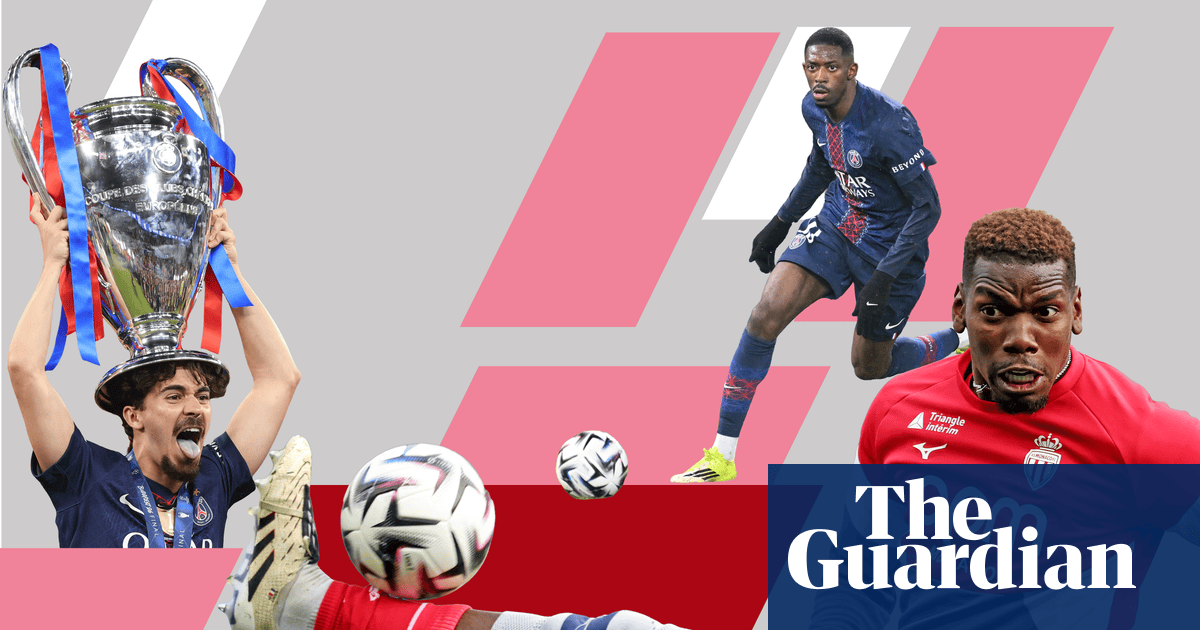
Best player: Vitinha, PSG“I like feeling the match go through me,” said Vitinha at the end of December. It’s an apt way for the 26-year-old to interpret his role at PSG, given that everything the team produces on the pitch involves him in some way or another.He was the only PSG player to be a regular presence in the league and Champions League, missing only a handful of matches in April due to a heel injury. With Marquinhos having been spared for the Champions League from February onwards, the Portuguese midfielder often wore the captain’s armband in the second half of the campaign.PSG’s conductor-in-chief is equally at ease weaving through dense midfields as he is playmaking from a more withdrawn position. He has more often been seen in the latter role in league matches, given that the vast majority of the champions’ opponents set up conservatively.Before Ousmane Dembélé’s move to the centre, it was Vitinha’s retraining as a defensive midfielder that had proved the most impactful of Luis Enrique’s changes since arriving. The manager has rebuilt PSG as a collective unit, but it is Vitinha’s individual talents that allow the rest of the team to shine. RJBest manager: Pierre Sage, LensIn less than three years, Pierre Sage has ascended from an unassuming, relegation-battling interim manager to being the most in-demand French coach on the market.Previously the head of Lyon’s academy, he was thrust into the spotlight in November 2023 when the club asked him to steer the senior side away from the bottom of the table. Sage went above and beyond, dragging them into Europe on the final day.Having been dismissed midway through the following season, the former goalkeeper was then hired by Lens last summer to replace Will Still. Once again, he made an immediate impact.In the 47-year-old’s first season in charge, Lens posed the most credible challenge to PSG’s dominance in years. While they ultimately fell short of winning the title, they did go on to lift the Coupe de France for the first time in their 120-year history.Built around high-intensity pressing, incisive counterattacks and the creative talents of Florian Thauvin, Lens were at times a devastating force in Ligue 1. Sage’s increasingly likely departure this summer, potentially across the Channel to Crystal Palace, will be a major setback for the club’s long-term plans. The opportunity to take on Pep Guardiola, one of his inspirations, will have to wait, however. RJBest young player: Afonso Moreira, LyonExpectations were not exactly high when Lyon signed Afonso Moreira for €2m. He had just spent the season with the Sporting CP reserve side in Portugal’s third tier. Given the low fee, his lack of experience at the top level, and the presence of Malick Fofana on the left flank, Moreira was expected to play a bit-part role. But an injury to Fofana in the autumn provided Moreira an opportunity that he seized with both hands. He finished the season with 19 goal contributions (eight goals, 11 assists) in 37 appearances and as the standard-bearer of Lyon’s attack.The Portuguese winger’s performances were used as ammunition for Paulo Fonseca to ask more from Endrick. “We are relying on a player who was playing in Portugal’s third division a year ago and who is stepping up to the plate. If Afonso has that courage, the others must do the same. Endrick needs to be more involved,” said Fonseca in April.Beyond his efficiency in the final third, Moreira has stood out for his defensive work and his relentless running down the wing. “When I run, I feel happy,” he says. A very modern forward, Moreira’s breakout campaign suggests he has a bright future. LEBest signing: Florian Thauvin, LensIn his first season back in France after four years away, Florian Thauvin was the leading man in Lens’ history-making campaign. The former Marseille player thrived as the main creative force in the league’s hardest-working side. As the Lens player with the most consequential top-level experience, the 33-year-old also readily embraced a new role as one of the squad’s leaders.Operating from an attacking midfield role, the World Cup winner scored 14 goals in all competitions, registered 11 assists, and was named Ligue 1’s player of the month three times. It was in the team’s triumphant Coupe de France run where he shone brightest, though, managing one goal and one assist in every match from the quarter-finals onwards.“It’s one of the most beautiful stories of my career,” he said in April, pointing to the way he was instantly embraced by Lens’ fervent support. For the first time in his career, Thauvin has been entrusted with the starring role in a team. Lens’ faith was immediately repaid. His Ligue 1 performances also propelled him back into national team contention. A first call-up from Didier Deschamps in six years came in March, although he would ultimately not make the cut for France at the World Cup. RJBiggest shock: Nice’s near missNice’s season began all the way back on 6 August, when they played a Champions League qualifier against Benfica, and ended it in a post-season relegation playoff against Saint-Étienne, which they ultimately survived by the skin of their teeth. After setting a vague objective of obtaining some form of European football, expectations quickly dropped. Poor transfer dealings, linked to Ineos’ growing lack of interest in the club, put Nice on the back foot and had Franck Haise complaining about his inability to “create a group” and meet the objective set.Still, no one expected their fall to be so dramatic. Mediocrity was what fans feared in the autumn, but what they came to aspire to by the spring. The supporters had their hand in the dramatic decline, with their attack on the team bus in November ultimately eliciting Haise’s departure. There would be other exits in hierarchical positions, and the replacements only accentuated the negative trend.Claude Puel returned to the club in December, having not held a managerial role for five years. He didn’t do his chances of getting another job any favours; his interim spell will almost certainly come to an end in the summer. Their fans invaded the pitch on the final day of the regular season and were subsequently banned from the relegation playoff. When safety was finally secured, the supporters were not in attendance to celebrate it. “Celebrate” perhaps isn’t the right word for a season described as “catastrophic” by senior figures at the club. LEBest goal: Ousmane Dembélé, PSG v LilleIf there was one moment when Ousmane Dembélé confirmed that last season was not a flash-in-the-pan, it was his chip against Lille in January. Fitness issues marred the Ballon d’Or winner’s start to the season, but he showed he hadn’t lost his goalscoring touch with an audacious and improvised effort.Receiving the ball on the edge of the box, he bided his time. Jinking back not once but twice, creating considerable distance between himself and the three Lille defenders around him, he mimicked a basketball player trying to tee up a three pointer. As well as his awareness of the onrushing defenders, he also spotted Berke Ozer being drawn off his line and pulled off a looping chip, leaving the retreating Ozer tangled in his netting and picking the ball out of his goal.Luis Enrique called it a “PlayStation goal”. The PSG manager added: “Everyone likes these kinds of goals, including me.” It is an effort that only narrowly eclipses another chip, this time from Folarin Balogun, who, sprinting behind the Marseille defence but being shepherded away from goal, threaded the hole of the needle with an unstoppable effort. His was more premeditated than Dembélé’s improv masterpiece. LEBest save: Hervé Koffi, Angers v NiceLens had the two best goalkeepers in Ligue 1 this season. They made Robin Risser their No 1 when he arrived from Strasbourg last summer. He has since worked his way into the France squad for the World Cup, but to do so he displaced Hervé Koffi, subsequently sent out on loan to Angers. In many ways, he eclipsed Risser, albeit playing for a side that would finish mid-table.Koffi made the most saves in the top flight, had the highest number of prevented goals, the highest save percentage and 10 clean sheets. A spectacular shotstopper, he pulled off one of his finest in the match against Nice in March. Jonathan Clauss lined up a free-kick on the edge of the Angers box and, rather than putting it over the wall, he put it around the side. His curled effort, fiercely struck, was destined for the top corner if not for Koffi’s quick reflexes and strong left hand. That was his crowning moment in an exceptional season. Unseating Risser at Lens looks unlikely, but he has put himself in the shop window. LEBiggest flop: Paul Pogba, MonacoExpecting Paul Pogba to return to the level that made him the most expensive player in the world was always unrealistic. It is unfair to expect as much of a player who, since 2022, has struggled to manage crippling injuries, been kidnapped in an extortion attempt involving his own brother, and missed 18 months due to a doping ban.It was his fitness concerns that dissuaded Marseille from making their move. Monaco CEO Thiago Scuro said he was “pretty confident” that Pogba “could bring a lot” and Pogba himself had designs on a return to the France squad for the World Cup. Those expectations were not met. He did not play until the end of November and made his first and only start for Monaco in May. With six games, 115 minutes, no goals and no assists, the much-anticipated PogBack has been a damp squib.Scuro said the deal was a “win-win”. The club only qualified for the Europa Conference League; Pogba failed in this quest to reach the France squad, and there are doubts about whether he will see out the deal. What was always a risky move has felt like a lose-lose. LEBest match: PSG 5-0 MarseilleWhen PSG’s focus shifted to retaining the Champions League in spring, their key players were only called in for league action when necessary. The second Classique of the season, played at the start of February, was one of the last league matches to feature a full-strength PSG side. Marseille had beaten the Parisians at home for the first time in 14 years earlier in the campaign, one of several defeats Luis Enrique’s men suffered in an injury-hit autumn.This time, the southerners were subjected to a 5-0 humbling, the widest margin in the history of the cross-country rivalry. Ousmane Dembélé’s performance, which included a first-half double and an assist, kicked off his late-season resurgence after a patchy start to the campaign.The result did not have an immediate impact on the title race. However it showed just how devastating PSG can be when giving Ligue 1 their full attention. Marseille, meanwhile, plunged further into crisis in the wake of their Champions League exit and would not win again until the following month. RJBiggest flashpoint: clashes in NiceIt was the moment on which Nice’s season turned, instigating the departures of two players, the president and the manager. After a defeat at Lorient in November, the Nice players returned to their training ground only to be greeted by an angry group of fans. On the short walk from the bus to the gates of the training ground, Jérémie Boga and Terem Moffi were attacked, while insults and spits were directed at sporting director Florian Maurice. Boga and Moffi were put on sick leave and would not play again until departing on loan (to Juventus and Porto, respectively) in January.Franck Haise, whose stock among Nice fans was still high at the time, said of the attack: “Some came in balaclavas with petanque balls.” The club’s sporting director Florian Maurice was particularly affected by the events: “In the moment, I wasn’t scared. It was after that I realised, once we were all inside. The days that followed were very hard. You run it over, you imagine a lot of things.” Maurice stayed at the club, unlike president Fabrice Bocquet, who left after the events, and Haise, who left one month later. LEDepartures of the season: Rabiot and RoweIt took just over 90 minutes for Marseille’s season to begin unravelling. Shortly after their opening-day defeat in Rennes, the team’s performance was quickly overshadowed by a dressing room bust-up between Adrien Rabiot and Jonathan Rowe.The fight, which was described by (now-former) club president Pablo Longoria as “extremely violent”, led to both players leaving for Serie A after initially being excluded from the squad. The Frenchman moved to Milan and the England youth international joined Bologna. Both players had been an integral part of (now-former) manager Roberto De Zerbi’s plans.Sporadic descents into drama and chaos are not uncommon for Marseille but few incidents have needlessly hamstrung the squad as much as the sudden departure of two key players, creaking open the door to more internal chaos as the campaign went on. By the end of the season, Marseille had changed their manager, sporting director, president and several other backroom staff. They lost 11 league games and crashed out of the Champions League in spectacular fashion along the way.Consecutive wins at the very end of the season nevertheless saw Habib Beye’s men clinch an unlikely Europa League spot. Whether the new foundations are solid enough to make the most of that position next season remains to be seen. RJTeam of the season4-3-3: Robin Risser; Nuno Mendes, Malang Sarr, Willian Pacho, Achraf Hakimi; Adrien Thomasson, Vitinha, Mamadou Sangaré; Matias Fernandez-Pardo, Esteban Lepaul, Florian Thauvin.Bench: Hervé Koffi, Matthieu Udol, Charlie Cresswell, Moussa Niakhaté, Saud Abdulhamid, Corentin Tolisso, Warren Zaire-Emery, Khvicha Kvaratskhelia, Joaquín Panichelli.

Most Popular



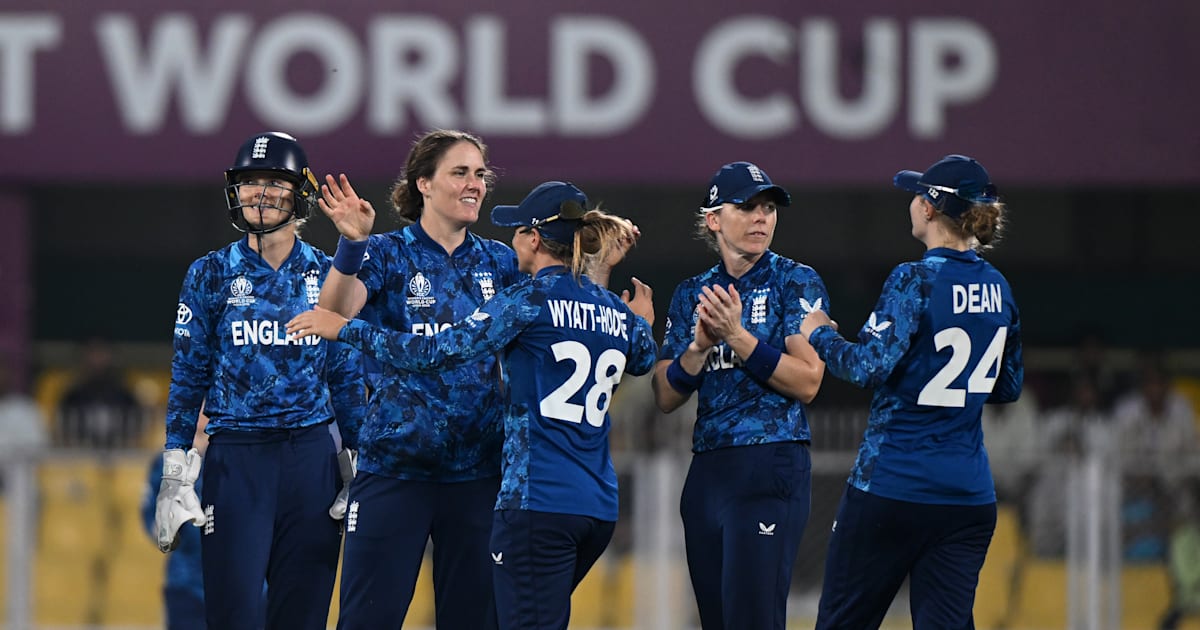
England Women's T20 World Cup 2026 squad
12 hours ago