
How Ricky Ponting turned from villain to friend in India
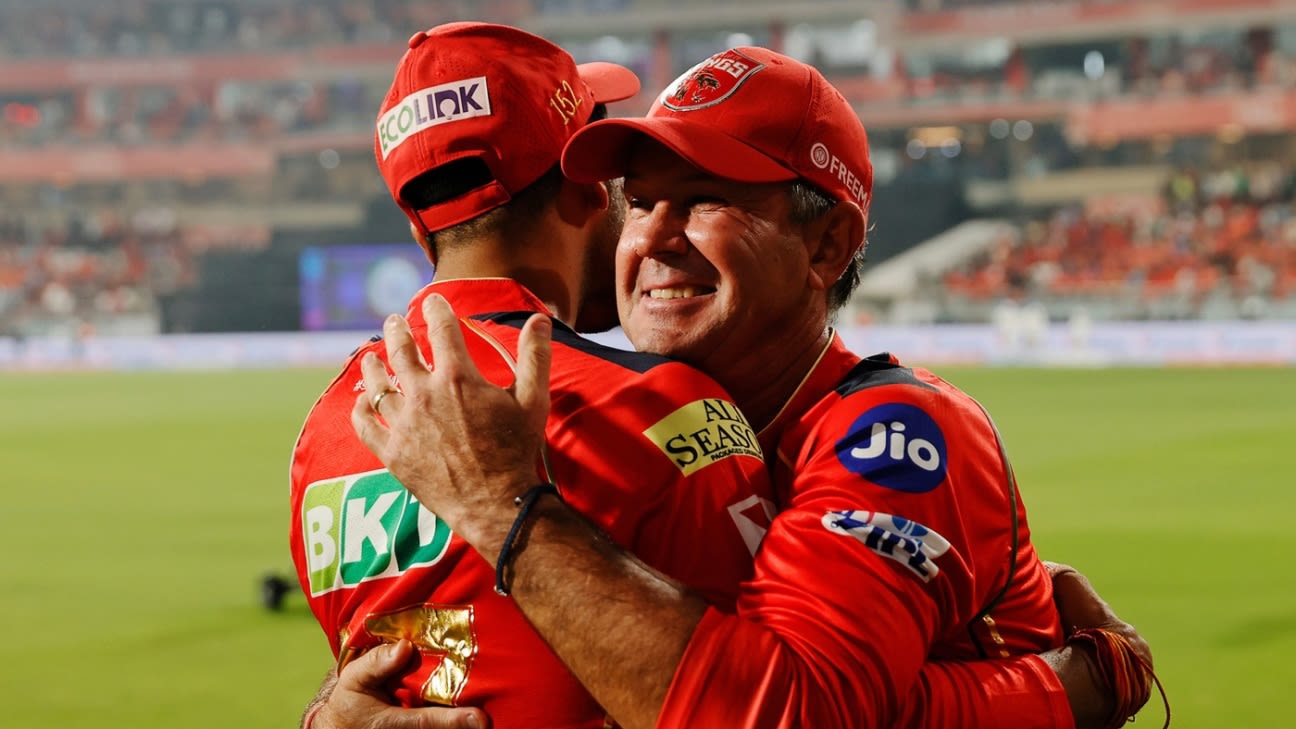
During his playing days, he was a prickly presence, often in your face. That has changed, and howSreshth ShahPublished: May 25, 2026, 4:47 AM (8 hrs ago)For a generation of Indian cricket fans, disliking Ricky Ponting once felt almost compulsory. He kept appearing in India's worst cricketing nightmares - walking in chewing gum with unnerving calmness, and then proceeding to dismantle India with precision.Every time Ponting strode out to bat against India in the 2000s, there was a lingering sense of dread - the expectation that something painful was about to unfold again. And usually, it did. The hundreds piled up, so did the Australian victories, and so did the resentment.Part of it, admittedly, came from perception. Australia, under both Steve Waugh and Ponting during that era, operated with ruthlessness. But while Waugh got Indian audiences to warm up to him with his charity work and photography tours, the Ponting years brought with them some animosity. Ponting carried himself - unlike Waugh - in a manner that Indian audiences interpreted as smug.RelatedAustralian cricket's soul, mate (2012)Ricky Ponting on his Punjab Kings role: 'We are not going to sit back and just accept mediocrity'Kohli the Indian Ricky Ponting? (2017)'I made it clear that I was here to win the IPL' (2015)Today, though, the relationship between Ponting and Indian cricket audiences feels almost unrecognisable from that era. He is no longer viewed as the hyper-competitive Australian villain; now he is among the most admired overseas figures in India.It's a far cry from how Indian supporters of a certain generation felt about Ponting. For them he was the man who doubled-down on disputed catches in an age before DRS. In the Sydney Test of 2008, when Ponting raised a finger in response to the umpire's query about whether Michael Clarke had taken a contentious catch, off Sourav Ganguly, cleanly, he turned into the face of win-at-all-costs gamesmanship; TV replays across Indian households showed the catch might not have been clean. Effigies were burnt in New Delhi, and mistrust flourished.Further back, there was the 2003 World Cup final in Johannesburg, one of the defining traumas of early 2000s Indian cricket fandom. Ponting destroyed India's hopes with one of the most brutal innings ever played in a World Cup final, making an unbeaten 140 off 121 balls. For the time, the innings was so outlandish that it generated conspiracy theories. Rumours that there was a spring in his bat spread widely, and the bizarre accusation became part of cricket folklore. Bottom line: fans in India just struggled to process that kind of strokeplay.Another element was Ponting's rivalry with Harbhajan Singh - verbal volleys spanning a decade both on and off the field, and ten dismissals in Tests. During the 2008 series down under, the combustible atmosphere caught fire. Harbhajan was at the centre of the Monkeygate racism controversy, and Ponting backed his own player, Andrew Symonds, in the he-said, she-said.Even older controversies became absorbed into the mythology around Ponting. There was an infamous late-night fracas outside a Kolkata nightclub on Park Street in 1998, which fed into the broader image constructed around him. When he was knocked out cold in a bar in Sydney in 1999 and dropped from the ODI side, it fed into the theory that he went looking for trouble.But beyond the headlines, and all the incidents involving Ponting and India, there was another, simpler, reason why he attracted intense dislike. He just kept winning around the world; Australia notched up 376 wins in 559 international matches across formats during his time, for a win rate of nearly 68%.Ponting's aura in India best resembles the polarising reaction Max Verstappen evokes in Formula One today. For rival fans, the dominance becomes exhausting, every victory reinforces the sense of helplessness, and every celebration becomes more irritatingSport has a peculiar relationship with serial winners. Fans can tolerate arrogance - or what they perceive as arrogance - when it is also accompanied by vulnerability or failure. Sustained dominance, though, changes the emotional equation completely. The more successful an athlete becomes, the greater the resentment they can inspire among rival supporters.Ponting's aura in India best resembled the polarising reaction Max Verstappen evokes in Formula One today. For rival fans, the dominance becomes exhausting, every victory reinforces a sense of helplessness, every celebration becomes more irritating. The way his team brushed the BCCI president, Sharad Pawar, off the stage while collecting the 2006 Champions Trophy silverware in Mumbai didn't help.The relationship began to soften, though, with the advent of the IPL. Ponting and John Buchanan, the long-time coach of Australia, were part of Kolkata Knight Riders in that team's early years. Ponting then moved to Mumbai Indians, whom he also captained in 2013. When he struggled for form that year, he gave up the armband before anyone could ask for his head.From being an opponent and antagonist, Ponting became a team-mate and a dressing-room confidant to many Indians. MI would go onto win their maiden IPL that year, and there was a sense of warmth when Rohit Sharma called Ponting to lift the trophy alongside him. Harbhajan was right beside them.After retiring, Ponting's commentary - insightful and educational in an era of empty superlatives and cliches - showed he was, in the most basic sense, an intelligent and passionate cricket follower. His coaching stints at Delhi Capitals (earlier) and Punjab Kings (now) have only reinforced that notion.As time passed, younger Indian players gravitated towards him. Under Ponting, DC reached their first-ever final in 2020, and his partnership with Shreyas Iyer became one of the most compelling player-coach relationships in IPL history. When few in India saw Iyer as a captain, Ponting repeatedly backed him. Later, when Ponting moved to Punjab Kings, he turned again to Iyer at the first opportunity.For a generation that grew up rancouring Ponting, his image as an intimidating Australian captain gradually gave way to one of a mentor who cared for his players. There was even a phase after Rahul Dravid's tenure as India coach ended when Ponting's name surfaced in conversations around the national coaching role (although Ponting wasn't really up for it, according to an interview, due to how much time he would need to commit). Behind-the-scenes social-media content has brought him closer to fans in India too. One such item showed him sporting a sacred red thread - popular in certain Indian socio-religious contexts - on his right wrist. Another showed him enjoying home-cooked dal-chawal prepared by Prabhsimran Singh's mother. During the meal, Ponting is supposed to have said to her that it ought to be an annual tradition. It was an everyday moment, but one that resonated deeply.On another occasion this season, when a young PBKS fan was trying to grab the attention of players for an autograph before they boarded the team bus, Ponting noticed it and urged Yuzvendra Chahal and Shashank Singh to give the child a bit of their time.Ponting's daughters' love for Khaleel Ahmed, and their tears when DC lost the 2020 IPL final are images that are still poignant.It is also possible that Ponting himself has genuinely evolved over time. Elite athletes often soften publicly after retirement. Footballer Roy Keane shared a fraught relationship with anyone who wasn't a Manchester United supporter, until he picked up the microphone and showed a different side to his personality.Indian cricket has changed over time too. The India that once viewed Australia through a lens of inferiority or frustration no longer exists. Indian cricket today is wealthy and deeply self-confident. Their players carry the same swagger Ponting's Australia once monopolised. It wouldn't be wrong to say that Virat Kohli's captaincy had shades of Ponting's too.Two decades ago, Ponting was the Australian many Indian fans loved to hate. Today he feels like one of Indian cricket's adopted insiders. If you fell into a coma in the early 2000s and woke up in 2026, the idea would have sounded absurd, but here we are. One of the great enemies-to-lovers arcs we've seen in modern cricket.Sreshth Shah is a sub-editor at ESPNcricinfo. @sreshthx


Most Popular




Rafael Nadal: A legend cast in clay
8 hours ago


Australia back star pace trio to play the 2027 WC
10 hours ago