
IPL's new order: RCB & GT's contrasting routes to dominance

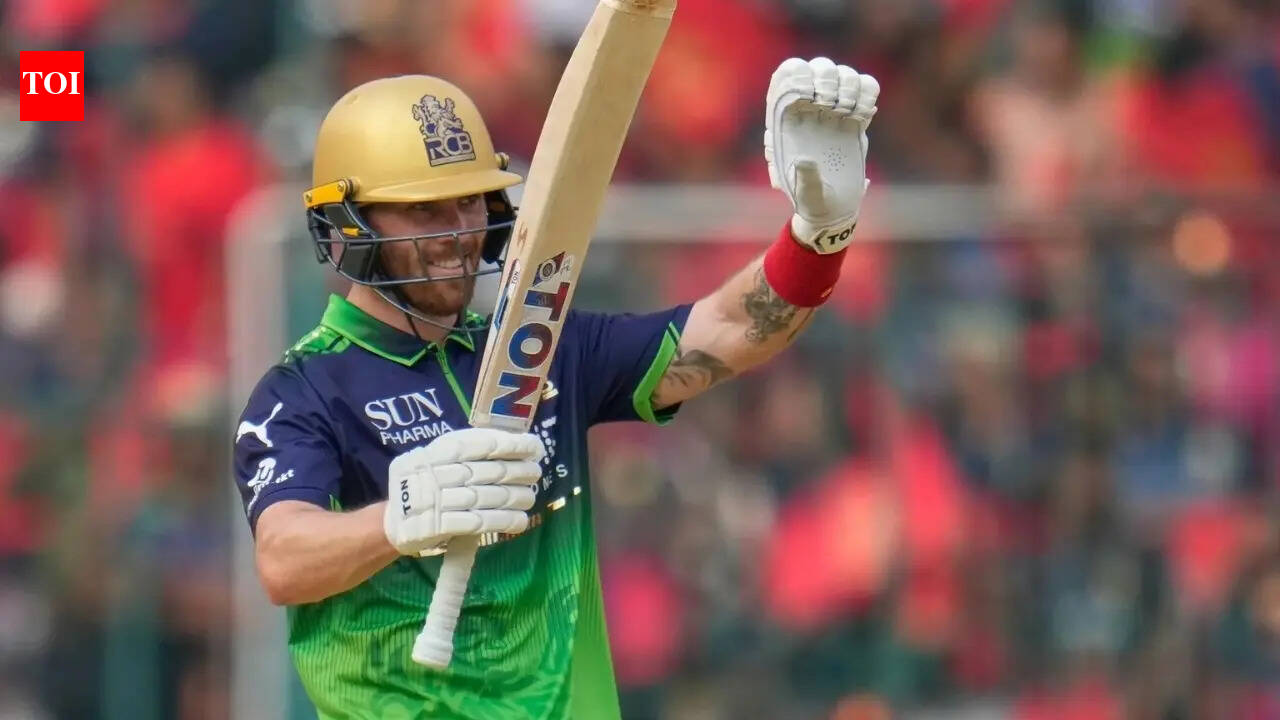
Royal Challengers Bengaluru and Gujarat Titans now sit at the center of the IPL's shifting power structure. One side is built on role clarity and phase optimization; the other on top-order consistency and sustained attacking pressure. Different methods, same destination and now Qualifier 1 offers the clearest test yet of which model holds up better under playoff pressure.The IPL's evolving competitive balance is perhaps best reflected in how sustained dominance has become increasingly difficult. Across the first 14 editions, the league revolved largely around two dynasties: Mumbai Indians and Chennai Super Kings combined for nine titles. Since the expansion to 10 teams in 2022, however, the league has entered a more fluid era. The last four seasons have produced four different champions - the first such sequence in IPL history.No two sides have defined this phase more than Titans and Royal Challengers, who now meet in Qualifier 1 in Dharamsala. Since 2022, Titans own a 46-28 win-loss record and Royal Challengers stand at 43-31, comfortably ahead of the rest of the field. The only other side above water in this period is Rajasthan Royals at 38-36. Ironically, the once-dominant Chennai and Mumbai sit at the bottom of these charts.Titans' rise has been immediate and startlingly consistent. They have reached the Playoffs in four of their first five seasons and finished in the top two on three occasions - a feat only Chennai have bettered by making the final four in each of their first five seasons. Royal Challengers' climb has been more gradual. They have qualified for the Playoffs in four of the preceding five seasons, finally ending their long wait for a title in 2025. Both sides then followed up their championship campaigns by topping the league stage the next season - something previously achieved only by Mumbai Indians across 2019 and 2020.Titans, in contrast, remain the league's great counterculture success story in the Impact Player era. While much of the league has embraced all-out aggression, Titans continue to place unusually high value on wicket preservation. Their top order bats deep, absorbs responsibility and scores with extraordinary consistency. Even their bowling attack reflects this identity: alongside the ever-attacking Rashid Khan, their seamers continue to push for wickets well beyond the Powerplay instead of defaulting into damage limitation.The spread of match-winners across the two sides underlines this difference. Royal Challengers have produced 12 different Player-of-the-Match winners across the last two seasons, spread across almost the entire playing XI. Titans have had only eight, all from either their top three batters or strike bowlers.There is another similarity between the sides: stability. Both sides settled on their preferred combinations early and rarely deviated from them. Injuries and availability may have altered personnel, but these two sides have used the fewest personnel throughout 2026.Royal Challengers distribute responsibility across phases. Virat Kohli remains the constant at the top, continuing to drive their Powerplay scoring even as returns from his opening partners have dipped in 2026. Around him, the lineup is structured to maximize matchup advantages and entry points.Devdutt Padikkal has excelled through the back end of the Powerplay and the early middle overs, helping create ideal conditions for Rajat Patidar, who strikes at 207.37 after the 10th over this season. Kohli and the middle order then pave the way for Tim David, arguably the most destructive death-overs hitter in the league, who is striking at 223.28 in the final five overs this season.Even with Jitesh Sharma and Romario Shepherd enduring rough campaigns, Royal Challengers have maintained scoring depth. Outside the openers, Padikkal has scored 433 runs at a strike rate of 172, Patidar 393 runs at 184 and David 277 runs at 198. While Royal Challengers have six batters with 100-plus runs at strike rates above 160, Gujarat, by contrast, have only one batter striking above 160 this season: Shubman Gill at 161.67.Titans operate very differently to Royal Challengers. Their top three consume an extraordinary share of the innings. They faced 71.2% of the balls in 2025 and 66.7% in 2026, while contributing 71.2% and 69.4% of the batting runs respectively. One of the top three routinely bats deep into the death overs, leaving the lower middle order with little to do.Their peerless consistency is what makes this approach thrive. Titans are the only side to have lost fewer wickets in Powerplay than matches played in both 2025 and 2026, virtually eliminating top-order collapses. Across all 16 wins in the last two seasons, one among the top three has finished as their leading scorer.Royal Challengers are heavily dependent on preserving their structure. Their phase-based batting model functions best when wickets remain intact long enough for the designated finishers to enter on their best entry points. Whenever opponents have broken through early, RCB have looked vulnerable. They have been three down inside eight overs seven times since 2025 and lost five of those matches. The two wins came while chasing moderate totals, aided by anchoring efforts from Krunal Pandya at #5.Their attack is well-equipped for exactly that task. T Mohammed Siraj and Kagiso Rabada have bowled unchanged in the Powerplay the most, setting up games for the team. Like Siraj, Bhuvneshwar Kumar operate on similar principles with the new ball: probing good lengths and generating movement both in the air and off the seam. Josh Hazlewood corresponds Rabada, as they possess two tall quicks capable of hitting uncomfortable hard lengths consistently. Unsurprisingly, these are the two best Powerplay pace attacks in the competition. Titans bowl on a good length 59.1% of the time - the highest in the league - while Royal Challengers rank third at 52.1%.Royal Challengers become increasingly defensive through the middle overs. Krunal Pandya and Suyash Sharma focus primarily on control - Krunal through changes of angles, pace, delivery points and lengths, Suyash through awkward back-of-length trajectories that are difficult for the batters to get under. Rasikh Salam complements them as a fuller-length option operating mainly around the back end of the Powerplay and the death overs.Both teams have arrived at the top through sharply contrasting routes, yet each has looked entirely coherent within its own philosophy. The head-to-head record this season stands at 1-1, with both sides winning emphatically at home. Qualifier 1 now feels bigger than a straightforward playoff. It is a clash between two of the defining teams of the IPL's post-2022 era, two highly stable systems on opposing ideas of how T20 cricket should be played. And with a direct route to the final on the line, Dharamsala may well offer a preview of the title clash later in the week.

Most Popular




Rafael Nadal: A legend cast in clay
8 hours ago


Australia back star pace trio to play the 2027 WC
10 hours ago