
World Cup 2026: Which teams have travelled the furthest?
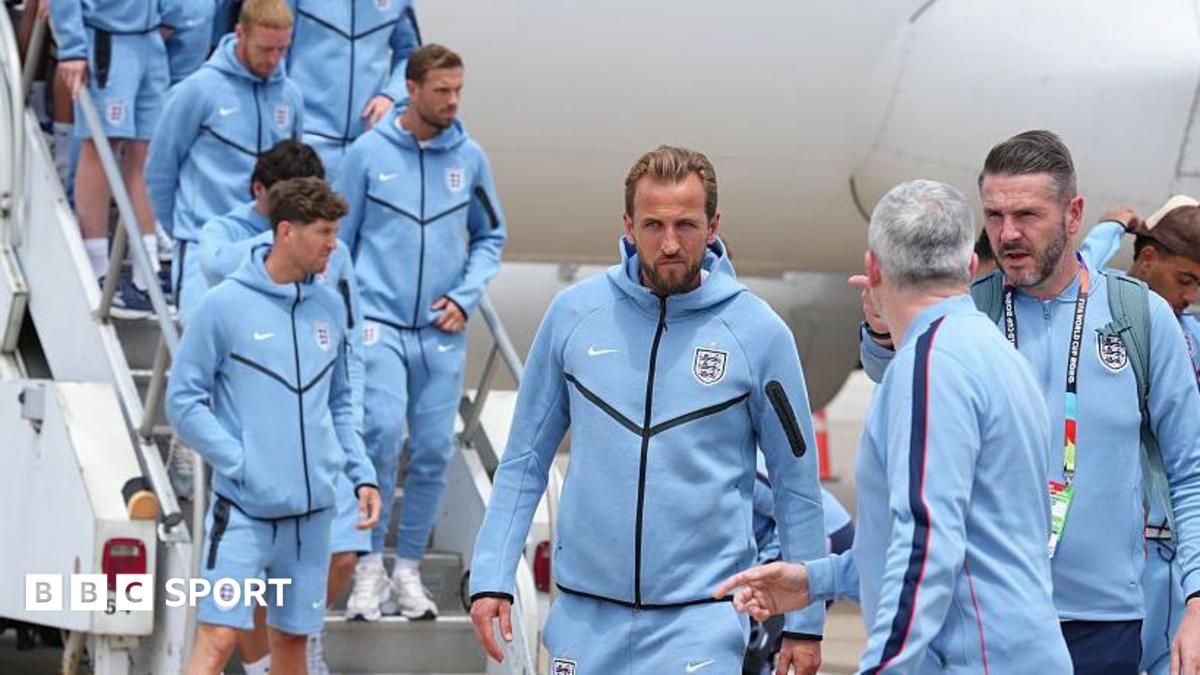
A World Cup staged across three countries was always going to test teams in ways no previous tournament had. With 16 host cities spread across North America, nations have travelled further than before in pursuit of football's biggest prize.But while every team has had to contend with the vast distances, some have covered considerably more ground than others.England have travelled more than 14,000 miles to reach the last four - seven times further than favourites France and considerably more than semi-final opponents Argentina.Thomas Tuchel's side have travelled back and forth from their base in Kansas City, Missouri, to play matches in Atlanta, Boston, Mexico City and Miami.Argentina have also based themselves in Kansas City but have covered a little more than 8,000 miles, while France have remained almost entirely on the east coast, travelling fewer than 2,000 miles before heading to Dallas for their semi-final against Spain.That round trip of about 3,000 miles will more than double their mileage for the entire tournament.England are not alone in covering vast distances.Spain have logged more than 12,000 miles, while Switzerland exceeded 10,000 thanks to what the Swiss Football Association described as "venue hopping" across North America.Morocco repeatedly returned to their New Jersey base despite fixtures taking them to Boston, Atlanta, Monterrey and Houston before eventually bowing out to France in the quarter-finals.Belgium's decision to base themselves in Renton, Washington, kept travel to about 4,000 miles before their exit against Spain.France's tally is one of the lowest of any nation at the tournament - with a total below even several teams eliminated after only three group matches.Long-distance travel is nothing new at the World Cup. Brazil in 2014, Russia in 2018 and even South Africa in 2010 all required teams to cover significant distances.The first 48-team World Cup, however, has presented a different challenge. With matches staged across three host nations and 16 cities, some teams have spent weeks shuttling back and forth across North America, while others have remained largely within the same region.England's route illustrates that contrast better than most. Their journey has already exceeded the total distance of countries at other tournaments.BBC Sport calculated the distances between training camps and match venues using the most local airport and assumed each nation travelled back to their camp after each game.We used an air miles calculator, external to measure the flight distances and doubled the mileage to account for teams returning to their training location in between games.For nations whose nearest airport to their training base was the same as a venue where they were playing, we marked that as zero miles, regardless of distance from base to stadium.We also did not include distance from base to airport or airport to match venue at the other end.The results therefore are an indicator of distance travelled during the World Cup so far rather than an exact number.



Most Popular