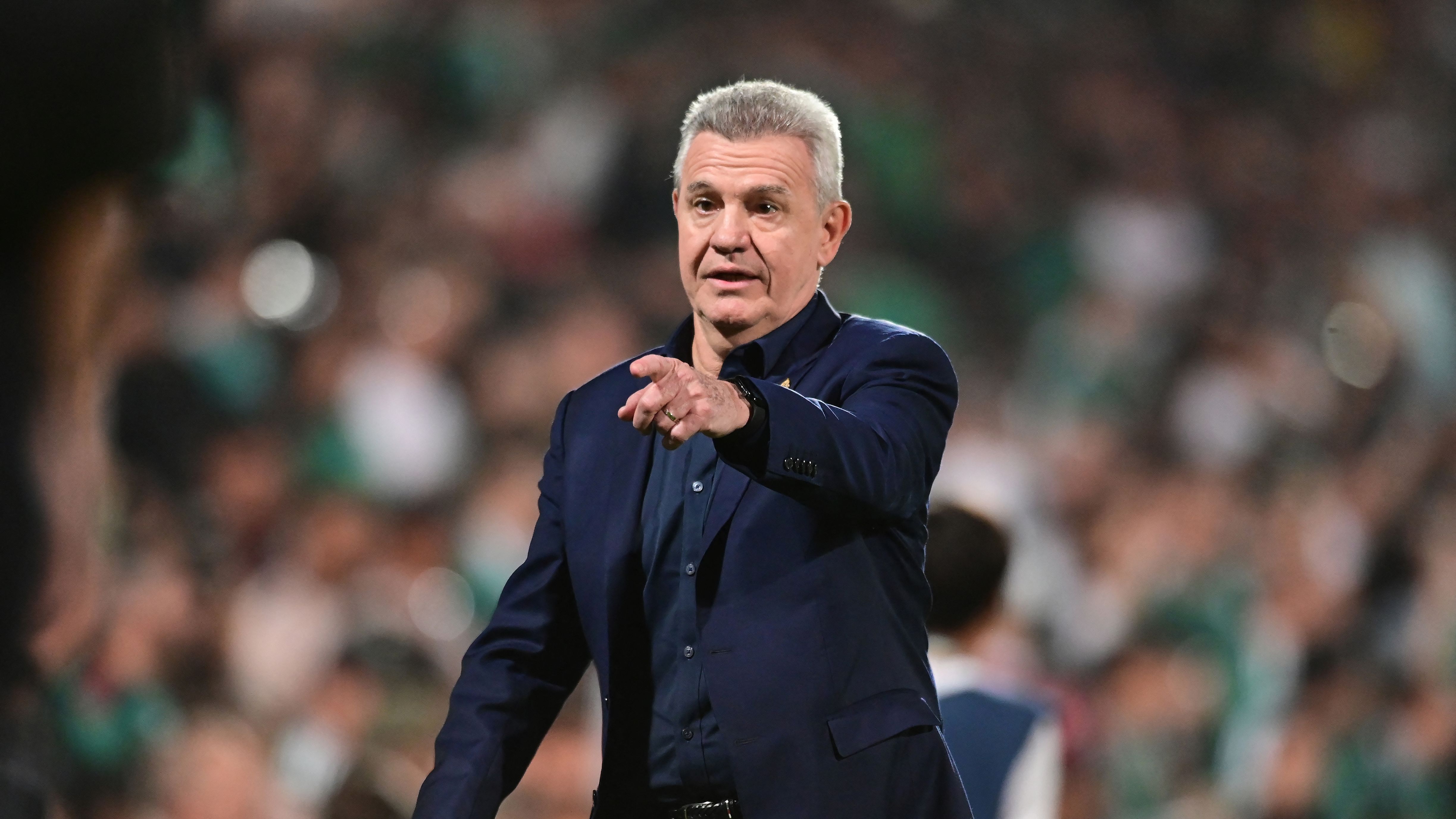
Javier Aguirre’s last look: Five keys as Mexico host Serbia before World Cup opener
Will El Tri’s goals depend on the brilliance of Raul Jimenez and Julian Quiñones? Could Gilberto Mora, also known as Morita, get on the scoresheet at 17 years old and become one of the youngest scorers in World Cup history - and Mexico’s youngest World Cup scorer?That second possibility is real, even if one historic mark is already out of reach. Mora will not be able to break Pele’s all-time youngest World Cup scorer record, set at 17 years and 239 days when the Brazilian scored against Wales at the 1958 World Cup. Mora was born on Oct. 14, 2008, so on June 11, 2026, Mexico’s opener against South Africa, he would be 17 years and 240 days old - essentially one day older than Pele was.But the larger question is not only about Mora. It is about where Mexico’s attacking spark will come from.Against Serbia, Aguirre will want to see an offensive performance that gives El Tri more confidence before the opener. The players selected to start in Toluca will carry a special responsibility in maximizing Mexico’s scoring chances and showing they can turn possession into real danger.Across recent matches against World Cup-bound opponents - Portugal, Belgium, Ghana, and Australia - El Tri averaged 11.5 shots. That number is not insignificant, but the next step is improving the quality of those opportunities.That has to be the plan against Serbia: create at that volume, but make more of those moments count. Whoever is trusted with Mexico’s attack in Toluca will likely have a strong chance of being part of Aguirre’s thinking for June 11.Even before Alvaro Fidalgo played his first minutes for Mexico, Vega spoke highly of his presence in the national team, much like he did with Quiñones.“Yes, for me, they are players who make an absolutely massive difference. Whenever I faced Quiñones, I knew he was a very important player; he has been here in Mexico for a long time. It’s the same with Fidalgo, a player who defined a very important era at America. No one doubts or denies the talent of those two players,” Vega told Fox Sports.During his time at Club America, Fidalgo’s main supporter and mentor was Jonathan dos Santos. Jonathan’s time with the national team had its ups and downs. Unlike his brother, Giovani dos Santos, he did not accumulate many iconic moments with El Tri. But there was one night that still matters: the 2019 Gold Cup final against the United States.In that game, Jonathan gave Mexico exactly what it needed from a midfielder: control, timing and one decisive action. His winning goal, finished after Jimenez’s backheel, gave Mexico a 1-0 victory.That is not to say Fidalgo has to copy Jonathan’s career path. But there is something to learn from that version of the role. Mexico does not need Fidalgo to treat every possession as if it has to become spectacular. It needs him to give the team order, connect midfield with attack, and understand when to accelerate.If Fidalgo can command stretches of the match the way Jonathan did in that final, his value becomes clear. He is not just another technical player. He can be someone capable of giving El Tri a calmer brain in the middle of a tense game.Fidalgo needs minutes to better understand the speed, spacing, and responsibility of playing for Mexico. And after five years with Club America, many of them at Estadio Azteca, there is another layer to the story: he may soon have the chance to play a World Cup match in a stadium he knows well, but this time wearing El Tri’s green.Veljko Paunovic returns to Mexico after spending time in Liga MX coaching Chivas and Tigres. He understands the intricacies of Mexican football, the rhythm of the league, and the environment that surrounds El Tri. Although he is bringing a young Serbian side, there is still a sense that his team can cause problems for Mexico.This may not be the Serbia that people usually imagine. Several of the country’s most recognizable names are not part of this version of the squad, which gives the match a different kind of edge. Serbia will arrive with players trying to convince their coach that they belong in the next version of the national team, and that can make a friendly uncomfortable.Andrija Maksimovic is one player to watch. He is one of the most intriguing prospects in the squad, an attacking midfielder who can play between the lines and give Serbia a creative spark. Aleksandar Stankovic, at Club Brugge, gives the midfield another young player already being fast-tracked into senior responsibility. Kosta Nedeljkovic adds pace and energy from deeper areas.For Mexico, the lesson is clear: Serbia may not arrive with its most recognizable stars, but it can still test El Tri in areas that matter at a World Cup. Set pieces, second balls, physical duels, defensive concentration, and transition defending will all be part of the exam.If Mexico control the ball but become loose when they lose it, Serbia have enough young legs and individual ambition to make the night more complicated than expected.Roberto “Piojo” Alvarado and Vega have a long-standing friendship. In Pasadena, they both arrived at the locker room jamming to their favorite Mexican corridos through loudspeakers. Their presence is felt in camp, whether through their quality on the ball, their personality or the joke they come up with on the spot.There is a certain joy they provide that Aguirre sees as fundamental to the group’s positive feel. But the numbers have to be there, too.Their presence cannot only be measured through unquantifiables. It has to show up in goals, assists, defensive work, and responsibility. That is where they stand ahead of their second World Cup. Both were bronze medalists with Mexico at the Tokyo Olympics in 2021. Both went to Qatar 2022. Now, both arrive at another World Cup cycle with a larger question in front of them: can they act like leaders?The easy answer might be no, because neither player fits the traditional image of a commanding locker-room voice. But Vega’s Clausura 2025 with Toluca proved that leadership can also come through performance. His season finished with 12 goals and 10 assists in 21 matches, helping lead Toluca to a league title. That was more than a year ago, but it showed what makes Vega special and why he carries Mexico’s No. 10.When he is sharp, Vega can take over games. He can receive between the lines, attack defenders, combine in tight spaces, and turn pressure into personality. The question is whether Mexico will get that version consistently enough.Alvarado brings a different kind of value. Aguirre is a big fan of his work rate, and his 2025 CONCACAF Nations League semifinal against Canada was a reminder of his two-way importance. His early shot helped create the loose ball for Jimenez’s opener, but his work without the ball was just as important. Matched at different moments against Alphonso Davies, Alvarado had to track back, close lanes, and keep Mexico’s right side from being isolated against one of CONCACAF’s most explosive runners.That is the kind of balance Alvarado gives El Tri: useful in possession, active in pressure, and willing to do the defensive work that allows Mexico to survive difficult matchups.We’ll find out soon. But for both, the challenge is similar. This can no longer be only about talent, chemistry or personality. At a second World Cup, Mexico needs them to turn experience into impact.How open will Aguirre be to switching the XI across the group stage?At this point, it is difficult to rule out the possibility that Guillermo Ochoa will make one appearance as a Mexico starter during the group stage.Aguirre has done this before. In his last World Cup as Mexico manager in 2010, he had three different captains walk the team out during the group stage: Rafael Marquez, Gerardo Torrado, and Cuauhtemoc Blanco. The lineups changed, the leadership structure shifted and Aguirre showed that he was willing to adjust depending on the opponent and the moment.It remains to be seen if he will do something similar this time around. But because Mexico’s group-stage opponents are so different from each other - South Africa, South Korea and Czechia - do not be surprised if Aguirre changes his XI across the group stage.That makes the Serbia match even more important. His starting XI and substitutions in Toluca will allow us to peek inside Aguirre’s thinking a little more.For example, another start for Guillermo Martinez up top would put the Pumas striker in position to earn considerable minutes at the World Cup. Another strong performance from Fidalgo could change the midfield conversation. Another useful outing from Alvarado or Vega could make Aguirre feel more comfortable leaning on the Tokyo generation.The Serbia friendly will not answer everything. But it should reveal how close Aguirre is to deciding who starts before June 11.




Most Popular