
Historic changes: official announcement of the new refereeing rules in La Liga
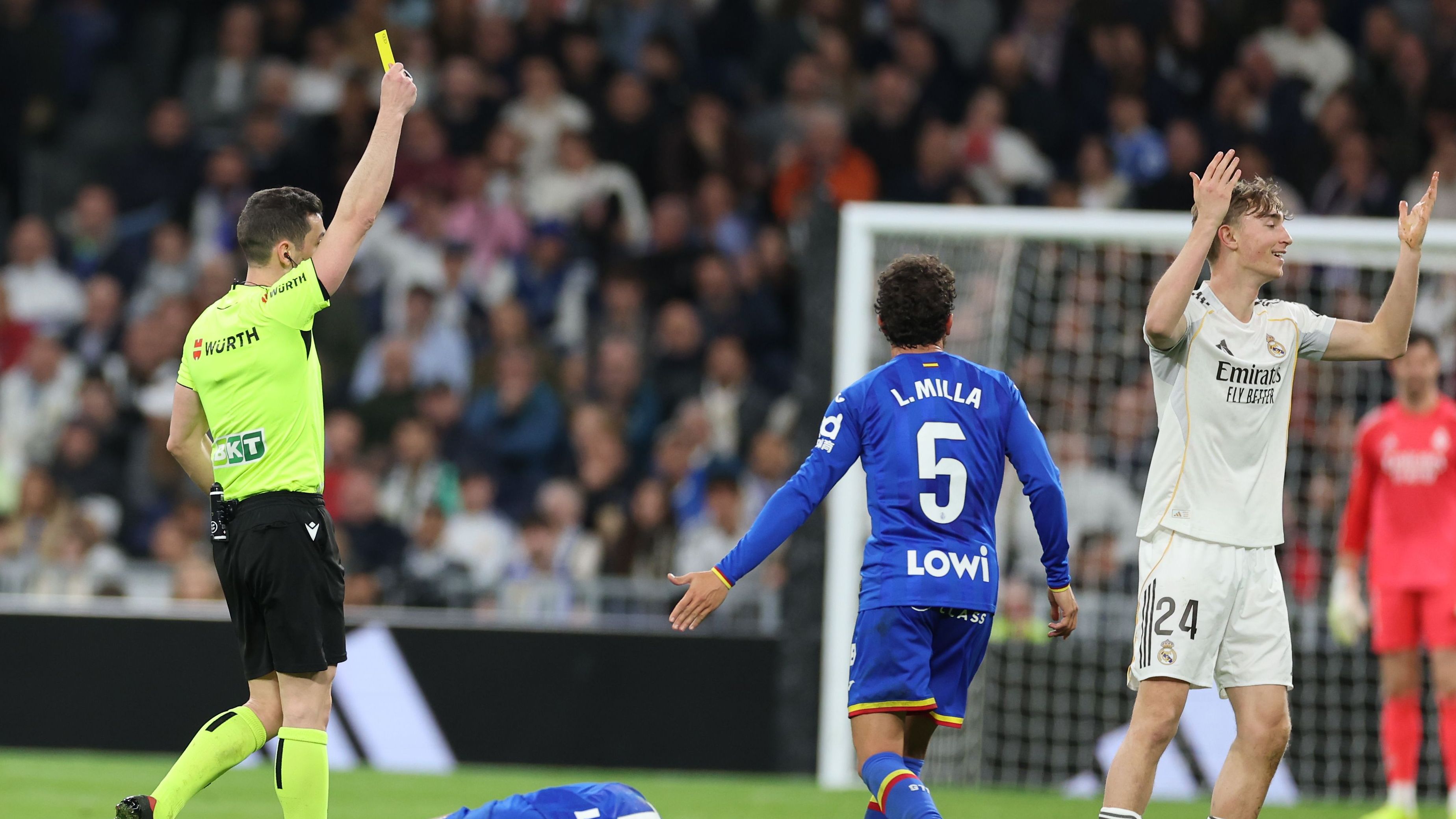
A rule already in force at the 2026 World Cup is now heading for Spanish professional football, targeting one thing: time-wasting at substitutions.The player coming off must leave the pitch within 10 seconds of the substitution board going up, or of the referee's signal where no electronic board is used.Miss that window and there's a price. Unless safety, security or injury makes it impossible, the departing player must still walk off, but his replacement cannot come on until the first stoppage after a full minute of actual playing time has passed since the restart.Multiple substitutions at once? Every player coming off must clear the pitch within 10 seconds of the final change being signalled.Football is bringing in a new rule to tackle suspicious goalkeeper injuries, the kind used to break an opponent's rhythm, waste time, or buy a coach the chance to feed tactical instructions to his players.IFAB, the International Football Association Board, has cleared the Spanish technical refereeing committee to run the trial, as set out in Circular No. 34.The rule works like this. If a match stops because a goalkeeper is injured, the head coach must immediately name one of his outfield players to leave the pitch. That player then stays off the field for at least a minute after play restarts.Miss the deadline and the captain pays the price. If the coach names nobody within the first 10 seconds from the moment the referee allows the goalkeeper to be treated, the team captain must leave the pitch automatically.Three clear exceptions apply.The first covers a goalkeeper's injury that comes from a foul warranting a free kick and needing immediate medical intervention.Next comes a collision between the goalkeeper and an outfield player that requires both to be treated.Bleeding makes up the third exception.Where an outfield player is also injured, the one treated on the pitch must leave the field and stay off it for one full minute of actual playing time after the restart. He may return once the referee grants permission during a stoppage.One of last season's most controversial incidents, with Atletico Madrid's Marc Pubill at its centre, has finally been cleared up before the new campaign begins.The moment came in Atletico's Champions League clash with Barcelona. Goalkeeper Juan Musso set the ball down, then rolled it out to Pubill with his foot.Pubill got it wrong. He stopped the ball with his hand before playing it out with his foot to restart the move.Referee Kovacs ruled at the time that the ball had never come into play.The new clarification changes that. If a goalkeeper plays the ball and a teammate then deliberately handles it inside the box, the referee will award a penalty.That unifies how officials handle these situations. If a defender wants to take the goal kick, he must do so without the goalkeeper having touched the ball first.VAR technology can intervene when a player is misidentified, with the referee showing a yellow or red card to the wrong player from either side despite having clearly awarded the offence against someone else.The offence itself cannot be reviewed here. Only the error in identifying the player falls within scope.Officials welcomed the use of the mistaken identity clause to deal with cases of simulation during the 2026 World Cup, and it is set to feature in the detailed review of the VAR protocol announced in circular number 32.That clause, however, cannot be used in this way until the review is complete.Misidentification is a case VAR technology can review only when the referee penalises the wrong player for an offence the referee himself awarded.Examples of this include:A player receiving a yellow card for a handball committed by another player.A player receiving a yellow card for a reckless challenge committed by another player.Any similar case in which the referee awards an offence but shows the disciplinary sanction to the wrong player.Crucially, the referee's decision to award the offence itself cannot be reviewed. The review is limited exclusively to identifying the player who committed it.The only exceptions are cases that fall within the other categories reviewable by VAR technology, namely goals and the offences preceding the scoring of goals, penalty kick decisions, and red card cases.VAR can review a corner kick that has clearly and incorrectly been awarded, even when the ball has left the field of play over the touchline. The review must happen immediately and without delaying the resumption of play.Once the corner is taken quickly, the decision stands.The "television broadcast signal" also becomes mandatory when the decision changes after information from VAR.Only very clear situations qualify. An incorrectly awarded corner kick can be reviewed by VAR provided the review is completed immediately and without delaying the resumption of play.An attacking player who commits an offence before the ball comes into play at a free kick or corner kick can still be punished, even if the on-field officials miss it. VAR can step in and recommend a review, provided the offence meets specific criteria.These cases include an offence warranting a possible sending-off for violent conduct, spitting, biting, or acting in an extremely aggressive, offensive, or insulting manner.VAR can also intervene if the offence continues when the ball is kicked or after it is kicked.Intervention is also possible if the offence occurs after the referee's signal to take the kick, whether by the hand, the arm, or the whistle, and the offence has a direct and immediate impact.The cases in which intervention is possible include if the offence:Helps the attacking team to score a goal or create a goalscoring opportunity.Reduces the defending team's ability to prevent a goal from being scored.Leads to the defending team committing an offence warranting a penalty kick.Leads to the defending team committing an offence warranting a red card for denying a clear goalscoring opportunity.Leads to a player from the defending team receiving a second yellow card for denying a clear goalscoring opportunity.Leads to stopping or interfering with a promising attack.


Most Popular


Algeria parts ways with coach Petkovic
13 hours ago