Debating Paraguay’s tactics against France: Disgraceful or their best way to win?

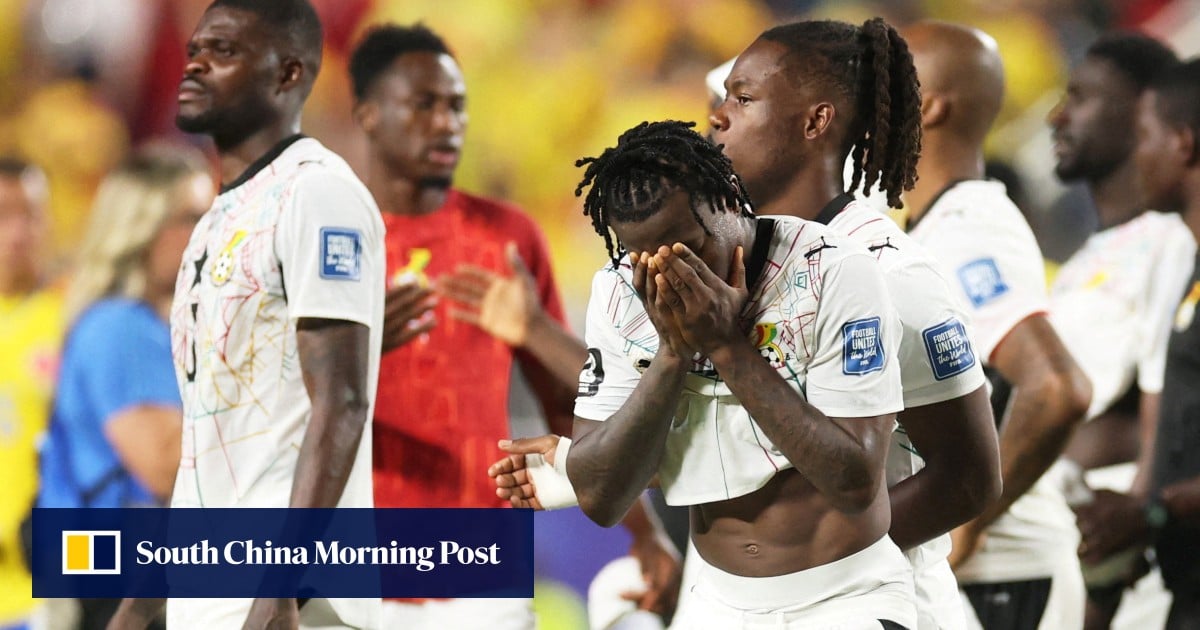
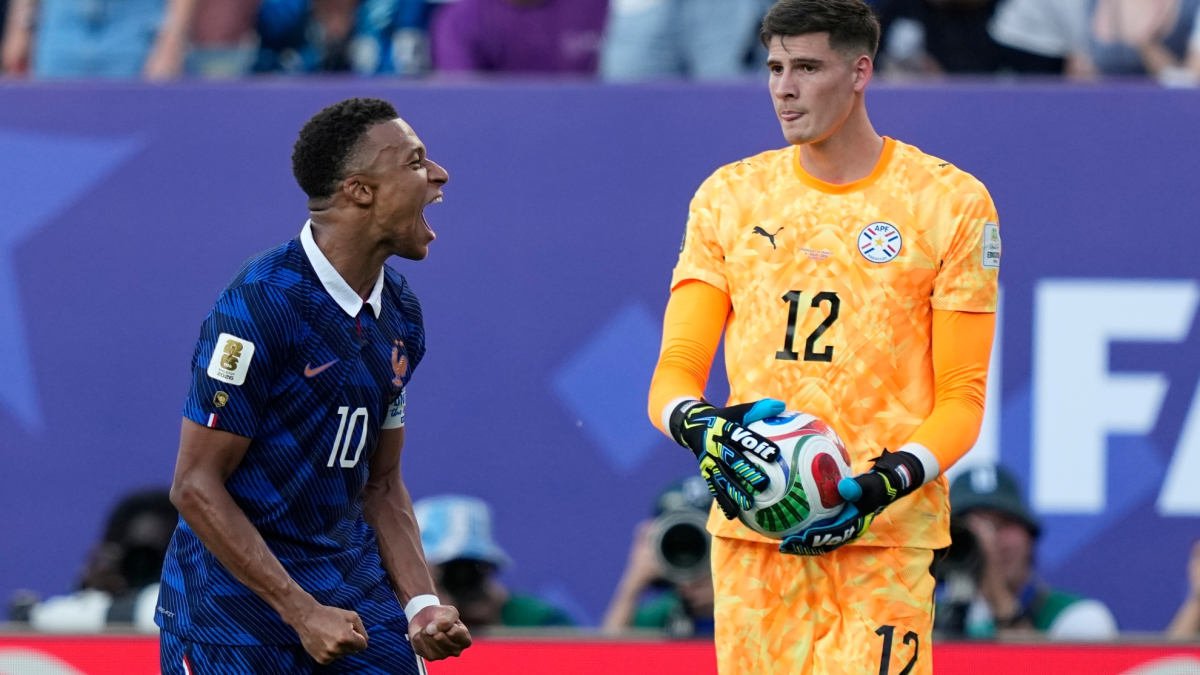
On Saturday night in Philadelphia, France defeated Paraguay 1-0 courtesy of a Kylian Mbappe penalty to reach the last 16 of the World Cup. “Football won. I don’t want to talk about Paraguay,” said Thierry Henry, the former France forward, in his role as a pundit on Fox.Paraguay’s tactics, seeking to frustrate and disrupt France, had annoyed Henry as well as the current team and coach.An impressive display of dogged defending was mixed with play acting, challenges and an off-the-ball strike on Mbappe that only referee Ilgiz Tantashev seemed to believe were not worthy of yellow cards. As it was, Paraguay ended the game with no players booked and France with three.Yet it was clear that Paraguay had set out with a plan to irritate France. They used “every trick in the book”, according to France coach Didier Deschamps. Was Paraguay’s performance a “disgrace”, as some have called it? Or was it their best, and perhaps only, strategy to beat a side whose players would command a transfer value estimated to be almost nine times more than their own?The Athletic’s Stuart James and Thom Harris debate a controversial evening in Philadelphia.Paraguay had no shame“Our team, through the entire competition, wanted to play the game. Even against the best teams, we never wanted to play anti-football; we always took care to compete head-to-head with our opponents.”That was the Cape Verde manager Bubista talking in the wake of his team being eliminated from the World Cup on Friday night after more than playing their part in one of the greatest matches in the tournament’s history.Bubista went on to use words such as “pride” and “dignity” when he talked about how well his players had performed in that thrilling 3-2 defeat against Argentina.In short, there’s a way to lose a football match — and Paraguay, that wasn’t it.On Saturday in Philadelphia, Gustavo Alfaro’s team turned up against France looking for a scrap. Provocation, intimidation, play-acting — you name it, Paraguay were guilty of it. Well, except in the eyes of a referee who seemed to forget that his primary job is to enforce the laws of the game. Maybe the heat got to Uzbek official Tantashev.It’s hard to find any other explanation. Paraguay got through a World Cup match for the first time since 1998 without picking up a yellow card, while France somehow collected three, including one for Michael Olise late in the game that was in keeping with both the abysmal standard of refereeing throughout (remember the supply teacher at school who had no control of the class? That was Tantashev) and the way Paraguay cheated.Matias Galarza, who had earlier swung an arm at Mbappe in an off-the-ball incident in the middle of a France attack, dramatically threw himself to the floor late in the second half, holding his face and jerking around on the grass like a fish suffocating on the deck of a boat. Tantashev, shamefully, was reeled in too, and ended up booking Olise.Talking of shame, Paraguay didn’t have any. It was win-at-all-costs. Or, as it turns out, lose-at-all-costs.Yes, there is a huge disparity in quality in the respective squads, both on paper and on the pitch, but Cape Verde were also in that position and didn’t resort to playing, in the words of their manager, “anti-football” against Argentina.To be clear, this isn’t saying that Paraguay should roll out the red carpet for France or try to play them at their own game. Nothing of the sort.Bank in, low block, surrender possession, everyone behind the ball, defend for your lives, play on the counter, hope for a set piece — there’s nothing wrong with any of that. In fact, be physical too. There’s more than one way to play football. But that’s the problem, Paraguay didn’t play football in Philadelphia.There’s a name for what they did against France; it’s called s***housery. The dark arts. Diving around, feigning injury, time-wasting, trash-talking, bending the rules, haranguing the referee — we know the drill. Some people watching on television love all of that. For others, it’s a bit of a turn-off and means that, in the case of France against Paraguay, you quite quickly stop cheering for the underdog.The sight of Gustavo Velazquez slyly — but not so slyly that he wasn’t caught on camera doing it — putting his foot in between Ousmane Dembele’s legs and scuffing the penalty spot before Mbappe took his kick was no more than we expected at that point.As for Galarza, he spent the game trying to get Mbappe sent off. Actually, trying to get anyone in a France shirt sent off. Galarza finished the match so worked up that, much to Mbappe’s amusement, the Paraguay midfielder tackled a corner flag.And that, from a Paraguayan point of view, sums it up.Stuart JamesNo one is here for the cheating, but the defensive commitment was admirableLook, I am not going to blindly defend every aspect of that Paraguay performance.Velazquez and his attempt to scuff the penalty spot with his boots is about as low as it gets on a football pitch, while the torrent of nasty challenges towards the end — shoulders and elbows involved — frequently crossed the line.Galarza essentially punched Mbappe in the first half to stop him getting away, before falling over theatrically to get Olise booked late on, a laughable card given all that had followed before. None of those things are good for the spectator, the players, or the image of the game.Having said all of that, I can’t just let this Paraguay team go out in a blaze of fury like this, their accomplishments explained away by shameless football and foul play alone.Their defensive commitment was astonishing, compact and aggressive in a 5-4-1 shape throughout, limiting the overwhelming tournament favourites to pot-shots for over an hour. Their concentration never flickered, their energy levels held in the sweltering sun, and they made a game out of a complete mismatch on the pitch.According to Transfermarkt, the French starting XI was valued almost nine times that of their opponents. Deschamps’ side had scored 13 goals in four games, sweeping a competitive Sweden team aside in the previous round. It took them almost an hour to register a shot on target in Philadelphia, in what was undoubtedly their toughest game to date.As we can see from the graphic below, illustrating the expected goals (xG) of each side’s chances throughout the game, things were remarkably close until a clumsy challenge in the penalty area finally gave Mbappe a clear shot at goal.Paraguay offered little themselves, but the game plan was clearly to frustrate France; to get under their skin, and to drag themselves through to a penalty shootout. They were afforded leniency by the officials in a frankly astonishing refereeing performance, but Paraguay played within those stretched rules, and eked every advantage out of a game in which they had very few.It wasn’t pretty, and many — including Stuart — have pointed to Cape Verde as an example of how underdog football should be played. But Paraguay played to their strengths. They have stamina, physicality, and grizzled defenders, and not so many of the expressive, box-to-box players that almost took Argentina all the way.If they had opened up, tried to take the game a little more to France, their weaknesses would likely have been horrifically exposed. They played the only way they could to make it a game.Once again, no one is here for the play-acting, the time-wasting, the cheating. But as far as their defensive commitment goes, and their sheer determination to see the game plan through, Paraguay deserve at least a little credit for almost shutting an incredible team down.Thom Harris


Most Popular
Past performances prime England for home final
11 hours ago
life care after head clash during Melbourne game
5 hours ago