Why the World Cup still belongs to the old empires - Mohd Zaidi Zabri
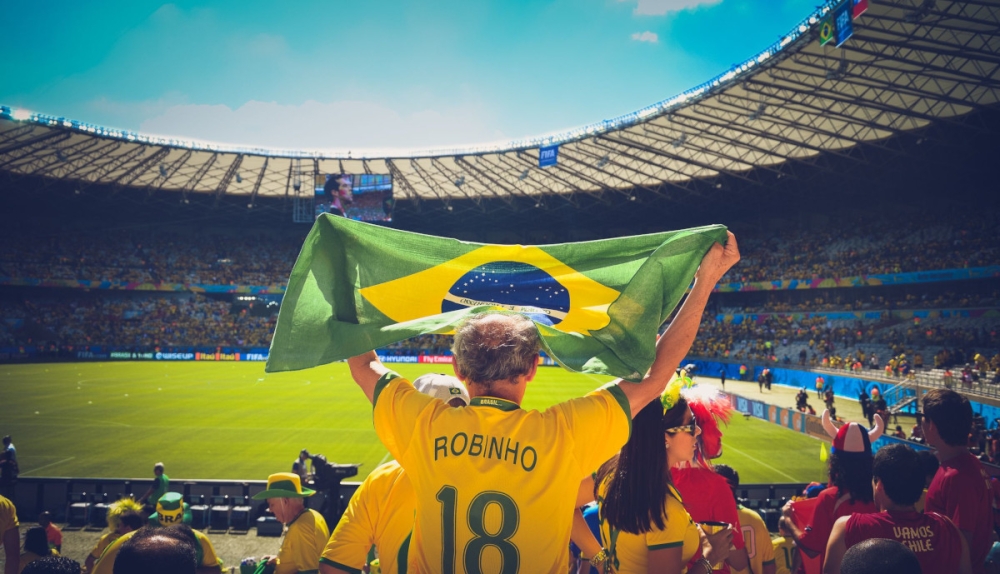
JUNE 26 — Several teams that won their opening two matches have already secured a place in the Round of 32, and football’s old aristocracy, France, Germany, Argentina and company, are once again gliding toward the business end of the tournament while everyone else scrambles for a seat at the table.This is not merely a sporting pattern. It raises a question football rarely asks out loud: is the World Cup still, in some sense, a tournament dominated by the old empires?The answer is yes, though not in the simplistic way the phrase suggests. Matches are decided over 90 minutes, but footballing success is built over generations, by the same forces, human capital, migration and institutional development, that have long shaped global economic power.A winners’ circle that barely changesThe numbers make the pattern hard to dismiss as coincidence. Across 22 editions of the World Cup since 1930, only eight countries have ever lifted the trophy, all from two continents.Europe accounts for 12 titles across five nations, while South America holds the remaining 10 through just three: Brazil, Argentina and Uruguay.For all football’s claims to global reach, the tournament has long behaved like a duopoly with better branding.The concentration runs deeper than trophy counts. France has won two World Cups and reached four finals. Spain strung together Euro 2008, the 2010 World Cup and Euro 2012, one of the most remarkable streaks in the sport’s history.Portugal, the Netherlands and Belgium tell a related story: small nations of 10 to 18 million people that have turned overperformance into a habit, producing golden generations far beyond what their populations alone would predict.These outcomes are often credited to coaching or tactics, but those too are products of deeper processes. Economists call this path dependency: countries inherit advantages that keep paying dividends long after their original source has faded from view.Colonialism exported more than flags and tradeColonial rule did not “gift” football to the colonised world. It imposed systems of administration, education and mobility designed primarily to serve imperial control and more importantly, economic extraction.Football travelled along those same routes, through colonial schools, military institutions, port cities and expatriate enclaves, before taking root among local populations who later made the game their own.The British spread organised football across parts of Africa, Asia and the Middle East, while French and Portuguese imperial networks did the same in their own territories, Portugal’s reach extending as far as Cape Verde, which qualified for its first-ever World Cup this year on the back of exactly those networks.What endured after empire was not merely a sport, but a set of linguistic, migratory and institutional linkages that would later shape how football talent moved, developed and was absorbed into global systems.That helps explain why footballing influence still maps onto old imperial geography: the game is global, but the routes through which talent is found and trained rarely are.South America fits the pattern tooAt first glance, South America complicates the argument. Brazil, Argentina and Uruguay are among football’s most decorated nations, yet none were colonial powers, and if anything were former colonies themselves.But formal colonial rule is only part of the picture. In the late 19th and early 20th centuries, Britain exercised enormous influence across South America through trade, railways and finance, an empire in economic practice if not administration.British sailors, railway workers and engineers helped found some of the region’s earliest football clubs. Peñarol, now Uruguay’s most decorated club with 48 league titles and the first winner of the Copa Libertadores in 1960, began life in 1891 as the cricket club of the British-run Central Uruguay Railway.Football arrived in Argentina and Brazil through similar commercial and expatriate networks, taking root in port cities and railway towns before spreading more widely.Export-led growth in beef and grain also drew huge flows of European migrants, especially from Italy and Spain. By 1914, nearly a third of Argentina’s population, and roughly half of Buenos Aires, had been born abroad.The relevant question is not who formally held the colonial flag, but who was plugged into the trade, migration and institutional networks of that era. By that measure, South America was deeply embedded in the same global system that helped shape football elsewhere.Migration networks became talent networksTalent is widely distributed. Opportunity, however, is not.That is why migration matters so much, and countries that can identify, train and retain talent across borders enjoy advantages that compound over time. England draws on Commonwealth-linked migration, the Netherlands on ties to Suriname and the Dutch Caribbean, Belgium on migration from Central Africa, and France’s modern success is inseparable from its postcolonial connections to North and West Africa.France’s 2018 winning squad illustrates the point: roughly 15 of its 23 players had African family roots, but they were products of the French development system, not just raw talent arriving at its doorstep.Migration networks do not only strengthen former colonial powers, though.Morocco offers the clearest counterexample. More than 70% of its 26-man squad were born outside the country, most of them in France and Spain, the two powers that once divided Morocco into colonial protectorates. That share is up from 14 of 26 in 2022 and just two of 23 as recently as 1998, the same year captain Achraf Hakimi, born in Madrid, came into the world.Rather than treating this as a loss, Morocco has turned transnational connectivity into a strategic asset, fielding a team that combines the polish of European academies with the cohesion of a national project built around its diaspora.History shapes the field, but it does not decide the resultIf it is not obvious by now, I am in no way celebrating colonialism. The economic and social costs imposed on colonised societies were profound, and many consequences remain visible today in inequality and weak institutions.But history also leaves behind networks, languages and migration corridors, which can be repurposed as much as inherited as liabilities.Morocco shows this clearly. Its rise is not a gift from history but a deliberate strategy: investment in football infrastructure, a strengthened federation, and active use of diaspora connections.The same migration routes that once reflected dependence have been turned into channels of recruitment and competitiveness, the clearest evidence that colonial legacy is raw material rather than destiny.The real lesson goes beyond footballAs millions watch the final group-stage matches, attention will naturally focus on tactics and moments of brilliance. But the dominance of football’s traditional powers reflects the cumulative effects of human capital, migration networks and institutional quality, the same ingredients that shape economic success more broadly. Football is one of the ways histories keep showing up in the present.So, is the World Cup still a tournament between old empires? In part, yes, but the more useful lesson is that history shapes the playing field long before the first whistle blows, without deciding the result. Success rests on institutions, infrastructure and talent development, not shortcuts.Cape Verde shows that lesson at a smaller scale: a country of just over half a million people, drawing on Lusophone migration networks into Portugal, punching well above its weight by building rather than shortcutting.For countries like Malaysia, that is the sobering part. Footballing success, much like economic transformation, cannot be summoned by passion alone, a lesson this year’s heritage-player saga drove home rather more bluntly, costing the country its own result against Cape Verde. It requires patient investment, credible institutions, and a willingness to think beyond the next match.*Dr Mohd Zaidi Md Zabri is a Research Fellow at the Centre for Islamic Economics, Kulliyyah of Economics and Management Sciences, International Islamic University Malaysia.


Most Popular



Alex Eala ramps up preparations for Wimbledon
14 hours ago