
Scottish Premiership returns with McInnes adding new twist to Old Firm rivalry
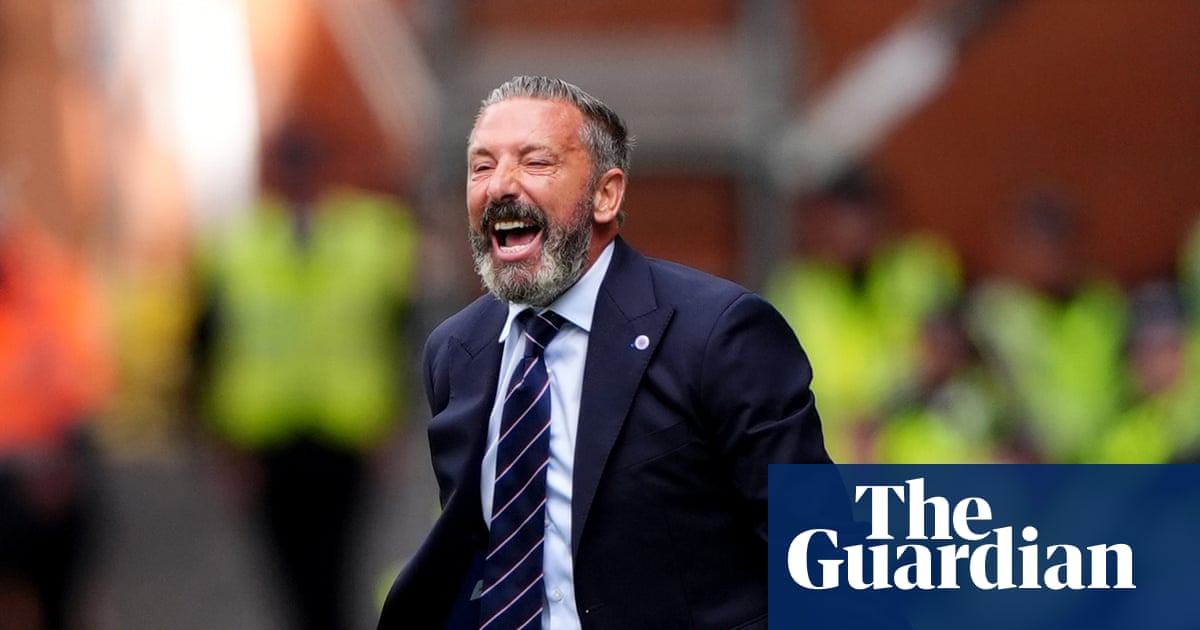
Only residents of cloud cuckoo land can hold the firm belief of Scottish football emerging promptly from a summer of discontent. The onset of a new domestic season, ordinarily a cause for excitement, instead gives reason to ponder the grim realities of what came before.That it is unsurprising there has been no detailed explanation or plan from the Scottish Football Association following a lamentable World Cup does not prevent the scenario from being so deflating. Mike Mulraney, the president, was last seen peeking out from the crowd behind Gianni Infantino and the US president at Trump Tower. Ian Maxwell, the Scottish FA’s chief executive, bemoaned “hysterical commentary” around his country’s World Cup performance during a brief media appearance after Steve Clarke had resigned. These executives had all-but spurted with laughter when it was suggested handing Clarke a four-year contract immediately before Scotland set sail for the United States was perhaps a needless dalliance with risk.Perhaps Mulraney and Maxwell are too engrossed in the sourcing of Clarke’s replacement to speak out on the overall state of the national sport. It is only fair to give them the opportunity to appoint a coach who can oversee much-needed transition in a geriatric Scotland squad. The nation’s leading clubs have been moot on a big picture they wilfully ignore but was exposed at a World Cup. The problem is that lingering and legitimate anger over Scotland’s showing on the biggest stage – despite all rationale behind it – mirrors so much broader sentiment as the Premiership returns. This has scope to be a troublesome, toxic campaign.Celtic’s supporters remain irate at the custodians of their club, whom they perceive as complacent and out of touch. In Derek McInnes, Rangers have a new manager who is deeply unpopular on the other side of the city. Nobody should underestimate the lingering resentment that exists among followers of Hearts over the way the campaign of 2025-26 concluded. The most reprehensible element of that arrived on 11 June, when the Scottish Professional Football League published the outcome of a disciplinary process into the pitch invasion which forced the ending of Celtic’s title-clinching clash against the Edinburgh club.Snuggled in alongside wrist tickles for Hamilton Academical, Inverness and Stenhousemuir was a meagre fine for Celtic and a suspended, paltry ticket reduction. Rangers fans, who need little encouragement to rail against officialdom, were subdued until McInnes was slapped with a touchline ban for comments made against a refereeing decision. Rangers have criticised elements of an independent report into the chaos which followed their March Scottish Cup loss to Celtic. Motherwell are speaking with lawyers due to objection to a Scottish FA fine for a video posted on social media. A 2-0 European qualifying first-leg defeat in Kosovo last week was rightly sufficient to send Hibs fanatics into the internet’s version of orbit. Such results stopped being a shock long ago.Certain clubs do actually have reasons to be cheerful. Celtic’s signing of Kasper Høgh for a club-record fee not only demonstrated the kind of fiscal muscle-flexing that supporters wish happened more often but provided the most intriguing transfer arrival of the close season. Scepticism exists over the ability of players to perform outside the perennially successful environment of Bodø/Glimt. Without such doubts and at a fee which even many Championship clubs would think little of, Høgh would have moved long ago. The 25-year-old, though, has a physical profile and direct style that should succeed in Scotland.Celtic’s challenge is to replace existing first-team performers – Arne Engels and Alistair Johnston the prime examples – should irresistible bids arrive without posting the kind of net profit that makes balance sheets look more important than trophies. Fans have rightly welcomed the Høgh signing but need more.Rangers, in contrast to their oldest foes, have burned through extraordinary amounts of cash in recent years while generally watching others lift trophies. This has fuelled rage in and reputational damage from the stands, which an American ownership has curiously opted not to challenge.In McInnes, Rangers – who kick off the season at Dundee United in Friday’s curtain raiser – have a manager whose knowledge of club and culture looks better placed than most before him in recent years to lay gloves on Celtic. Vanja Dragojevic looks a smart midfield signing from Partizan Belgrade. Rangers need attacking spark yet it should be no surprise that McInnes’s first act was to implement a stronger core. McInnes lacks nothing in motivation or work ethic in the job he has always craved. This version of Rangers should be much improved. Yet on the simple basis of course and distance specialism, Celtic remain the title favourites.Nobody linked to Hearts should have been expected to fully process the circumstances which saw them come within minutes of a first title win in 66 years, only for that dream to be snatched away, by now. McInnes’s departure for Rangers, the completely new style implemented by Wouter Vrancken and a palpable raising of expectations all contribute to a period of upheaval. Hearts’ tilt at glory came earlier than anyone could anticipate. The club remains on the minds of people who previously had no interest in the Scottish game. A comprehensive Champions League qualifying defeat to Sturm Graz showed the scale of work Vrancken has ahead of him. Patience, however, would be wise.Motherwell’s work with and post the management of Jens Berthel Askou proved those below the Premiership’s biggest fish needn’t only cling on for dear life. The football was superb, the attendance figures boosted and a broader market was impressed. Motherwell’s sales of Elijah Just and Elliot Watt for multimillion-pound fees completely justify a club model that thinks outside the box.St Mirren have clear aspirations of introducing more young players and a more alluring brand of football. Kilmarnock displayed that at the end of last season under Neil McCann. Aberdeen will surely be a stronger force this time under Stephen Robinson. Only one artificial pitch remains in Scotland’s top flight, which provides cause for celebration.Football remains a Scottish obsession. It is also undeniably a sick patient. The dawning of a fresh season should appeal only if there is a glimpse of fresh thinking.


Most Popular



.jpg?w=1120&h=630)


Auckland FC name replacement for title-winning coach
12 hours ago