Why Morocco Appears Well-Positioned Ahead of CAS AFCON 2025 Hearing
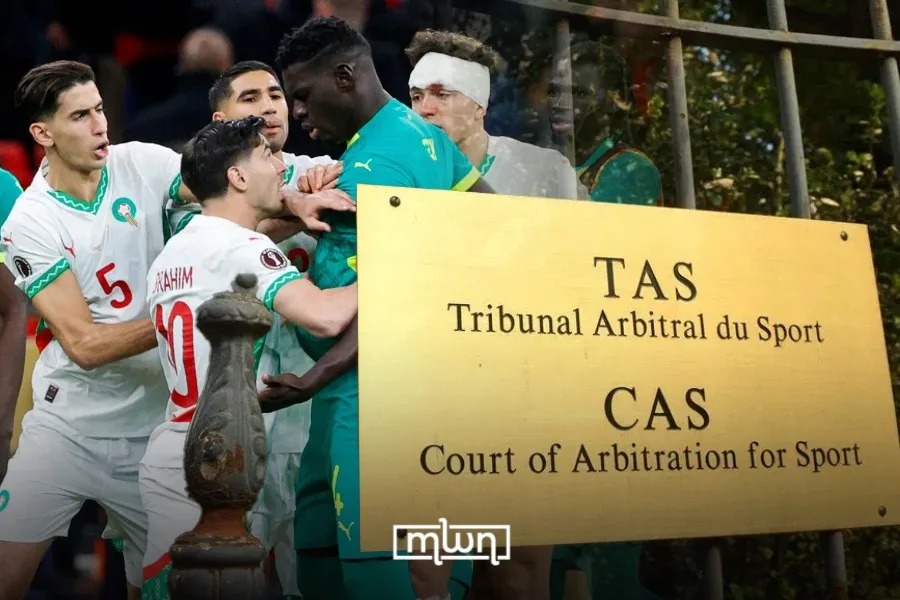
Rabat – The legal dispute over the 2025 Africa Cup of Nations title is entering its decisive phase after the Court of Arbitration for Sport (CAS) confirmed that it will hear Senegal’s appeal against CAF’s decision on October 8 in Lausanne, Switzerland.While the hearing will determine whether Senegal can overturn CAF’s ruling that awarded Morocco a 3-0 victory by forfeit, legal experts believe the Royal Moroccan Football Federation (FRMF) enters the proceedings with a strong position based on the regulations governing international football competitions.CAF’s decision carries significant weightThe case centers on CAF’s decision following the controversial AFCON 2025 final, during which Senegal’s players left the pitch during extra time in protest after Morocco was awarded a penalty.After reviewing the incident, CAF ruled that Senegal had abandoned the match and declared Morocco 3-0 winners by forfeit, officially awarding the Atlas Lions the continental title.CAS is not expected to replay the final or reassess refereeing decisions. Instead, its role is to determine whether CAF correctly applied its disciplinary and competition regulations and whether the governing body respected due process before reaching its decision.This distinction could prove crucial.Overturning a Federation’s decision is never easyCAS operates as an independent arbitration body rather than a sporting authority that substitutes its judgment for that of a federation.In previous football cases, CAS has generally shown deference to disciplinary decisions made by governing bodies unless there is clear evidence of procedural errors, misapplication of regulations, or disproportionate sanctions.For Senegal to succeed, its legal team will likely need to demonstrate that CAF either incorrectly interpreted its own rules or violated fundamental procedural rights during the disciplinary process.That is a considerably higher legal threshold than simply arguing that the circumstances of the match were exceptional.Match abandonment rules’s importanceOne of Morocco’s strongest arguments is expected to revolve around the established principle that teams are responsible for completing a match.International football regulations consistently treat a team’s refusal to continue playing or its withdrawal from the field as a serious disciplinary offense. Such incidents frequently result in forfeits when the interruption is attributable to one team rather than external circumstances.If CAS concludes that Senegal voluntarily abandoned the match despite available procedures for protesting refereeing decisions after the game, CAF’s decision may be viewed as consistent with long-standing football regulations.Senegal faces a difficult legal challengeSenegal’s appeal seeks not only to overturn the forfeit but also to have the Teranga Lions officially recognized as AFCON 2025 champions.That represents an ambitious request.Even if CAS were to identify procedural shortcomings in CAF’s disciplinary process, the court has several possible remedies beyond immediately awarding the title to Senegal. These could include sending the matter back to CAF for reconsideration or modifying aspects of the disciplinary decision, depending on the findings.As a result, obtaining direct recognition as champions could prove legally more difficult than simply challenging the original sanction.CAS has warned against speculationsCAS has emphasized that no verdict will be delivered on the day of the October 8 hearing.The arbitration panel will first hear arguments from CAF, the FRMF, and the Senegalese Football Federation before beginning private deliberations. The final decision could take weeks or even months after the hearing.The court has also urged the public to rely exclusively on official CAS communications, dismissing numerous reports circulating online that claim to know the outcome of the case.Morocco remains in a strong positionAlthough predicting any legal ruling carries uncertainty, Morocco appears to enter the hearing with the advantage of defending an existing CAF decision rather than seeking to overturn one.The burden of proof rests largely with Senegal, which must persuade CAS that CAF committed legal or procedural errors significant enough to justify reversing one of the most consequential decisions in recent African football.Unless compelling new legal arguments emerge during the October proceedings, the current regulatory framework and CAS’s traditional approach to reviewing federation decisions suggest that Morocco’s position remains robust heading into the appeal.




Most Popular