
Brazil fall short of their arrogant fans’ belief they are centre of the football world

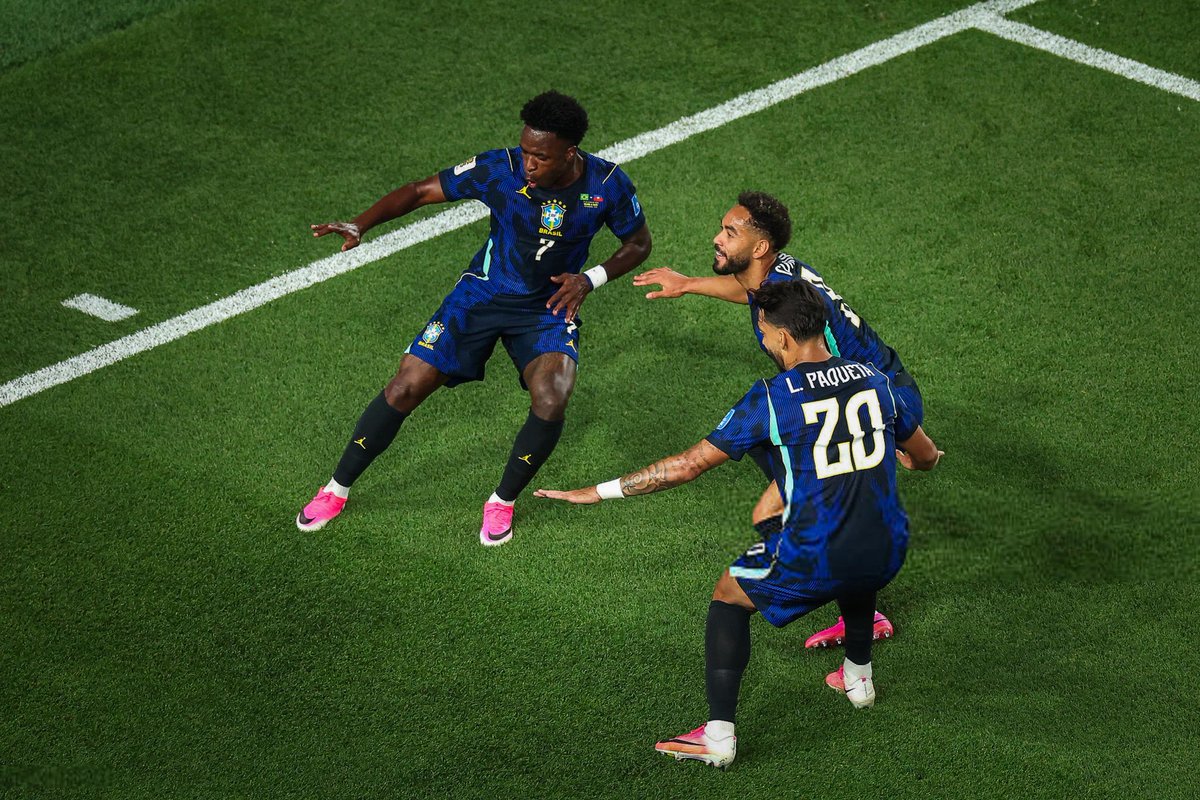
World Cup Group C: Brazil 3 (Matheus Cunha (23′, 36′) Vinícius Júnior (45′+3) Haiti 0If you want to know why Brazil matches are the biggest events of the World Cup group stages, you need to spend some time around their fans. It may be 24 years since Brazil last won the World Cup but these fans still arrogantly believe themselves to be the centre of the international football world. They don’t have the musicality of the Argentines or the chant-repertoire of the Croats, but they are the most bullishly self-confident of all fans, the most bombastically arrogant in victory, the most vicious to their own players in defeat.It’s a tough crowd, in other words, and trying to meet its near-impossible demands with the patchy Brazilian squads of recent years is a task that has chewed up many good football men.Big Phil Scolari, the coach of the 2002 winners, was brought back as a talisman for the home World Cup in 2014 only to be engulfed in the flames of the Mineirazo 1-7 defeat to Germany.The gentlemanly Tite, a sort of therapist for the nation, was popular enough to get away with his first World Cup elimination in 2018 but could not survive the 2022 quarter-final defeat on penalties to Croatia.After cycling through three more coaches in two years, in 2025 Brazil finally turned to its first foreign manager: Carlo Ancelotti. They hoped the five-time Champions League winner would have the stature and experience to rise above the chaos and find the path back to glory.But Ancelotti’s first match at the World Cup was a slap in the face to all of Brazil. They were torn to shreds by Morocco in the first 30 minutes and in the end lucky to escape with a 1-1 draw.The captain Casemiro was substituted at half-time – not a good look – and his replacement, Fabinho, fared little better in the second half. Both players may be past their peak years, but Brazil’s problem was structural.The centre-forward, Igor Thiago of Brentford, had a great first two-thirds of the Premier League season before the goals dried up in the last few weeks. His record as second top-scorer in the league after Erling Haaland got him a start in Brazil’s opener.It’s always difficult for a target-man centre-forward to play with two inverted wingers like Vini Jr and Raphinha, who would rather cut in and shoot than cross the ball. The big man failed to link with his team-mates and drifted around at the top of the team, an irrelevance to the game.It was not much different from playing with ten men and the knock-on effect was that Brazil were getting overrun in midfield.Clearly something had to be done – but what? Neymar, in the squad but still struggling with the injury Ancelotti ignored to include him, could not help. Back in Brazil many demanded the inclusion of Endrick, deemed the closest thing the current generation has to a Neymar-level talent.But Ancelotti was never likely to bet the farm on a 19-year-old. He has a tried-and-tested response to this kind of situation: put an extra man in midfield. More than any coach at the top level, Ancelotti likes a diamond midfield. Nobody else seems to fancy the formation these days, but Ancelotti’s opponents hate this one weird trick.The player who came in for Thiago was not Endrick, but Matheus Cunha of Manchester United. Cunha has suffered from being a difficult player to categorise, but he has energy, good all-round skills, and is capable of venomous finishing. He played at the top of the diamond, behind the strikers Vini Jr and Raphinha. Lucas Paquetá and Bruno Guimarães were in the shuttling roles on either side and Casemiro returned in the starting XI as the anchor man.The high-energy atmosphere at the black, steep, jagged Philadelphia Eagles stadium, with juddering beats blaring and the sky swarming with helicopters and drones, was a suitably ‘metal’ backdrop for Brazil to do their thing.They showed their intent early when a gorgeous chip from Bruno Guimarães found Raphinha stealing in behind and the Barcelona forward finished confidently. The Brazilian fans in the overflow press section only noticed that the goal had been called offside when the Haitian keeper Johny Placide booted the free-kick upfield. They had been too busy filming themselves celebrating to notice the on-field celebrations being cut short.We were to see a lot of those chipped passes by Brazil into the space behind Haiti’s defence, but the breakthrough, on 24, came from a different route. Vinícius Júnior’s shot from the edge of the area was parried by Placide but Cunha was on the move before any of the defenders and reached the ball first to force it over the line.Thirteen minutes later Cunha ensured that he would be starting the rest of Brazil’s games in this World Cup. Haiti retreated 50 yards under pressure with a string of five backwards passes in a row, and when Jean-Kevin Duverne finally grasped the nettle and passed the ball into Josué Casimir in midfield, we all understood why Haiti had looked so reluctant to do just that.Paquetá stepped in and easily dispossessed Casimir, in the process setting Vini Jr free on a run into the Haiti half. As the defenders retreated he delayed a fraction of a second and slipped a perfect through ball to Cunha, powering towards the left side of the Haiti box. The angle left him with a reasonably difficult chance that he made look easy, smashing a first time left-footer with total conviction high inside Placide’s near post.The chips over the top finally paid off with goal number three in first-half injury time. Lucas Paquetá let the ball run past him to beat his marker and lofted a beautiful 30-yard pass that took five Haitians out of the game and left Vini Jr one-on-one with the keeper. He tucked it underneath Placide for his second goal in two games.But Ancelotti by then would have been more concerned with the welfare of Raphinha, who had been forced off with an injury five minutes earlier, to be replaced by the 19-year old Bournemouth winger Rayan. Initial reports suggested it was a recurrence of the hamstring problem that hampered him towards the end of the season with Barcelona, in which case it seems unlikely he will play again in this World Cup. A major loss for Brazil.Victory was already assured at half-time, but that didn’t mean the second half was an exercise in energy conservation. First place in Group C looks likely to be decided by goal difference, but while Morocco’s last game will be against all-but-eliminated Haiti, Brazil face a Scotland side who still have everything to play for.This was an opportunity to run up the score, and it was one in the end that Brazil failed to take. Endrick replaced Cunha on 64 to a huge reception from the crowd, but the one time he did get beyond the back line to finish through the keeper’s legs, he was offside.The two best chances fell to the two full-backs, Douglas Santos and Danilo, but Santos blazed over from the kind of position where Vini Jr or Cunha would have scored while Danilo bundled wide of the post from two yards in injury time. Brazil will need a few more goals against Scotland in Miami to be sure of winning this group.


Most Popular




Turkey v Paraguay: World Cup 2026 - live
6 hours ago
