Wimbledon 2026: Arthur Fery's journey to Alexander Zverev semi-final on Centre Court
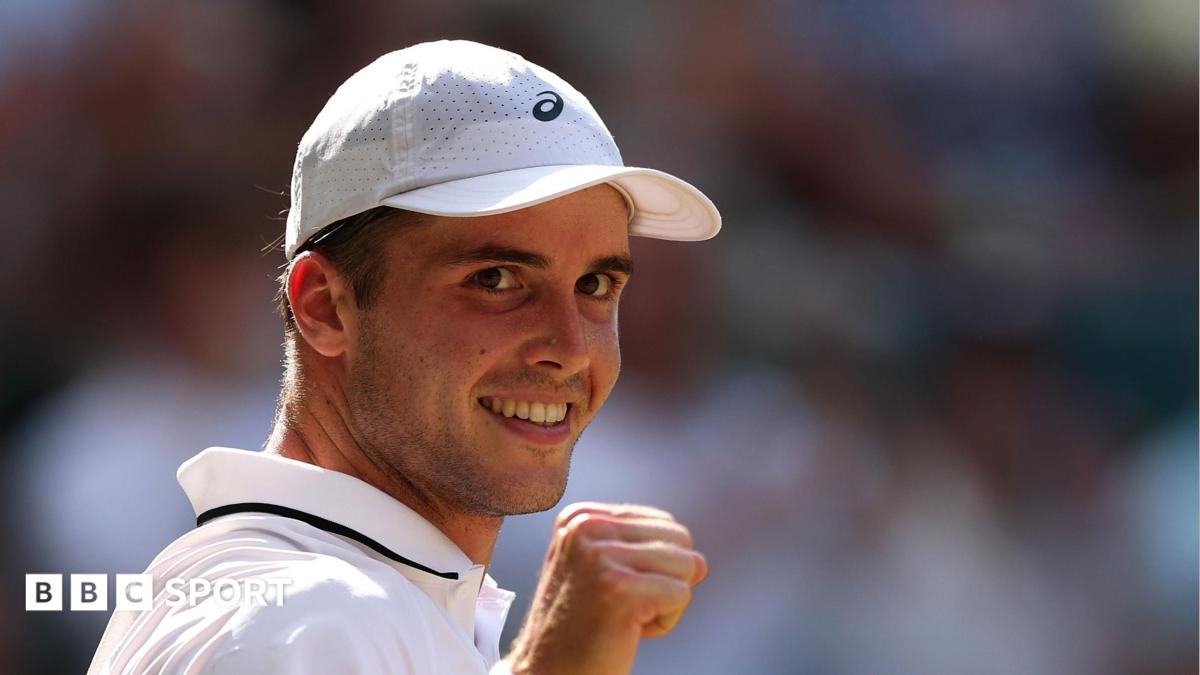
Arthur Fery's journey has come almost full circle.The Wimbledon semi-finalist first stepped onto a court aged four at the Westside Tennis Club, a little over a mile away from the All England Club.Almost 20 years later, Britain's newest breakout star has achieved the greatest results of his career on the courts he dreamed of playing on as a child.The 23-year-old wildcard grew up just a short walk from Centre Court, and he will return there on Friday at 13:30 BST to continue his fairytale run against second seed Alexander Zverev in the last four.Playing for a place in the Wimbledon final is uncharted territory for the world number 114 - and his story goes far beyond SW19.While the new British number one is not representing the country of his birth, there is no disputing where his talent was honed.Fery was born in Sevres, a chic neighbourhood just outside Paris, but the family moved to London before his first birthday.He comes from strong sporting stock and credits his French parents for helping shape his career.The tennis ability comes from mother Olivia, who played doubles at the 1991 French Open and competed in the Fed Cup.Father Loic is a financier by trade but he understands elite sport and the pressures felt by top-level athletes, having owned French Ligue 1 football club Lorient."They're both extremely supportive with my career, not only now but over the past 10 to 11 years I've been playing sport," Fery told BBC Sport earlier this year."It is important to recognise their help, not only now I'm having success, but also in the bad times."Fery grew up in Wimbledon and played tennis at the nearby Westside club, where coach Alison Taylor was a family friend.Taylor, who is married to three-time Wimbledon semi-finalist Roger, gave the young Fery his first tennis lesson."Arthur was incredibly athletic and gifted," she told BBC Radio 5 Live."His footwork was exceptional. He could retrieve any ball and was very balanced."He had amazing touch, he always like to do drop shots and rush the net."You could see there was something special there."Those skills have been the cornerstone of Fery's run to the Wimbledon semi-finals.Fery still relies on his movement to defend and then surge forward when he transitions to attack.It is also how 5ft 9in Fery learned to punch above his weight.By the age of 10, Fery's technical ability had already marked him as one of the most talented youngsters in the country.He caught the eye of Craig Veal, a coach at the Sutton Tennis Academy, and began working with him alongside French former ATP player Benoit Foucher.The pair decided he would improve more playing against adults in the UK rather than travelling internationally to compete against his peers."[We decided to] let him develop his game and his passion for it, rather than putting a load of pressure on him to get an international ranking," Veal told The i Paper., external"When he was 16, he then got his junior ranking up very, very fast compared to a lot of his peers, because he was ready to play."Once Fery did start playing internationally, he won World Tennis Junior singles and doubles titles, and reached 12 in the world rankings.At the Slams, he never went past the third round in the boys' singles, but reached the semi-finals in the Australian Open and Wimbledon doubles.A smooth transition to the professional ranks was not guaranteed - so he had an alternative plan.Demonstrating his ability at the highest level has taken time - and not necessarily because of Fery's own doing.Fery has struggled with bone bruising in his arm - a similar to the issue that has thwarted fellow Briton Jack Draper over the past year - and it led to "dark moments" for him.The soreness has reoccurred in recent times, most recently after he reached the second round at this year's Australian Open.Fery pledged to reinvest his £115,000 Melbourne winnings into his career and he has brought in a full-time physio and a biomechanics expert to change his serve."The serve is helping cause less force through the bones and it's clearly working because he is not in pain anymore," said Fery's coach Jeroen Benard."We have only been together a year but it has been a long journey already because of the injury."I know how hard he works and everything coming together now, in his backyard at Wimbledon, is a dream."




Most Popular