
Are Chelsea-Strasbourg transfer deals bad for football?
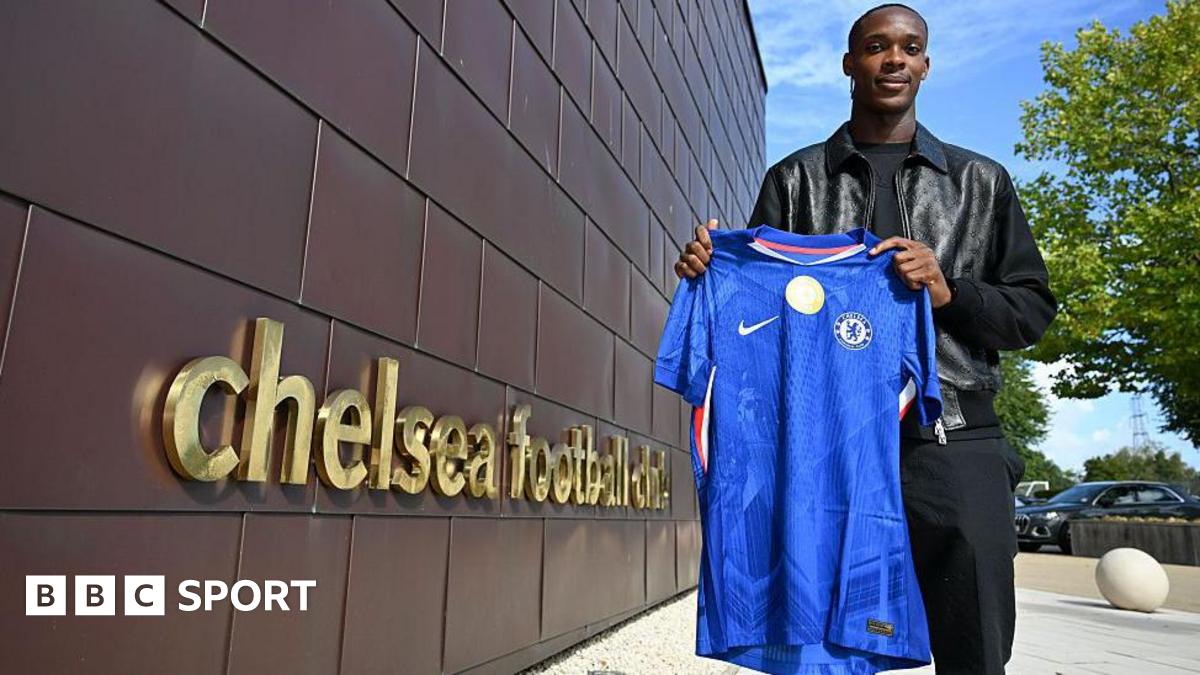
When Chelsea's David Datro Fofana completed a deadline-day loan move to Strasbourg on Monday, he became the 12th transfer between the clubs this season.The activity between the BlueCo partners has started to raise eyebrows.Rather than simple loan arrangements like that of Fofana, some players have moved back and forth for fees.Chelsea plucked head coach Liam Rosenior away as well, much to the annoyance of Strasbourg.There is no suggestion there is anything untoward, and the deals have all been carried out within the rules.But could such a high number of transfers between two teams within multi-club ownership (MCO) be a trigger for Fifa or Uefa?The game's governing bodies are keeping a close eye on the situation.So far action has been limited to clubs being removed from competitions where there might be a conflict of interest.Last year, Fifa disqualified Leon from the Club World Cup, and Uefa demoted Crystal Palace from the Europa League.Chelsea's transfer business has been the catalyst for change in Fifa's transfer regulations once before. Could it be again?Chelsea and Strasbourg came together under Todd Boehly and Clearlake Capital's BlueCo group in 2023.Across the first two years Strasbourg got the best of the deal.Six players left Chelsea for the French club, five on loan and one permanently.Strasbourg were able to spend money they could only have dreamed about.In the three years before BlueCo, Strasbourg's total transfer fees paid per season were £6.1m, £3.9m and £9.5m.In the following three seasons Strasbourg spent £52.6m, £53.6m and £96.5m. They were the biggest-spending club in France last summer, outgunning even Paris St-Germain (£89.2m).Those additional resources helped Strasbourg challenge for a place in the Champions League last season.But last summer the way the two clubs did business began to change. The pendulum would swing towards the dominant MCO partner in Chelsea.Take central defender Mamadou Sarr, who in June joined Chelsea from Strasbourg on a permanent deal.The 20-year-old made only one appearance for Chelsea as a substitute at the Fifa Club World Cup.In August he went back to Strasbourg on loan. On Monday he was recalled by Chelsea.BlueCo would argue this is a key part of player development - that Sarr would get regular football at Strasbourg and return to Stamford Bridge a better player.Then there is the case of Ishe Samuels-Smith.The left-back moved from Chelsea to Strasbourg in July. He was then re-signed by Chelsea in September - and immediately loaned to Swansea City.In the world of multi-club ownership there is logic to it.With Ben Chilwell not part of Enzo Maresca's plans the full-back was sent to Strasbourg on a free transfer. The Ligue 1 club had also resolved a contract dispute with another defender, Ismael Doukoure.It left Samuels-Smith as a spare part in Alsace.Rather than leave the 19-year-old struggling for first-team football, Chelsea effectively refunded the £6.5m transfer fee and sent him to the Championship club.Club captain Emmanuel Emegha is already confirmed to be the next on the conveyor belt to Stamford Bridge.The 20-year-old striker, one of BlueCo's first signings at Strasbourg, will join Chelsea at the end of the season.The club's ultras - long-time critics of the association with BlueCo - demanded he hand back the captain's armband.Outsiders see players (and indeed the head coach) jumping around from club to club at the behest of Chelsea.Take Aaron Anselmino. The centre-back spent the first half of the season on loan at Borussia Dortmund from Chelsea.Yet when Chelsea wanted Sarr in their first team, Anselmino was recalled from the Bundesliga club and sent to fill the hole in the Strasbourg squad.Anselmino was reportedly in tears when he left Dortmund.Chelsea were shifting chess pieces to suit their own strategy.Yet recalling loan players from one club to send them to another should not be seen as special to a multi-club ownership structure.For instance, last month Manchester United brought Harry Amass back from a loan spell at Sheffield Wednesday and sent him to Norwich City instead.Chelsea's transfer business has attracted the attention of Fifa before, leading to a reshaping of the regulations in 2022.Along with Juventus and Atalanta, Chelsea had become the poster boys of player hoarding - signing a high number of players and loaning them out.Former Chelsea technical director Michael Emenalo had drawn up the concept of the so-called loan army. Up to 35 players were sent out on loan across Europe at any one time.Fifa stepped in to "develop young players, promote competitive balance and prevent hoarding", and enforced a limit of six players aged over 21 who could be loaned out.Most importantly for MCOs, Fifa said a maximum of three players could be loaned to one club.Chelsea would point out they have simply been fully utilising this option.BBC Sport understands that Fifa does not have any appetite to look again at its transfer regulations.Indeed, football finance expert Kieran Maguire told BBC Sport that Fifa would be on "a fairly sticky wicket" if it was seen to be treating clubs unequally.Maguire added MCOs would simply find a way of getting around it, perhaps by changing the structure of shareholdings."They will find another loophole," Maguire said. "It is a situation that is easy to manipulate."There would be other concerns, too, with half the clubs across the top five European leagues in some kind of MCO."So many clubs are in MCOs that to introduce a set of rules would impinge upon them," Maguire added."Chelsea are far from the worst offenders. Take a look at the number of transactions between Watford and Udinese."They would say that they're not an MCO, they just happen to be owned by different parts of the family, the Pozzo family."Watford and Udinese are just one example of clubs outside of an MCO engaging in multiple transfers.Nottingham Forest owner Evangelos Marinakis signed four players from Botafogo in the summer. Danilo then went in the opposite direction with one of the signings, Cuiabano, immediately going back on loan.John Textor, the majority owner of Botafogo, said Marinakis "has effectively become that partner" when discussing transfer agreements across leagues.Uefa has been talking critically about MCOs for some time.It its European Club Footballing Landscape report in 2023 it said that the "growth in multi-club investment has the potential to distort transfer activity".The report added that it has led to transfers at "prices that suit investors, rather than at fair values, to the detriment of trainer clubs".The Premier League says it has checks and balances in place to make sure all transfer deals are completed to fair market value - either loan or permanent.The only time related-party loan deals came up at a Premier League shareholders' meeting was in 2023.Clubs were concerned Newcastle could use their Saudi Arabian links to bring in players on loan at minimal cost.A vote to outlaw such incoming loans just for the 2024 winter transfer window was narrowly defeated. MCO-style transfer deals have not been discussed since.MCOs have grown further since the Uefa report. Indeed, it was later that year that BlueCo bought Strasbourg.Yet there is little Uefa can actually do, other than introduce tougher regulations on access to its own competitions.When Manchester United and Nice, and Manchester City and Girona, were admitted to the same European competition in 2024-25, transfers between the clubs were banned for three windows.Last year Uefa was more strict by bringing forward the deadline for MCO compliance to 1 March. That caught out Palace, but has yet to be tested with one of the bigger clubs like Chelsea, Manchester United or Manchester City.Chelsea are confident that they have taken steps to ensure that both BlueCo clubs would be admitted to the same Uefa competition.Uefa is expected to try to go further, concerned that MCOs present "a material threat to the integrity of European club competitions".Chelsea would argue it is unfair to single them out purely because they are part of an MCO, and that they play by the rules.In any case, MCO transfer deals are commonplace. They would say they behave in a similar way to the Red Bull Group, who sold Nicolas Seiwald and Benjamin Sesko from Red Bull Salzburg to RB Leipzig in 2023.Deals are planned according to strategic needs - good for players and probably good for both clubs.A player might return to Stamford Bridge ready for first-team football, as was the case with winger Andrey Santos and now Sarr.Or performances at Strasbourg can see a player's value increase and improve their career chances.Goalkeeper Djordje Petrovic was sold to Bournemouth for £25m last summer - double the fee paid to New England Revolution in 2023 and it made him a Premier League number one.Strasbourg have benefitted from Chelsea's scouting network and resources, too.Take forward Joaquin Panichelli, signed for £14m from Alaves last summer.The 23-year-old, who has scored 11 Ligue 1 goals this season, earned his first senior cap for Argentina in November.Panichelli was reportedly the subject of transfer enquiries at the end of the window, with Strasbourg quoting a price of £43m.The association with BlueCo has enabled Strasbourg to not only spend big on players, but also reject offers.Other clubs in France may argue it is too beneficial for Strasbourg with the resources they have access to.The problem for Strasbourg will always be when Chelsea come calling.Strasbourg can benefit from the loan system and finances but if Chelsea want the next Sarr, Rosenior or Emegha there is nothing anyone can do about it. That is the compromise.Football fans may not like it, but it has been going on for years in many different forms.Chelsea and BlueCo are just doing it their own way.




Most Popular






Winter Olympics begin quietly with curling
11 hours ago