Is Spain more deserving than Morocco to host the 2030 World Cup final? Facts prove otherwise
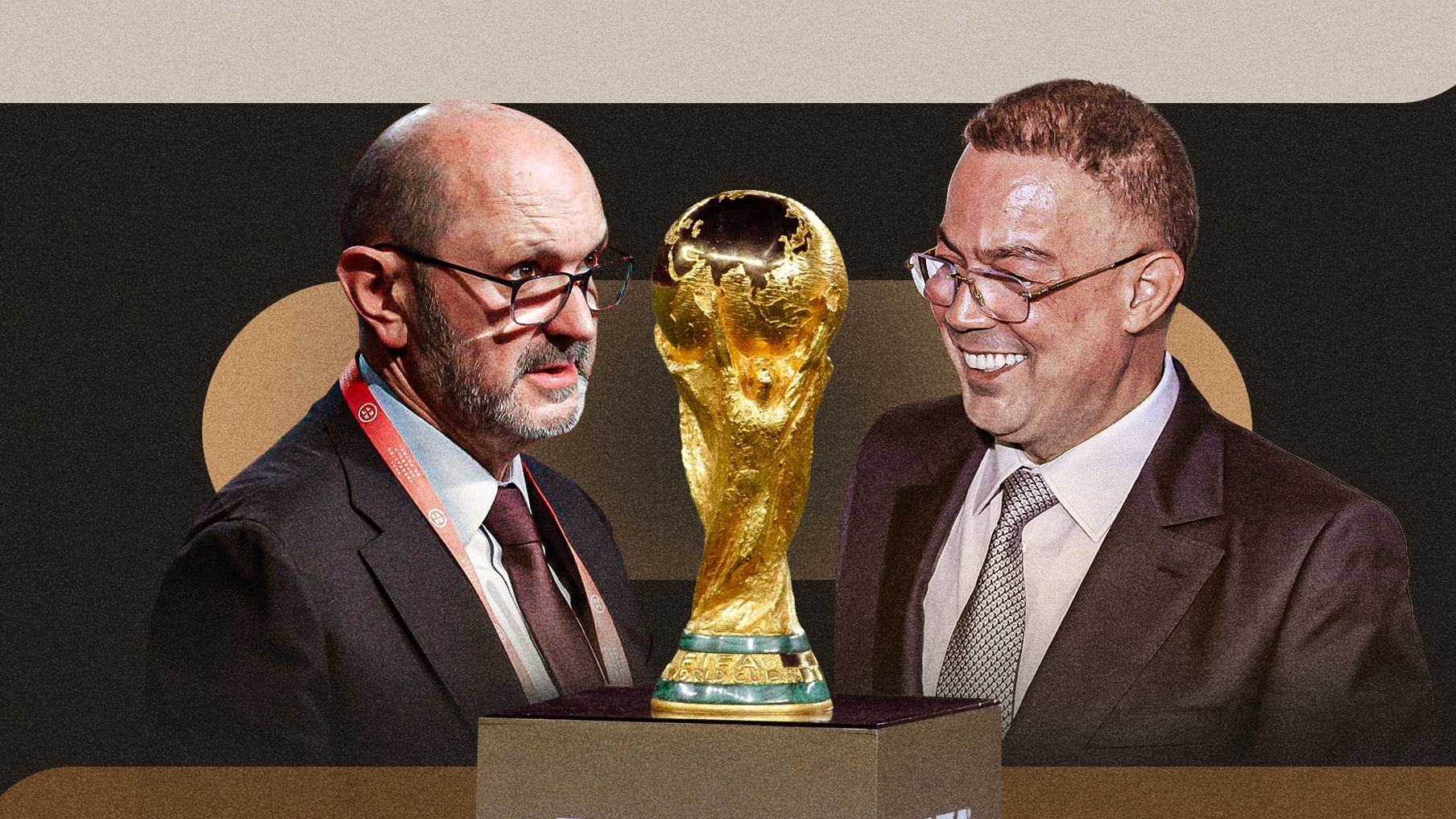
FIFA has handed the 2030 World Cup to a three-way bid comprising Spain, Portugal and Morocco, with three symbolic opening matches to be staged in Argentina, Uruguay and Paraguay, marking the 100th anniversary of the first edition of the tournament.The venue for the final remains the most sensitive question. It has turned into a muted rivalry between Madrid and Rabat.Rafael Louzán, president of the Royal Spanish Football Federation, has affirmed more than once that Spain will host the final. He considers it "impossible" to explain not awarding the match to a country he sees as the most organisationally capable, and he expects the final to land at the Santiago Bernabéu or the Camp Nou once they are upgraded.Fouzi Lekjaa, president of the Royal Moroccan Federation, wants something else entirely. He has declared a clear desire for the final to be held at the new Casablanca stadium, whose capacity is expected to reach around 115,000 spectators. The message is blunt: Morocco will not accept the role of secondary partner in a bid as historic as this.As things stand, FIFA has yet to name the host city for the final. The governing body has confirmed only that the decision usually gets settled roughly two years before the tournament kicks off, which leaves the door open for the discussion to shift in light of future developments.Vinicius Junior has become more than a player griping about jeers. He is now the face of an open war on racism in Spanish stadiums, a fight that began with the notorious Mestalla incident and ended in the first court ruling in Spanish football history to jail fans over racist abuse.Abuse has followed the Brazilian across more than one ground. It boiled over into emotional remarks in which he admitted the constant, unpunished insults had drained his desire to play football at all.Then came the interview that lit the fuse. Speaking on international television, Vinicius said Spain should lose the right to host the 2030 World Cup unless it made real progress against racism. No player, he argued, can feel safe on a pitch in a country where the colour of his skin invites racist abuse.Sections of the Spanish media and a host of sporting figures rounded on him, accusing him of tarnishing the image of an entire country. Yet what unfolded on the pitch afterwards lent his words fresh weight, proving they were far more than a fleeting outburst.The biggest flashpoint in recent days came from a friendly match that was supposed to be no more than a technical test before the World Cup: Spain against Egypt at the RCDE Stadium, home of Espanyol in Barcelona.The opening minutes had barely passed when a chant rang out from a section of the stands: "Whoever doesn't jump is a Muslim." It twisted a slogan well known in Spanish stadiums, but here it targeted the religion of a rival country, the majority of its players and fans, and every Muslim watching on screen.This was no passing incident. The chants returned in the first half and again in later periods. Organisers were forced to broadcast repeated messages over the internal radio and the stadium screens, warning against racist expressions and recalling the laws that criminalise racist behaviour inside sports facilities. A section of the crowd responded with boos.Catalan police moved immediately, opening an investigation into "Islamophobic and xenophobic chants". The Spanish Football Federation officially condemned what had happened, insisting hatred and racism have no place in stadiums.The scene hit Lamine Yamal hard. The Barcelona and Spain star, of Moroccan and Equatorial Guinean descent and a follower of Islam, was psychologically affected by what happened, according to reports, and headed straight for the dressing room after his involvement ended without completing the lap of appreciation to the fans.Taking to his social media accounts, Yamal delivered a blunt message. He branded the chants "ignorant and racist" and "disrespectful and unacceptable", even though they were not aimed at him personally. He is "Muslim, praise be to God", he affirmed, adding that mocking religion reflects ignorance and hate speech that cannot be tolerated.The Egyptian Football Association condemned the chants from their side, calling them unacceptable behaviour from a minority that does not represent the Spanish people. At the same time, they stressed their complete rejection of any insult to the national anthem or any offence to the Islamic religion.Mounting international pressure then prompted FIFA to open disciplinary proceedings against the Spanish Football Association over those chants. It is a step that confirms the matter is no longer merely an internal media controversy. This is now an official file on the table of the highest football authority in the world.Months on from the incident during Spain's match with Egypt, Lamine Yamal has spoken out again and dragged the issue back into the spotlight. Days ago he revealed he had faced racism "a thousand times" in his career. It doesn't always come as a direct insult, he explained, but through actions and comments whose authors may not even realise carry a racist character.What gives this testimony its weight is the man behind it. Yamal isn't a foreign player passing through the Spanish league. He's one of the biggest stars of the Spain national team itself, a Muslim player of Moroccan origin. That takes the debate about racism in Spanish stadiums beyond the Vinícius case or any isolated incident. This is a personal experience that one of the most prominent faces of Spanish football says he has lived through time and again.The controversy surrounding the Spain versus Egypt match had barely subsided before fresh clips surfaced on social media. They showed a group of Real Madrid fans chanting almost exactly the same thing near the Santiago Bernabeu before the team's Champions League quarter-final against Bayern Munich: "Whoever doesn't jump is a Muslim".This time no national team match against a Muslim country lay behind it. Instead, the chant reflected a behaviour that has become a recurring form of "folklore" among a section of the fans, who show no awareness of how clearly it holds in contempt the religion of hundreds of millions around the world, including players in their own teams.Around the same time, several reports flagged the conduct of Atletico Madrid fans towards Lamine Yamal during the first leg of the Champions League quarter-final. Observers noted chants carrying racist and sectarian connotations, among them "Go back to Morocco" and "Go and play for Morocco", continuing the politicisation of the player's origins and religious background in the stands.Such incidents hardened the conviction among many supporters that the fight waged by Vinicius and Yamal against racism is no individual exception. It expresses a deeper cultural problem, one demanding a fundamental solution rather than seasonal statements of condemnation.It didn't end with the Spain v Egypt match or the chants aimed at Yamal in club games. The Santiago Bernabeu returned to the spotlight in September 2026 after video clips spread showing some Real Madrid fans repeating racist, antisemitic and Islamophobic chants near the stadium, shortly before the Champions League clash with Inter Milan.Fresh criticism followed, all the sharper because the Bernabeu is one of the leading candidates to host the 2030 World Cup final.That is where the sensitivity deepens. The problem is no longer confined to stands far from the stage of a potential final. It has reached the doorstep of the stadium Spain wants to host the biggest match of the World Cup.Another Moroccan voice rises from the heart of the Spanish league. Omar El Hilali, the Espanyol and Morocco national team full-back, has confronted multiple faces of racism himself.The referee halted the match for a spell after El Hilali claimed Elche striker Rafa Mir had racially insulted him, with a demeaning allusion to his immigrant origins. That triggered La Liga's anti-racism protocol and an investigation into the incident.Speaking to the press afterwards, El Hilali flatly rejected the anti-Muslim chants heard in Spanish stadiums. He cited what happened in the match between Spain and Egypt. Mocking any religion is unacceptable, he argued, just as no Christian would accept their faith being ridiculed in the stands.He also invoked the name of Lamine Yamal, recalling that one of Spain's best current players is a Muslim of Moroccan origin who chose to represent La Roja. The least he deserves is respect, not chants that ridicule his religion.Put together, these testimonies come from players of very different backgrounds: a dark-skinned Brazilian, a young striker of Moroccan origin and a Moroccan defender playing in Catalonia. They paint a picture that cannot easily be denied. Part of the stands in Spanish football have a recurring problem with racism and hate speech, and it inevitably reflects on the image of a country preparing to host the biggest football event on the planet.Faced with this criticism, prominent Spanish figures have been keen to stress that the country is not racist, and that what is happening is nothing more than the behaviour of a minority that does not represent society as a whole.Dani Carvajal and others have defended Spain's image. They point to the advanced anti-racism protocols in La Liga, and note that sporting and judicial institutions have already begun issuing rulings against offenders, as happened in the Vinicius case at the Mestalla.Yet the incidents keep coming. They have spread from club grounds to national team matches, triggering police investigations and prompting FIFA to open disciplinary proceedings against the Spanish Federation over anti-Muslim chants. All of that makes it difficult to reduce the matter simply to the image of "a few undisciplined individuals".The problem here is not so much whether Spain is a racist country at its core. It is about the message these accumulating incidents send to players and fans from different backgrounds, and to the partner nations in the World Cup bid itself, chief among them Morocco.Morocco, by contrast, seized the 2025 Africa Cup of Nations to prove exactly what it can do. The hosts deployed nine stunning stadiums across six main cities, some renovated, others built from scratch for the tournament, all focused on modern standards of pitch, capacity and access.Take the Prince Moulay Abdellah Stadium in Rabat, which staged the opening match and the final. It looked every inch the modern, football-dedicated arena, packed with a fierce atmosphere and free of any complaints of systematic racism in the stands.Back in the spotlight too came the Mohammed V Stadium in Casablanca and other historic grounds, redeveloped to raise capacity and upgrade facilities as part of wider preparations for the joint 2030 World Cup bid.The refereeing chaos and the controversy that swept through the final did their worst. The president of the Spanish federation even exploited it to launch a veiled attack on the Moroccan organisation. Yet the infrastructure and facilities drew praise from observer after observer, marking an important step towards the Kingdom's readiness to stage the biggest World Cup matches.One indicator matters above all. Morocco presents itself, in official and popular discourse alike, as a religiously and culturally diverse country hosting the World Cup for the first time, determined to use the event to strengthen its image of coexistence and openness. That message chimes loudly with FIFA's own declarations of zero tolerance for racism and hate speech.Here the central question returns: does Spain have a greater right than Morocco to host the final of the 2030 World Cup?Spain boast a long record of hosting major sporting events, with strong infrastructure in Madrid, Barcelona, Seville and beyond. No one doubts that. But the case for staging a final rests on more than stadiums and logistics. It hinges on the image and the message world football wants to send at a moment when billions gather in front of their screens.Consider the run of racist incidents. Vinicius targeted at more than one stadium. Anti-Muslim chants during Spain's match against Egypt, then the same slogan echoing near the Santiago Bernabeu. Racist abuse aimed at Lamine Yamal, among others. Each of these weakens the argument that Spain is fully ready, on moral grounds, to host the most important match in the history of the centenary tournament.Morocco, by contrast, offers organisational readiness alongside a humanitarian message. A Muslim-majority country hosting its first final would carry a powerful symbol: the recognition of religious and civilisational diversity within world football.The world keeps pushing one message: football belongs to everyone. So the idea of staging the final in a country where anti-black and anti-Muslim chants keep recurring stands in glaring contradiction with the spirit of the World Cup.A match meant to unite the peoples of the earth under one banner cannot, at the same time, play out to stands chanting against the colour of a player's skin or the religion of an entire crowd.Recent events lend fresh credibility to Vinicius Junior's remarks, which struck many as exaggerated at the time. He was not talking about one match. He was describing a general climate, one that demands long-term institutional work, tougher legislation and clear political and sporting will before anyone can call the country ready to host the historic final.Spain is still struggling to clear its stands of hate speech. Morocco has spent recent years building an ambitious organisational image and a message of openness and diversity. Weigh the two, and the objective answer leans towards handing the honour of the 2030 World Cup final to the party more in tune with football's self-evident slogan: there is no place for racism on the pitches.



Most Popular