Councils reassess synthetic cricket wicket safety at community football ovals
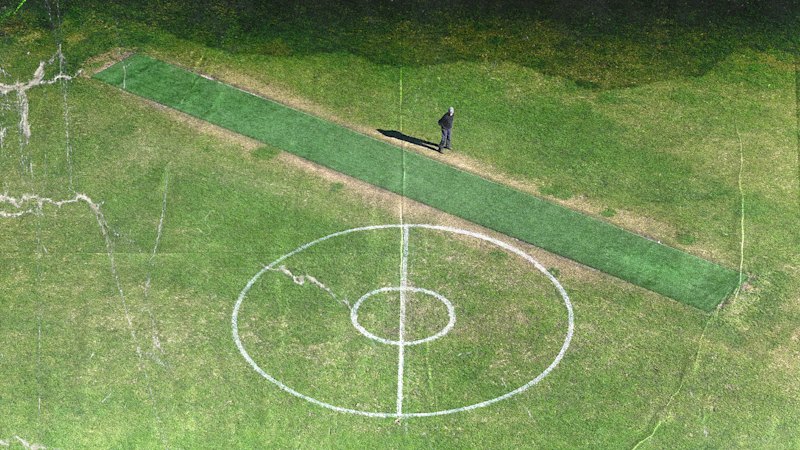
AdvertisementHidden dangers: Councils assess concrete cricket pitches after player’s deathJuly 13, 2026 — 7:51pmYou have reached your maximum number of saved items.Remove items from your saved list to add more.Cricket pitches across the state are being subjected to extra testing and safety measures ahead of footy games following the tragic death of local player Nathan Fitzgerald.A turf expert has also called on councils to conduct more regular assessments of playing surfaces and consider employing qualified groundskeepers to help mitigate the risks of mixed-use community facilities.A survey of 19 metropolitan Melbourne councils, conducted by this masthead, found that 59 per cent of grounds used for Australian rules football had a synthetic-covered concrete wicket, compared with 11 per cent that had soil-covered wickets. Twenty-four per cent of grounds had only a turf wicket, while 6 per cent had no wicket.Most synthetic covers contain an infill of sand and rubber crumb, and a shock pad. They are generally cheaper and quicker than soil to lay and remove between seasons.AdvertisementWhile the exact circumstances that led to Fitzgerald’s death are under coronial investigation, the tragedy has unearthed long-standing concerns among winter sports clubs about the dangers of covered concrete wickets like the one the 27-year-old teacher fell on after accidentally knocking heads with a teammate.Mornington Peninsula Shire said it had ordered additional rubber crumb for all senior grounds following a review of its reserves with synthetic cricket wicket covers. It said it was waiting for additional product to finish the remaining grounds.A further eight Melbourne councils confirmed they were also proactively reassessing their pitches.Hume Council said it had tested the hardness of its 19 covered concrete wickets. While the nine soil-covered wickets were well below the AFL’s recommended levels, all 10 synthetic covers exceeded it. Grounds with readings above this limit are considered unacceptably hard with a significantly increased risk of player injury.Advertisement“Council trialled additional rubber granules to soften the synthetic covers, but the treatment was unsuccessful,” councillor Naim Kurt wrote in a statement posted to social media late last week. “For games this weekend, the synthetic covers have been removed and replaced with soil at the four wickets located within football playing surfaces.”Reviews are also under way interstate. The City of Wollongong has committed to assess its shared sports grounds following concerns raised by local clubs responding to events in Victoria.Lalor Football Netball Club, whose home ground was the site of Fitzgerald’s fatal accident on July 4, told this masthead that previously, there had been issues with people pulling the cover off in the winter to play cricket – which can cause covers to lose some of their rubber cushioning – but it was not aware of this having happened in a while.Rubber crumb has been in high demand since the tragedy. A representative at one metropolitan council, who did not wish to be named because he was not an approved spokesperson, said a number of large orders had left some councils struggling to secure product.AdvertisementAustralian Sports Turf Managers Association chief executive Mark Unwin said there was no definitive research to prove which cover-up approach – synthetic or soil – was safer. He said the latter carried its own risks, including pitch unevenness, which was associated with more knee injuries.“As participation has grown and green space has become more constrained, facilities have become increasingly multipurpose, placing greater pressure on existing playing surfaces and increasing the need for regular management, maintenance and ongoing investment,” he said.“There is no single solution that suits every ground. I would suggest that continued focus should be on regular assessments of playing surfaces and employing qualified sports turf managers to manage these surfaces. Investment in ongoing maintenance and planned asset renewal is also important to player and facility safety.”Gecko Surfacing Solutions – whose turf covers are widely used in Victoria – said its product met AFL safety guidelines, but that it was up to councils to properly maintain them, including “topping up” the rubber crumb every couple of months.AdvertisementFormer umpire Rodney Anderson said he was disappointed that it had taken a tragedy for local governments to act. The 71-year-old Tasmanian said he had flagged the risks of synthetic-covered concrete wickets six years ago when he was concussed by one during a game, having fallen backwards following accidental contact.He said he was knocked out for a few minutes and taken to hospital, and while he was lucky not to have sustained a serious brain injury, he feared it was only a matter of time before someone did.Anderson said he had contacted councils, clubs and AFL Tasmania flagging his concerns, but nothing had happened.Concrete wickets are not the only potential safety threats lurking in community sports grounds. Last year, a VFL player sustained a permanent brain injury from hitting his head on a concrete drain that was too close to the boundary. The City of Kingston also told this masthead irrigation box lids posed a risk on pitches across the state.AdvertisementAnd while ground safety is only one piece of the puzzle when it comes to preventing head injuries, mum-of-three Stella Thomson said it was surely among the easiest to control.She is desperate for better solutions having watched her 13-year-old sustain multiple concussions – including two during football games – that had forced him to stop playing.After the incident in Lalor, she is more fearful than ever for her 19-year-old, who still plays.“I already can’t watch any of [my son’s] games because they scare the hell out of me,” she said.Advertisement“It’s an awful game. It’s a great game. But it’s an awful game as a parent.”Her concerns were only further validated on Saturday when a 16-year-old was airlifted from Horsham to Melbourne after being concussed and sustaining upper body injuries during a junior football game. The teenager is now alert and doing well.The same day, a Laverton Magpies player suffered a head injury during play that led to his being hospitalised and the match abandoned. He has since been discharged and is recovering well.Thomson said there was “no way in hell” her 19-year-old would consider stopping playing, and to an extent she understood because it was a choice between a slim risk of severe injury, and certain risk of missing out, losing friends, being unhappy – something her youngest was currently battling.AdvertisementYou have reached your maximum number of saved items.Remove items from your saved list to add more.More:Concussion crisisWorkplace safetyFor subscribersCity lifeAFL 2026Bridget McArthur is a sports affairs reporter at The Age, covering the intersection of sports and politics/business/economy/society.Connect via X or email.

Most Popular