
Icing Jude Bellingham wasted valuable time - now it’s backfired

But all of this was OK, just, because there were two games upcoming in March for Tuchel to shape his squad, and his starting line-up, so all would be fine as long as Bellingham was available and not injured.And now he is injured. Not long term, it is to be hoped. But seriously enough to appear distressed when he left the field after ten minutes playing for Real Madrid against Rayo Vallecano on Sunday. Bellingham has a hamstring issue, requiring an estimated month out. That makes the comeback target either a league game on March 8 against Celta Vigo, or a Champions League round-of-16 game the following midweek against Sporting Lisbon or Manchester City, dependent on Madrid overcoming Benfica in Bellingham’s absence this month.Later than that, and it’s tense. England play Uruguay on March 27, Japan on March 31, meaning Tuchel picks his squad for those matches on March 20. If Bellingham takes, say, six weeks to return — not unusual depending on the severity of the tear — he will barely have played before England’s squad is selected. The last time that happened, Tuchel left him at home.Many thought that showed strength, a minority — one here — thought it foolhardy. But maybe it’s just a reminder of why international managers shouldn’t play mind games. Opportunities to bond the team are so rare, so precious. The time spent messing the player about to prove a point is time now wasted. Dropping him, delaying his return, it all seemed like a flex. Tuchel may now have to break his own unnecessary rules to rush Bellingham back, when he didn’t the last time. Equally, for consistency’s sake, he could leave him out again. And then England go to the World Cup none the wiser.Of course, Bellingham’s critics will not care. Those who believe he should be left out in case he looks at someone funny, or because he doesn’t speak to the media or if his father is brusque, will not see this as impactful at all. Tuchel may even feel he has a better No10 in Morgan Rogers and a better No6 in Elliot Anderson, and if Bellingham is no more than a substitute his presence at the next get-together is hardly of national importance.Yet if Tuchel does believe Bellingham has a role to play — maybe scoring vital goals as he did in two of England’s six games at the last tournament — this is a mess. There are two games before the World Cup squad is selected and no certainty around the roles to be played — if any — by Bellingham, Cole Palmer and Phil Foden. Palmer’s recent injury record suggests a withdrawal waiting to happen too. This could all have been prevented.How does Palmer fit into this England team? Who knows? Yet when Tuchel named his three players of 2025 for Fifa’s The Best awards, he placed Harry Kane at No1, then Palmer, followed by Ousmane Dembele. So Tuchel believes Palmer is the second best player in the world, but we have no idea where he plays for England. Does Tuchel? He recently spoke of the No10 spot being between Rogers and Bellingham; Palmer wasn’t even considered.Actually, Palmer wasn’t even playing. On November 16, when England were last in action, Palmer hadn’t kicked a ball since coming off in the 21st minute of a Chelsea match with Manchester United on September 20. Even now, his club minutes are being carefully managed. Who knows if he would be able to play two games in five days for England in March, or whether he will be advised to rest?And if Tuchel could give Palmer a game, how about the other permutations, like Bellingham, or Foden? What if Rogers gets injured? What is the true pecking order? So much time has been let slip. If Bellingham recovers and Palmer’s resilience improves, all may be well. If not, somehow the depth that appeared such a positive a year ago has turned problematic: one big mystery to us all.So has Tuchel just been unlucky? Not really. If this England is built on squad unity, why haven’t injured players been called up as part of the group, while allowed to continue their recovery? Bellingham, and Palmer, could have been involved in all bar the matches to here, could have known their role, heard the manager’s thoughts, connected with team-mates, been made to feel part of the squad.In June 2023, Bellingham joined up while injured for matches with Malta and North Macedonia because he thought it was important; he also reported with a dislocated left shoulder that November, before returning to Madrid. This is a player, by the way, said to have an attitude problem. Can anyone imagine one of Sir Alex Ferguson’s players doing that, during his time as Manchester United manager? England managers were lucky to get the ones that were fit.So here we are, 134 days to England’s first World Cup game and still unsure about several of the country’s most important players. And Tuchel wasn’t given much time, we know. He had more than it now looks, though. To be locked in a race against time four months out, just seems rather unnecessary.Wednesday crisis could make or break new football watchdogIn the deliberations around who should own Sheffield Wednesday there is more at stake than the future of one football club. Football’s regulator can also not afford to get this wrong.It is 100 days since Wednesday were placed in administration and 41 since the consortium led by James Bord and Felix Römer was afforded preferred status. Since when, nothing. The prospective new owners say little, the EFL has offered no further encouragement and the actions of Kris Wigfield, the chief administrator, keep the lights on, but little else.Wednesday are shedding players to stay afloat and, after a savage points deduction, relegation to League One is inevitable. The best they can hope for is that the club starts next season without another points penalty.Yet for David Kogan and his team of regulators the stakes are, if anything, even higher. The cynical view is that the EFL’s governance and financial reporting units are taking their time, waiting for this to become somebody else’s problem. In May, the issue of whether owners are fit, proper and legally endorsed passes to the regulator. If the EFL’s checks aren’t completed by then, Bord and Römer’s suitability lands at Kogan’s door. Then it gets interesting.The potential new owners have unconventional business backgrounds. Bord left Citigroup to become a professional poker player and has made enough money to found Short Circuit Science, a sports analytics company, and buy the Scottish Championship club Dunfermline Athletic, where he is well regarded. Römer is a German entrepreneur working in the online consumer sector, including gambling. This means they would need the special dispensation the FA awarded Tony Bloom of Brighton & Hove Albion and Matthew Benham at Brentford, to own football clubs while keeping their gambling interests separate. Indeed, Bord is believed to have worked with both Bloom and Benham before this.The FA’s leniency, however, came at a time when football’s attitude to gambling differed. Both were successful owners before the strictest regulations around gambling were in place. The FA had a choice: bar two of football’s smartest club owners or grant dispensation. It would not be the same for Bord. He is not inside English football yet, and any regulator would have to consider that.Clive Betts, Labour MP for Sheffield South East, is also applying pressure. “The source of funding has to be a concern, given the inherent volatility of those industries,” he said. “Even if the EFL approves the takeover, what level of sustainability is there? I’m sure the regulators will be taking a close look because they could inherit these owners. This is a massive test for the regulator given the nature of the bidders, and it could take a long time.”He’s right. If Bord and Römer were to disappoint — or worse — that could be it for the regulator even sooner than for Wednesday. It is suggested a Reform or Conservative government, or a right-wing coalition, would have football’s regulator in its sights. There really would be scant defence if the first change of ownership the new body oversaw was a disaster. The only way the regulator stands its ground against political opposition is if it can be shown to have had use, to have steered Wednesday into calmer waters. But first it must deal with another complication.For the appeal of the Bord-Römer takeover is that it has gone in higher than any rival. The £32million bid would pay off all of Wednesday’s creditors, allowing the club to start in League One level on points with its 23 rivals. If a regulator kills that bid and accepts an alternative — say the offer of Mike Ashley — the acquisition number is likely to fall, creditors will go unpaid and Wednesday will, in all likelihood, suffer another points deduction.What, then, will be the attitude of the fans? One of the problems the new owners’ and directors’ test faces is that to many supporters the buyer is a saviour as much as a risk. Sure, Wednesday fans would like to hear more from Bord and Römer — who claim the process, not reticence, keeps them quiet — but would they see a hero in a regulator who cost their club ten points before a ball had even been kicked?Ostensibly, the regulator cannot get involved for almost four months — a bizarre oversight on the part of the government — but Kogan and his team would be mad if they are not keeping an exceptionally close eye on this. And he’s far from mad.



Most Popular




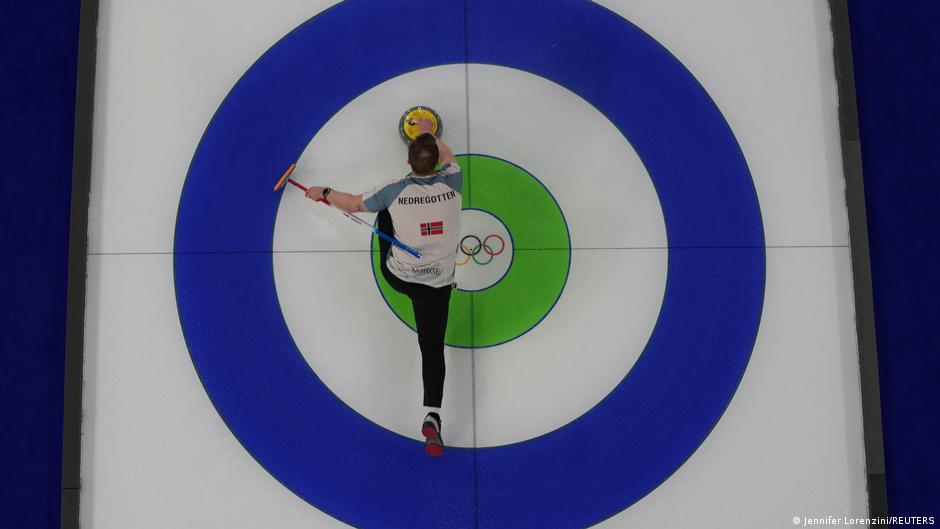
Winter Olympics begin quietly with curling
11 hours ago