
The story of Craig Forrest, the only Canadian to play for Chelsea
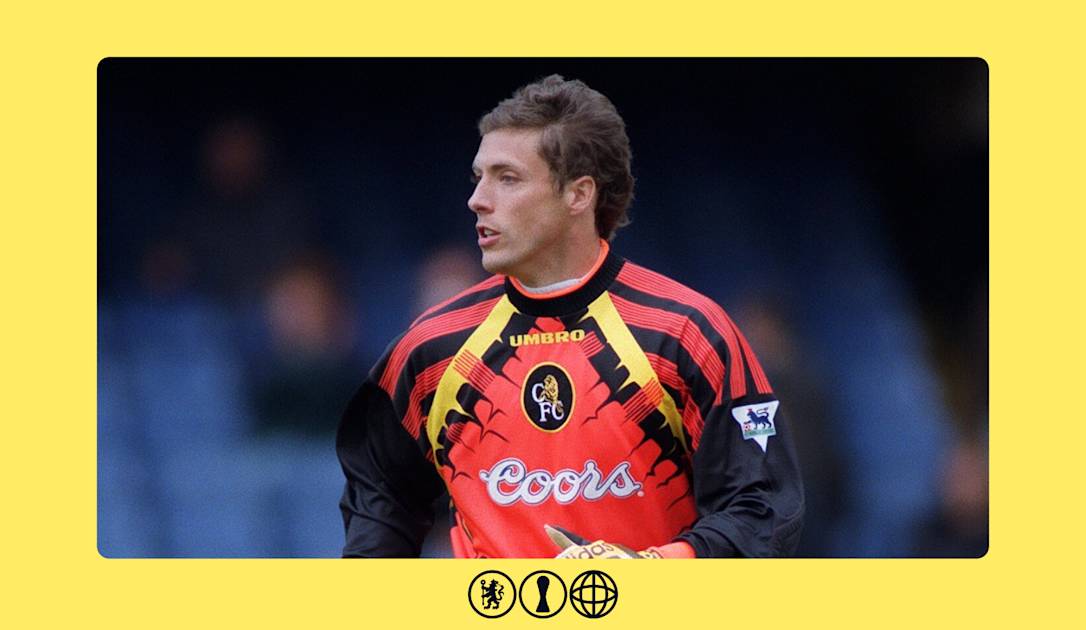
In another world, the name of Craig Forrest would be well known among Chelsea supporters of a certain vintage.For in that world, one where different decisions were taken at a pivotal crossroad, Forrest would have started in goal for Chelsea in the 1997 FA Cup final.It was a seminal result in the club’s history, yielding the first piece of major silverware in a generation. Forrest, though, was not at Wembley. He watched the game unfold on television, his brief loan spell at Stamford Bridge from Ipswich Town having come to an end earlier than he had hoped.‘Chelsea were happy with the way I had performed and [Ruud] Gullit said he wanted me to play the FA Cup final against Middlesbrough, but off I went,’ claimed Forrest in an interview after he had retired.‘Ipswich tried to demand money from Chelsea for me to stay there and at that point, Chelsea felt like [Frode] Grodas was going to be fit for the final, so we would talk in the off-season.‘I missed out on the opportunity. I was disappointed with Ipswich for that because, spending 13 years there, not that I deserved to play the FA Cup final, but it was there in my hands and I thought because of the loyalty I showed them, they wouldn’t want to take away that opportunity.’So Forest neither played in the Cup final, nor made his loan move permanent at the end of the 1996/97 season. Nonetheless, the month he spent at Chelsea – in which he made three appearances – remains, in his own words, ‘one of the best experiences I ever had in football’.Forrest was signed to provide cover between the posts. Dmitri Kharine was out injured and both Grodas and Kevin Hitchcock were struggling with their fitness. Chelsea reserve team coach Mick McGiven had worked with Forrest at Portman Road and recommended him to Gullit.He was on the bench for the defeat to Coventry at Highfield Road best remembered because we were forced to wear the home side’s away kit because of a clash of our colours.In our next Premier League game, away to Newcastle, Forrest was thrust into the spotlight.‘Half-an-hour in and we’re 3-0 down, which is unacceptable, and Frode Grodas has a hamstring injury,’ Forrest said.‘So in I go and that was an easy situation because being beaten 3-0 going in as a goalkeeper, there’s not a lot of pressure at that point, you’re just trying to hold the fort as opposed to going in maybe at 1-0 up and having that high-pressure situation.‘That actually went well for the rest of the game, we ended up losing the game 3-1, Gullit was obviously really angry with the team and how they performed, but I was almost sitting in the corner with a grin on my face thinking, ‘that was freaking cool’.‘I’d been playing for Ipswich for 13 years and then just playing for somebody else. All these amazing players at Chelsea around me, the five-a-sides at training were incredible, the talent was amazing.’Forrest’s full debut arrived a few days later as the Blues beat Leicester City 2-1 at the Bridge. He kept his place as we won 1-0 against Wimbledon at Selhurst Park, before heading off on international duty to represent Canada.This was still a time when international fixtures often overlapped with club games. By the time Forrest returned, Grodas was fit again and had regained his place in the side. Forrest felt that period of absence also cost him the chance of signing for Chelsea on a permanent deal.He instead moved to West Ham United, where he stayed for five years. Sadly, testicular cancer forced him to retire in 2002, but he had still enjoyed a wonderful professional career spanning 15 years.For a boy that grew up in British Columbia, it had been a hell of a ride. He played 56 times for his home nation and was pivotal in Canada’s unexpected and incredible triumph at the 2000 Gold Cup. He saved a penalty in the semi-final against Trinidad and Tobago and then another in the final, when Colombia were beaten 2-0 and silverware was secured.



Most Popular



Uzbekistan v Colombia: World Cup 2026 - live
19 hours ago