As ESPN cuts familiar faces, its retreat from serious NBA coverage is complete
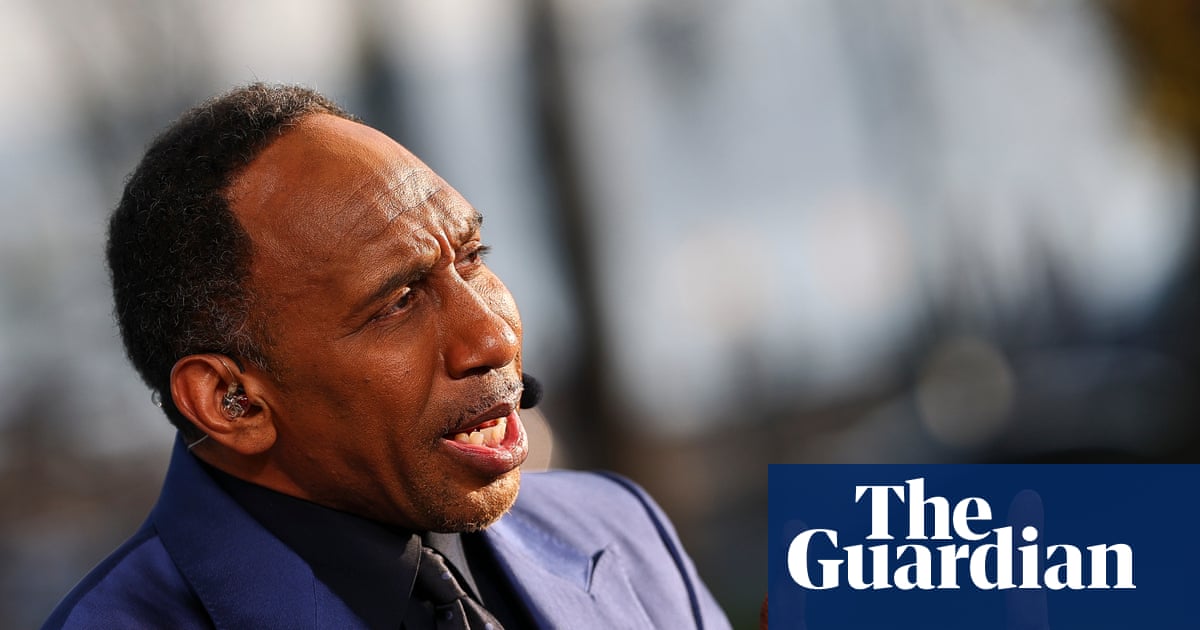
After the Phoenix Suns dumped the Golden State Warriors out of last season’s play-in, Stephen A Smith settled behind the First Take desk to explain why Steve Kerr might have coached his last game. Midway through the burial, he claimed the Warriors hadn’t “been to the playoffs since that championship in 2022” – a four-year drought in his telling – before grumbling that Golden State could pay someone far less than $17m a year to miss the postseason.Cool. Except the drought never happened. Golden State reached the conference semi-finals in 2023 and again in 2025. ESPN anchor Shae Cornette, who had command of the basic facts, tried to smuggle that inconvenient reality into the discussion. It went nowhere. Apparently, nobody on an ESPN set is permitted to correct the franchise “star”. Only weeks earlier, Smith had been inducted into the National Black College Alumni Hall of Fame for his work in media.That morning’s mistake was ESPN’s quality control in miniature: its highest-paid voice mangling an easily checked fact about a league the network pays $2.6bn a year to televise. How much would it have cost Smith – or anyone on his staff – to spend 30 seconds checking before he went on air?Smith churns out more than 3,000 takes a year, and there’s no way in hell he watches full games on the regular, not anymore, which is why he botches even his own team, the New York Knicks, when discussing them. Last summer on SportsCenter, while pencilling New York back into the conference finals on the strength of Mike Brown’s arrival, he ran through the returning core and rechristened Miles McBride as “Michael”. Knicks fans had seen the act before. A year earlier, Smith credited a hot streak to Quentin Grimes, whom the team had already traded to Detroit. He later explained that he had somehow confused Grimes with McBride. In the same rant, Smith waved away Isaiah Hartenstein – then the Knicks’ starting center – as “some dude name Hartenstein”.The circus extends beyond the studio. Late last month, ESPN told Ryan Clark he had been fired during a commercial break in the middle of taping NFL Live. He never returned to the set. The next morning, the network showed Karl Ravech the door after 33 years, then kept cutting. Cam Newton, Tom Pelissero and a long line of producers were among the other casualties, even as ESPN absorbed NFL Media into its operation. The reason is no mystery: ESPN has a nasty math problem. Its reach peaked at nearly 100 million cable households in 2011, as Kendall Baker noted in Axios, before falling below 68m by 2024 and to roughly 55m today. Meanwhile, its annual rights bills for the NBA, NFL, College Football Playoff and SEC total around $8bn. Add November’s YouTube TV blackout, which burned nearly $100m in 15 days, and the spring layoffs look like a network trying to save its ass.When ESPN laid off Zach Lowe in September 2024, it discarded the last person on its payroll who could dissect a possession on television and leave viewers understanding more about basketball. What remained was mostly a chorus of loudmouths performing hot takes. Take Christmas Day 2024, one of the NBA’s showcase dates, when former Warriors executive Bob Myers dropped his head on the desk as Smith and Kendrick Perkins shouted past him about Joel Embiid v Tyrese Maxey. By the next game, ESPN had moved on to Michael Jordan v LeBron James – the debate-show equivalent of a Christmas rerun.NBA commissioner Adam Silver has called basketball a highlights-based sport, a strange admission when the league’s media partners have committed roughly $77bn over 11 years to broadcasting full games. Watching all of those games now requires about $900 a year in subscriptions. YouTube Shorts and Instagram Reels cost nothing. That bargain comes at a price. Short-form platforms reward provocation over context and ask almost nothing of a viewer’s attention span. The imbalance helps explain why the 2025 finals averaged only 10.2m viewers, one of the weakest audiences of the past two decades outside the pandemic season. We are seeing more basketball and understanding less of it. A fan can watch 500 clips in a season without ever learning why a single play worked.As I argued in my newsletter earlier this month, sports literacy is shrinking alongside literacy itself. The numbers are grim. Reading scores among American 12th-graders have fallen to their lowest level since testing began in 1992, with 32% of seniors performing below basic. The share of adults on the bottom rung of the international literacy survey rose from 19% in 2017 to 28% in 2023. Harvard’s Martin West notes that just 14% of 13-year-olds read for fun almost every day in 2023, down from 27% in 2012.Sports consumption is changing along the same lines. Fans aged 18 to 24 now watch 2.7 hours of highlights each week, more than older viewers who still sit through entire games. Pew found that 54% of teenagers use chatbots for schoolwork, including 42% who use them to summarize an article, book or video. We are training a generation to skip the game, skip the article and go straight to the summary.A fan who cannot finish 2,000 words on Oklahoma City’s drop coverage is unlikely to sit through a 12-minute film breakdown either. The conversation shrinks accordingly: ring counts, tier lists and two-button polls – the only arguments simple enough to survive a divided attention span.ESPN spotted the opportunity early. When First Take launched in 2007, the network built an entire show around a discovery: manufactured conflict could draw an audience without showing or explaining much basketball. Five years later, Smith and Skip Bayless doubled down on the formula – with two men shouting at one another about LeBron James’ greatness, ring-counting and other hyperbolic drivel.ESPN’s politics amount to a soft corporate progressivism: fluent in symbolic gestures, timid when a story complicates the preferred script. This is a network that turned its own staff walkout into on-air programming, with an apology ready for the following morning. The DiJonai Carrington episode showed that reflex in practice. Carrington struck Sophie Cunningham across the head and neck on a fast break, received a Flagrant 2 and was ejected, then posted “WHITE PRIVILEGE” from the locker room while tagging the Fever. She later insisted the post did not refer to the ruling. ESPN showed one replay and passed over the story at half-time, then assembled a panel to question the whistle while barely engaging with the post itself.Business interests create another kind of timidity. ESPN gave the NFL a 10% equity stake in exchange for NFL Network and other media assets, then devoted little airtime to the controversy involving NFL reporter Dianna Russini and Patriots coach Mike Vrabel. The silence became conspicuous enough that Aaron Rodgers used ESPN’s own airwaves to ask how much time the network had spent on it, contrasting that treatment with its fixation on his vaccination status. Even Michael Wilbon, when asked whether viewers could still trust ESPN’s NFL reporting now that the league owns part of the network, said it should be viewed “skeptically”.Fans who still want to discuss the games and understand them have built their own alternatives, mostly on YouTube. The Knick of Time Show has grown into a multi-platform Knicks brand combining long-form video essays, live postgame coverage and a popular Substack, attracting more than 3m views and 52,000 followers across platforms. Slightly Biased, a Mavericks channel with 34,000 subscribers, mixes NBA parody with essays on the team’s history. And Hoops Tonight with Jason Timpf has become a go-to basketball destination, with Timpf’s possession-by-possession breakdowns often teaching more in a few minutes than First Take does in a week.



Most Popular