
Coco Gauff knocked out of Australian Open in brutal 59-minute collapse and then smashes racket up

The French Open champion had a day to forget as her game collapsed in a 6-1 6-2 defeat to the 12th seed Svitolina, as she made 26 unforced errors in just 59 minutes.The 21-year-old was noticeably distressed on the court as the errors piled up. After leaving the Rod Laver Arena, Gauff, thinking she was out of sight, let off some steam by repeatedly smashing her racket off a concrete ramp.But footage of the incident was immediately broadcast and shared on social media, with most player areas at the Australian Open fitted with fly-on-the-wall cameras, including gyms and walkways.A similar incident occurred in 2023, after Gauff defeated Aryna Sabalenka in the US Open final, with Judy Murray criticising the publication of footage from a training room that showed Sabalenka smashing her racket after the loss.“I tried to go somewhere where there was no cameras,” Gauff said after the defeat.“I kind of have a thing with the broadcast. I feel like certain moments - the same thing happened to Aryna after I played her in final of US Open - I feel like they don't need to broadcast.“I tried to go somewhere where I thought there wasn't a camera, because I don't necessarily like breaking rackets, but I lost [6-1 and 6-2].“I broke one racket in a quarter-final or round of 16 of French Open, I think, and I said I would never do it again on court, because I don't feel like that's a good representation.“I tried to go somewhere where they wouldn't broadcast it, but obviously they did. So maybe some conversations can be had, because I feel like at this tournament the only private place we have is the locker room.”Gauff, the world No 3, did not hide away from an “awkward” day where she could not rely on any part of her game. But she did praise Svitolina, whose direct returns and ball-striking caused Gauff’s game to unravel.“I just felt like all the things I do well, I just wasn't doing well today,” Gauff said. “The backhand wasn't firing. Forehand wasn't really firing. Returns. There was just a lot that didn't go well today.“I credit it to her because she forced me to play like that. It's not like I just woke up and, yeah, today was a bad day, but bad days are often caused by your opponent. So she did well.”Gauff said that she should have been able to let out her frustration, rather than lashing out at her team. “They're good people. They don't deserve that, and I know I'm emotional,” she said.”I just took the minute to go and do that. I don't think it's a bad thing. Like I said, I don't try to do it on court in front of kids and things like that, but I do know I need to let out that emotion.“Otherwise, I'm just going to be snappy with the people around me, and I don't want to do that, because like I said, they don't deserve it. They did their best. I did mine. Just need to let the frustration out.”Svitolina was the latest player to take a break at the end of last season for mental health reasons but she began this year by winning the WTA tournament in Auckland and will now return to the top 10.She said: "I'm very pleased with the tournament so far and it's always been my dream to come back after maternity leave in the top 10. Unfortunately it didn't happen last year but I told my coach this was my goal for this season."It means the world to me. I try to push myself, to give myself this motivation to continue."Svitolina is yet to go further than the semi-finals at a major and, if she is to end that here, she will have to get the better of Sabalenka, who ended the teenage challenge in Melbourne with an emphatic quarter-final final victory over Iva Jovic and is yet to drop a set.Having defeated 19-year-old Victoria Mboko in the fourth round, the world number one dropped just three games against 18-year-old American Jovic in a 6-3 6-0 victory.The scoreline was harsh on the youngster, who was very competitive in the points but time and again came out on the wrong end of games.It has nevertheless been a breakthrough tournament for Jovic, who only celebrated her birthday last month, and she will hit the top 20 for the first time next month."These teenagers are testing me in the last couple of rounds," said Sabalenka, who has now reached at least the semi-finals at 12 of the last 13 grand slams she has contested."She's an incredible player, it was a tough match - don't look at the score, it wasn't easy at all. I'm super happy with the win, it was a tough battle."It was the hottest day in Melbourne for 17 years, and Sabalenka did not have the benefit of the roof, which only closed as she was conducting her post-match interview."At the end of the match, it was really hot out there," said the 27-year-old. "I'm glad they closed the roof almost halfway so we had a lot of shade in the back."Sabalenka added with a smile: "I guess, as a woman, we are stronger than the guys, so they had to close the roof for the guys so they don't suffer."I knew going into this match that they won't let us play in crazy heat. If it would reach the five, they would definitely close the roof, so I knew that they were protecting us, our health. It's OK. I'm happy that I managed."Organisers had reworked the schedule in anticipation of the heat, with the start of the wheelchair draws postponed until Wednesday and junior matches beginning at 9am.The later junior matches were scheduled for the evening, and all the day matches had finished before the most serious heat rules were implemented, with the heat stress scale hitting the cut-off mark of five just before 1.30pm.The scale takes into account air temperature, radiant heat, humidity and wind speed to determine when conditions are safe for players.Meanwhile, Sabalenka said she didn’t understand why she was ordered to remove a wearable fitness tracker before one of her matches at the Australian Open and urged the grand slam tournaments to reconsider the policy.Sabalenka, Carlos Alcaraz and Jannik Sinner have been spotted at the Australian Open wearing a Whoop fitness tracker on their wrist but have been told to remove them because they have not been approved by the organisers of the grand slams.They were last approved by the International Tennis Federation (ITF) in December, while the WTA has had a partnership with Whoop since 2021 and the ATP approved their use in 2024.Tennis Australia, the organiser of the Australian Open, confirmed that the wearable wrist technology is not permitted at the grand slams – although it said that the tournament is “in discussions” over allowing such devices in the future.“The reason why I was wearing that on court, because we received the email that we got approval from the ITF to wear this device. I didn't know that grand slams didn't come to conclusion,” Sabalenka said after her quarter-final win over Iva Jovic.“I don't understand why, because the whole year we are wearing, on WTA tournaments, all the tournaments I play we wear Whoop. It's just for tracking my health.“I don't understand why grand slams are not allowed us to wear it, and I really hope that they will reconsider the decision and let their players track their health monitor.”Sinner was ordered to remove a Whoop device, which was hidden underneath his wristband, before his fourth-round match against Luciano Darderi on Monday.The previous day, Alcaraz was also stopped from wearing a Whoop device by a tournament official after it was spotted mid-match. Sabalenka had hers removed earlier in the tournament.“Wearables are currently not permitted at grand slams,” a Tennis Australia spokesperson said. “The Australian Open is involved in ongoing discussions on how this situation could change.”Sabalenka is a Whoop ambassador and explained how she used the technology to assist her recovery during her US Open title run in 2024. In a video published by the WTA, she explained that the Whoop band monitored her stress levels between matches and the data advised her to take days off after it found she was in the “red zone”.Sinner, who struggled with the extreme heat during his third-round win, said he was planning to use the technology not for in-match use but to inform his recovery before the quarter-finals.“There is certain data what we would like to track a little bit on court,” Sinner said. “It’s not for the live thing. It’s more about [what] you can see after the match.“These are datas what we would like to use also in practice sessions, because from that you can practice on with the heart rate, how much calories you burn, all these kind of things.”After Alcaraz was caught wearing the technology under his wristband on Sunday, the Whoop founder and CEO Will Ahmed posted on X (Twitter): “Ridiculous. Whoop is approved by the International Tennis Federation for in-match wear and poses no safety risk. Let the athletes measure their bodies. Data is not steroids!”


Most Popular


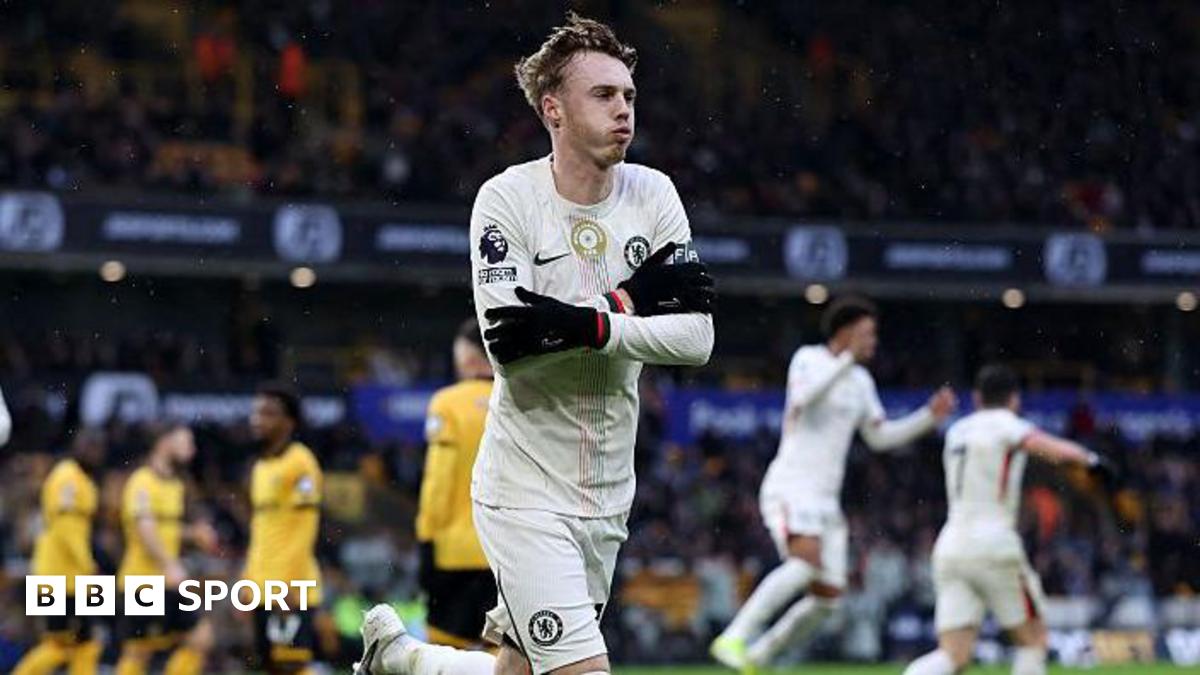
Palmer scores first-half hat-trick in Chelsea win
36 minutes ago