The reason behind Craig Tiley’s massive Australian Open success
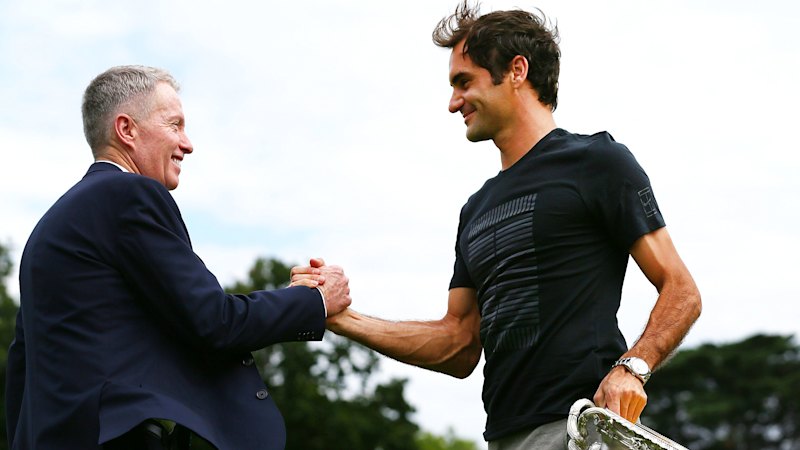
The measure of Craig Tiley’s success as head of the Australian Open is not found in the nearly three-quarters-of-a-billion dollars in annual revenue, the annexation of an entire river bend of Melbourne, nor the remaking of a tennis tournament into the new Birdcage darling.It is this: the Australian Open, in his tenure, shrugged off its image as the fourth, and least, of the grand slams. It resisted constant overtures, real and imagined, to move, and is now not only entrenched for decades but has claimed a physical footprint in the city and a global sporting footprint that has re-shaped Melbourne’s image.Few sporting administrators leave their posts with as much currency as Tiley, who confirmed on Wednesday that he will leave Australia to run tennis in the US.Drawing money into the game and the unabashed embrace of sport-tainment helped make the change. But the biggest reason Tiley succeeded in growing the Australian Open was because the former tennis player out of the South African Army, and by way of coaching in the US college system, intuitively understood that it was the players who mattered most. The best asset tennis had to sell was the personalities of its players and the glamour of the life they led.The sport is one thing, but it is the stars and their stories that the fans come for. The stories build a bigger image of tennis than any ground strokes, even glorious Roger Federer forehands. Athlete-first storytelling is now successfully being mined by fly-on-the-wall documentaries in Formula 1, Test cricket, the AFL, basketball, the NFL, the EPL and tennis in ways that would be called real life, only they depict lives that seem anything but real or normal.“I think he is very approachable. He is a good guy. He made us always feel like us the players we were part of the ecosystem of the game. We were not just a byproduct, he made us feel special, I think,” Federer said in an interview with the Tennis Channel in December of the likely Tiley move to the US Open.“I think his background as a tennis coach coming into the game keeps him rooted as a tennis player, [in his] DNA I would say.“I think with his knowledge of the game and the US Open being a massive tournament that also could maybe use a revamp, could maybe improve on everything like the AO can as well by the way, and he will do very well ... I think a lot of the players would love to see him there.“I really felt like the Australian Open wanted to lose its image of being the fourth major. They have really done well to stick with the others that are so popular with Wimbledon, the French Open, the US Open is obviously such a massive event. So I think he would do very well, and I think in many way the players would love to see him there.”In 2007, Tiley’s first as tournament director of the Australian Open, total prizemoney was $20 million. This year it was $111.5 million with the men’s and women’s winners getting $4.15 million each and the runners-up $2.15 million each. In 2007, they got $1.28 million each. Each year the first question Tiley asks of his executive is how much they can put the prizemoney up.The money is one explanation for how much the players love him, and helped encourage previously reluctant stars to make the early season trip. Previously, the biggest players didn’t all come to the rudely early January tournament. Andre Agassi, for instance, played nine US Opens before he played an Australian Open. John McEnroe only played the Australian Open five times, Bjorn Borg just once.The prizemoney, but also the ever-expanding facilities, more roofed courts, and the indulgences of every player’s whim all elevated the prestige of the tournament for players. Tiley invented the term for what has become common now: the 10-point player experience (it’s now far more than 10 points). It is the idea that from the minute they touch down in Australia to the minute they leave, everything is focused on the players.In fact, it now extends to before they arrive. Tiley created a travel grant that has grown to $10,000 for all players to make sure that even the fringe athlete who wants to compete, but is unsure if they can afford to, has the money to get here.Whenever new facilities are built, the first concern is designing it for the comfort and ease of the players. The location of gyms, warm-up rooms, physio rooms and player lounges are as close to the courts as possible.There is now childcare available, travel agents, an Australian Tax Office official on site to deal with prizemoney, sleep pods, quiet rooms, hairdressers, dentists, podiatrists and the de rigueur of massage therapists, ice baths, expansive player lounges and fine a la carte restaurants.Tiley also has what is recognised as the most extensive contact book of surgeons and sports physicians in Australia, and in January, they all take his call.“From my personal experience and point of view, the AO has done an amazing job making themselves one of the most prestigious events in the world of sport,” 22-time major winner Rafael Nadal told the AFR Magazine.“Craig has been someone always close to the players and that’s not only me saying that but something well known in the locker room. He had a vision and he definitely is making it happen. We have seen a tournament that is always growing, getting better at all levels and that’s including the very difficult past years.”Nadal was always Tiley’s favourite player. The reason dates back to a night in 2011 when he had a full house for Nadal to play David Ferrer in the quarter-finals. Tiley took a call to the medical room where Nadal was on a massage bed looking grim. He had the sort of torn muscle in his leg that would rule a footballer out for a couple of months.Tiley was poised to cancel the match, but Nadal looked up. “I will play.”“What?”“I will play.”And he did. Nadal lost in three straight painful sets, but he played. Afterwards, he would not be drawn on his injury because to do so would be disrespectful to his compatriot Ferrer and undermine his win. Tiley was relieved that Nadal played, but he was more awed by his decency.There was always something part-game show host and part-tournament director about Tiley as the AO head hovering in the background with his toothy smile, being thanked on court by the winners and losers. His visage regularly appeared in the shadows or scuttling along the labyrinth of tunnels, phone or walkie-talkie to his ear seeking to settle a problem from bushfire smoke to a leaking roof, hearing arguments why the roof should be closed or opened, discussing wet-bulb temperatures, liaising with police over nationalist protests, calming player tantrums, accommodating celebrities and helping fainting ball kids.Tiley always made a virtue of the Australian Open being different to the other slams. It was more innovative and edgy, but it was also different because the players were the priority. Then he was gifted marketing manna when Federer called it the “Happy Slam”. It stuck.It was the Happy Slam until, briefly at least, it wasn’t. There was no happiness anywhere during COVID-19 and it was this period that created the biggest existential threat to the Open and to Tiley’s hold on the job. Playing a tournament during a pandemic was, for some, cavalier at best and negligent at worst. For others, it was the return to normal life and the escapism of sport that they craved.Pressing ahead with a tournament was one thing, but inviting in the tennis champion and champion of vaccine controversy Novak Djokovic was another.Djokovic said he was coming to Australia for the 2022 Open but was vague on his vaccine status. It was argued he could come into Australia under a provision that allowed a visa to be approved if an unvaccinated person had recently had COVID. Djokovic said he had.LoadingThere was an international dispute over whether Djokovic should be allowed in. The federal and Victorian governments finger-pointed at one another, as many in Victoria who laboured under the world’s longest lockdowns couldn’t abide the idea of rules suddenly being bent for a tennis player. The federal government eventually revoked Djokovic’s visa. The Federal Court backed the legality of the move when Djokovic appealed. The Serbian president railed against the “harassment” of their greatest athlete.Tiley’s position was pragmatic: he ran a tournament and wanted one of the world’s biggest stars there. He reasoned, like Djokovic, that the rules were there to allow him in and he should be able to come. Some felt his position harmed the image of the Open.Tiley also resisted calls for the tournament to be scrapped that year or moved to Sydney, Brisbane or even China. The tournament eventually went ahead, without Djokovic, and amid calls for Tiley to follow him out of the Open. When Tiley appeared at the women’s singles match of Sam Stosur, he was booed by the crowd.What helped, or saved, Tiley was the same thing that had been the basis for the tournament’s growth under him: the players. Once the tournament started the international headlines became about the players who were there and not the one deported.The 2022 push to relocate the tournament temporarily revived what had been a constant theme of the Australian Open since its most controversial move in 1998, up Gardiners Creek from genteel Kooyong to a bend of the Yarra then known as Flinders Park. John Cain as premier pushed hard for the move and, consequently, his name adorns one of the arenas.That move gave the Open scope to grow, and constant threats to take it away helped his bargaining position with government.Tiley had been in the job two years when in 2008 NSW made moves to nick the Open. Sydney was just another in a long line of opportunists, for even as the NSW government was plotting to take the tournament, Chinese player Li Na said she thought it should move to Shanghai and become the grand slam of the Asia Pacific. Saudi Arabia, the new sports-washing purchaser of major events, still lurks with interest.These stalking horses have provided the perfect leverage for Tennis Australia and the Australian Open – one and the same person once Tiley added the title of CEO of Tennis Australia to his role as tournament director – to lobby for yet more state government money and land to expand the Open and entrench itself in Melbourne.There are now multiple show courts with roofs. The player and administrative facilities continue to expand – the footprint has grown 184 per cent into Birrarung Marr. A fourth show court for 5000 people was finished in 2021, along with a complete rebuild of facilities focused around dining, the function room and media facilities.The plan now is to stretch over Olympic Boulevard and use Collingwood Football Club’s facilities and ground during January in exchange for legacy buildings on their site and a rental payment.In 2023, organisers decided a two-week tournament wasn’t enough and extended it to a three-week tennis and entertainment extravaganza. The main tournament was still only two weeks, but last year they extended it by a day, starting on a Sunday and not a Monday. They added a pickleball tournament, and then this year the one-shot tournament with the million-dollar prizemoney. When an amateur tennis coach from Sydney, Jordan Smith, triumphed, the marketing looked like genius.It was a further part of Tiley’s philosophy of wanting to be if not innovative, then at least entrepreneurial.He had seen the anti-golf success of LIV Golf’s relaxed format and decided tennis would also embrace noise over its “silence please” traditionalism. Thus, the creation of a two-storey beach bar alongside one “party court” added to the spritz bars and DJs in the garden areas mixing with local guitarists, and fed the idea that a day or night at the tennis need not include watching actual live tennis.KIA Arena became what Tiley said he wanted it to be, a “bullfight arena”. When Nick Kyrgios and Thanasi Kokkinakis strutted and chest bumped their way through the doubles, calling on fans to “sink piss” and get loud, all that was missing were red capes and a hapless bull.Perhaps the most remarkable achievement is that this boganisation was compartmentalised and didn’t come at the expense of the chic brands. The partnerships continue with Piper-Heidsieck, Ralph Lauren is the official outfitter, Mecca has a mega beauty shop on site and Emirates and Rolex are key partners. At least a KIA could be afforded in most Australian driveways.The growth of the Open under Tiley has been extraordinary. The query this year was whether it had grown too big for itself. Which is a nice problem to have for whoever now takes over.News, results and expert analysis from the weekend of sport are sent every Monday. Sign up for our Sport newsletter.

Most Popular