
For Chaminda Vaas, swing still defines true fast bowling greatness
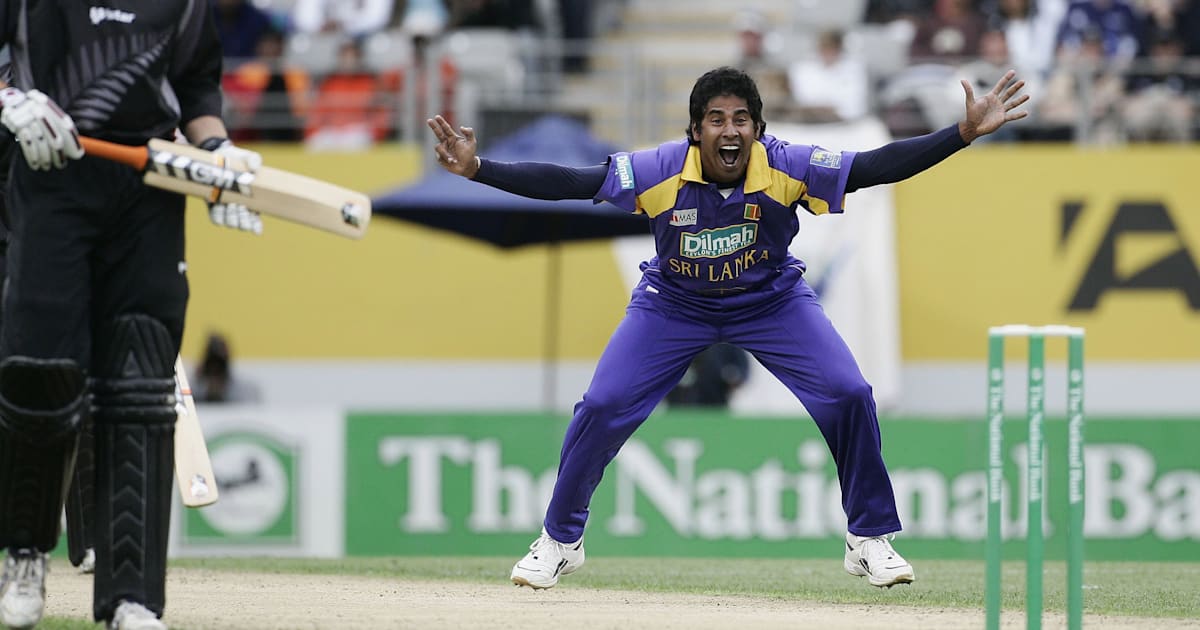
Swing bowling remains one of cricket’s most enduring crafts - an art built not on brute force, but on deception, discipline and deep understanding.Few have embodied that craft as gracefully as Chaminda Vaas, who carved out a remarkable career for the Sri Lanka cricket team through precision and movement rather than sheer pace.For Vaas, swing bowling is as much about intelligence as skill. And when he reflects on the greatest exponents of the art, his admiration is rooted in how effortlessly they combined both.“Wasim Akram, for me, was the complete fast bowler,” Vaas told Olympics.com. “He had everything - pace, control and the ability to swing the ball both ways. But what really made him special was how late the ball would move. Batsmen had very little time to adjust.”Vaas believes that Akram’s genius lay in his unpredictability and mastery across conditions. “He could pick wickets with the new ball, and then come back later and do the same with reverse swing. Not many bowlers in the history of the game have had that kind of impact in all phases.”The conversation inevitably shifts to Pakistan’s Waqar Younis, Akram’s partner at the other end. “Waqar was different,” Vaas explained. “He was quicker through the air and very dangerous with reverse swing. His yorkers were deadly. When he got the old ball reversing, it was very difficult for any batsman in the world.”Reverse swing, Vaas noted, revolutionised fast bowling. “It changed the way bowlers approached the game. Earlier, once the ball got old, it became easier for batsmen. But with reverse swing, bowlers always had a chance. That’s why Wasim and Waqar were such a lethal combination - they could hurt you at any stage of the innings.”Among contemporary greats, Vaas reserves special praise for England’s James Anderson, widely regarded as one of the finest swing bowlers in modern cricket.“Anderson is a master of his craft,” Vaas said. “In English conditions, especially, he is almost unplayable. The way he controls the seam position and gets that late movement - it’s beautiful to watch for any fast bowler.“To do it year after year, in different situations and still be effective - that’s not easy. Swing bowling requires rhythm and fitness, and he has maintained both for a very long time. That speaks volumes about his dedication.”Vaas also touched upon the artistry of South Africa’s Dale Steyn. “Steyn was more of an attacking bowler,” Vaas noted. “He could swing the ball at high pace, which is always dangerous. When you combine speed with movement, the margin for error for the batsman becomes very small.”In the modern limited-overs game, Vaas also pointed to India’s Bhuvneshwar Kumar skill, particularly in limited-overs cricket.“Bhuvneshwar showed that swing bowling is still very relevant, even in white-ball formats,” Vaas pointed out. “With the new ball, he could move it both ways and trouble top-order batsmen. It’s about control and understanding your strengths.“People often say swing bowlers need helpful conditions, but great bowlers find a way. They adjust their lengths, their angles, and even how they use the crease.”At its core, he insists, swing bowling is about patience and repetition. “You can’t rush it. You have to bowl in the right areas consistently. Sometimes the wickets don’t come immediately, but if you keep asking questions, eventually you will get the reward.”He also emphasised the mental side of the craft. “Swing bowling is a thinking bowler’s game. You have to set batsmen up, understand their weaknesses, and then use swing as your weapon. It’s not just about moving the ball - it’s about when and how you do it.”As the modern game continues to evolve with flatter pitches and increasingly aggressive batting, Vaas remains confident that swing bowling will never lose its relevance.“No matter how much the game changes, if the ball is swinging, the bowler is always in control,” he said. “You can have power hitters and fast scoring rates, but one good spell of swing bowling can change the match completely.”In an era of speed guns and power-hitting, Vaas’ reflections are a reminder that true fast bowling is about movement and intelligence as much as pace.


Most Popular


Ollie Robinson eyes England Test comeback
5 hours ago