Deschamps to blame as Mbappe reduced to impotent rage

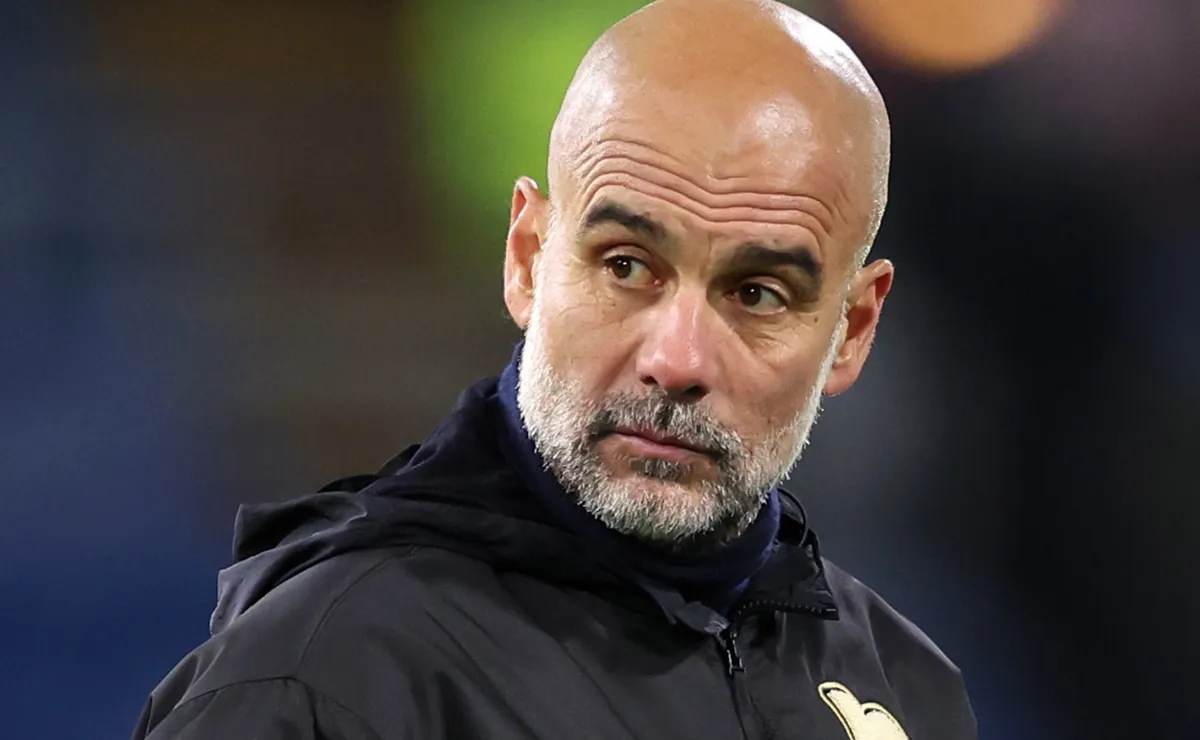
On Bastille Day, supposedly an occasion for flaunting French firepower, one of the finest football teams ever assembled could hardly have offered a tamer surrender. After a serene World Cup run in which they had barely been challenged, France, the game’s pre-eminent 21st-century force, simply disintegrated at the hands of a slicker, hungrier, technically superior Spain. Even with the stakes so high, they were inexplicably listless, with Bradley Barcola looking as if his mind was on the beach and even Kylian Mbappé reduced to quiet, impotent rage. At a moment like this, you looked to Didier Deschamps, preparing to depart Les Bleus after 14 years in charge, to impart some technical wizardry. Instead, he looked dumbfounded as the dream died.The veteran coach’s verdict on this torpid display was a study in deflection. First he tried to shift the blame to Iván Barton, the Salvadorean referee, for dubious decision-making, asking in more than one of his interviews: “Do you believe he was up to task to referee a semi-final?” Then he swerved any reflective comment on his own position by stressing that France still had one more match to play, in the form of the utterly meaningless third-place play-off. But if he were truly being honest, he needed to look in the mirror and ask how he had allowed so many of his key players to fall so far below their standards.AdvertisementOusmane Dembélé drifted into anonymity, Désiré Doué offered nothing beyond a single failed lob, and even Michael Olisé suffered the indignity of being substituted. Lucas Digne was a conspicuous liability, conceding the penalty that hastened France’s collapse and struggling from that point to contain the quicksilver brilliance of Lamine Yamal. Spain’s supremacy was total, with this match seldom threatening to become a contest and instead culminating for France in the embarrassment of olé chants as Rodri pulled the strings, somehow making his complex duties at the base of midfield look effortless.It was anything but the ending Deschamps had envisaged. This was meant to be his golden chance to emulate the feat of Italy’s Vittorio Pozzo almost a century ago, becoming only the second manager in the men’s game to win multiple World Cups. He assuredly had the heavy artillery: an attack of Mbappé, Dembélé, Olisé and Barcola had, across six games to this stage, been sufficient to terrorise any opponents into submission. And yet in one of the defining games of their lives, they seemed as if they had just switched off. Yes, Spain were sumptuous, with Rodri, Dani Olmo and Marc Cucurella all delivering such masterclasses in positional awareness that France were flailing as if playing blindfolded. But Deschamps, trying to lead France into a fifth final in just 28 years, needed to shoulder some responsibility for this feeble capitulation.A group of dazzling individuals lost any semblance of collective identity. “The players are deflated, the ambition was there,” Deschamps lamented. “I don’t want to throw away everything we did in this competition, but we were below our technical level.” That much was evident, but Deschamps was also tactically outmanoeuvred in every department by Spain’s Luis de la Fuente. Despite the 57-year-old’s luminous CV, and his distinction as one of only three men – alongside Mário Zagallo and Franz Beckenbauer – to win the World Cup as both player and manager, a consistent criticism is that he is too stubborn, too cautious, too dogmatic to make the most of the scintillating talents at his disposal.AdvertisementThis semi-final brought compelling proof of that theory, as France appeared leaden, suffocated, so much less than the sum of their extravagant parts. This was the second straight tournament, or third if you count the Nations League, where they had been undone by Spain in the last four, with Deschamps learning nothing from the previous humblings. Adrien Rabiot and Aurélien Tchouaméni, designed to be the twin anchors in midfield, were overwhelmed, with the unfortunate consequence that the front four were starved of service all game. Deschamps was at a loss to find a solution, thumping the metal structure of the dugout when Pedro Porro lashed in the second goal to put Spain out of sight. His introduction of Rayan Cherki also came far too late for this wondrous winger to exert any influence.In the final analysis, Deschamps’ body of work since 2012 is secure. He has won one World Cup and reached the final in another, achieving a glory so momentous that, after France’s triumph in 2018, he had a station on the Paris Metro named after him. His 20 wins on the highest stage are the most by any coach in history. But how many times across the Deschamps era has his strategic genius been saluted? For how many club jobs has he been named as a prime candidate? The feeling even in France, in the midst of a bountiful period, is that the manager has struggled to elevate his sides to the highest degree of artistic expression. While blessed with the best players, he has been cursed by an inability to believe in them fully. “Today’s feeling is that I am not happy,” he said, grouchily. It is one that an unimpressed French public will share.
.jpg)

Most Popular