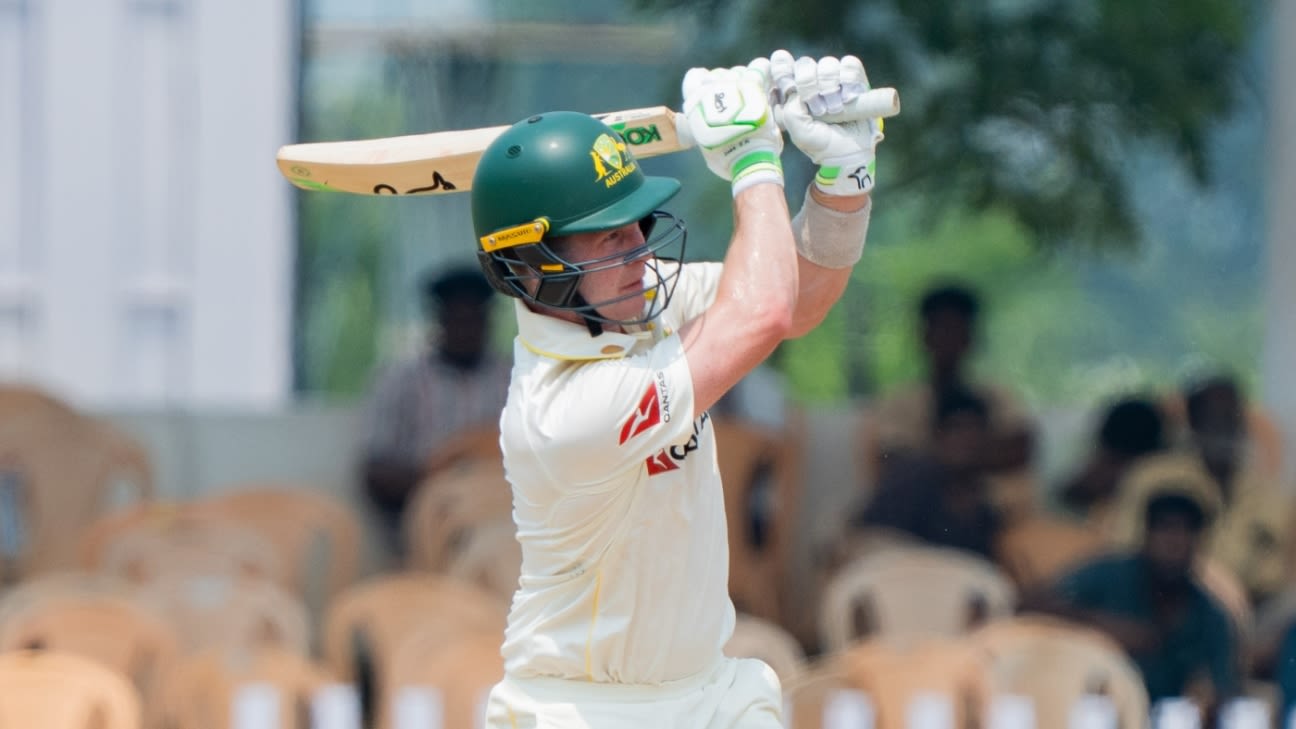
Tony Pigott’s last interview: ‘Cats have nine lives - I’m into my teens’

Tony Pigott was a bowler who would “run through a brick wall” for the teams he played for across an 18-year cricket career.Whether it was playing first-class or one-day cricket for Sussex or Surrey, or his one Test cap for England for which he postponed his wedding and bowled with an agonising shin injury to fulfil his dream of representing his country, Pigott left nothing out.“The one thing everybody says about me is I always give 100 per cent and I always have in life,” he told Telegraph Sport recently.We met in Adelaide in December, and shared breakfast for an hour before play on the second day of the third Ashes Test. Pigott was on holiday and in rude health. He later proposed to his partner on New Year’s Eve and was looking forward to the future. This summer he planned to throw himself into promoting his book, Lester and the Deckchair Revolution, which was published last year, and run the county cricketers’ golf society that he chaired.Over croque monsieurs and coffee we chatted about county cricket, his one cap for England, how Imran Khan showed him the darker skills of reverse swing and his rebuilding of Sussex when he became chief executive in 1997.The subject of his health took up a large part of our interview because Pigott recovered from oesophageal cancer in 2018, a disease he believes was caused by the ibuprofen he gobbled down to stay on the field as a cricketer.He posed for photographs at his home in Sussex a couple of weeks ago and we exchanged messages last week about when the interview would run.Last Thursday he had a sudden cardiac arrest, and died on Sunday surrounded by his family, aged 67. “A really loveable, glass-half-full character who will be missed dearly by many,” said Chris Adams, who was appointed captain of Sussex by Pigott and led the club to their first championship title.Pigott was arguably the most well known “one-cap wonder” for England. Mainly because he was so keen to play against New Zealand in Christchurch in 1984 that he postponed his wedding that would have fallen on the Sunday, day four, of the Test match.Such commitment was typical of the man and when we met he was keener to talk about other aspects of his life, particularly his cancer diagnosis aged 60, than his one cap, a topic that would come up all the time. “I was asked about it three times yesterday,” he said.‘Hollioake, Butcher and Thorpey used to laugh at me’His cancer was caught early during a routine endoscopy that was part of his treatment for Barrett’s oesophagus, a chronic disease caused by long-term reflux which was a side effect of painkilling treatment to keep him bowling for Surrey, the club he joined from Sussex for the final two years of his career.“At the end of my career my back was giving me hell. I used to have a pair of shorts with a back support stitched in and the young kids like Adam Hollioake, Mark Butcher and Thorpey [Graham Thorpe] used to laugh at me.“Surrey were also giving me ibuprofen like smarties all the time. They made a hell of a difference and got me bowling. Five years later, after I finished, I had trouble with my stomach. I had my first endoscopy. They found ulcers in my stomach. They asked if had taken anti-inflammatories. They said that is why you have ulcers in your stomach. They had healed up, but they were there.”Monitoring found cancer cells in 2018 and Pigott underwent chemotherapy treatment and a 12-hour operation to cut out the tumour and resect his oesophagus. “Three months later my surgeon said ‘how come you are so positive?’ But really, what was the option? I never thought once about dying.”He believed the strict exercise regime he went through in his later playing days prepared him for his later health struggles. “I worked bloody hard as a player. I would run around the ground 10 times and run to a gym and do a workout to strengthen my back, then go to a sauna. People said that about my cancer as well – that I worked bloody hard.”Pigott started his career with a hat-trick, the first Englishman to do so on debut, and took 672 wickets in first-class cricket as a nippy seam and swing bowler who could also biff a few runs lower down the order. He would have done well in the T20 era.He admitted he was in the right place at the right time to make a Test debut. He was playing for Wellington when England were on tour to New Zealand when Graham Dilley and Neil Foster went down with injuries. Pigott had been put on standby, but had given up hope of playing when he received an emergency call-up and left the match for Wellington at Palmerston North and flew down to Christchurch on the south island.There was no cap presentation or fuss. Just a cap thrust at him out of the kit bag and he had to borrow Nick Cook’s sweater.Preparation involved a team talk from Ian Botham, whose bowling plans perhaps lacked the detailed analytical data of the modern era. “Beefy was in the dressing room and went through all their batsmen. John Wright, not very good against the short ball – bounce him. Bruce Edgar – outside off stump. Martin Crowe – bounce him. Jeff Crowe – bounce him. And Richard Hadlee – definitely bounce him. That was it!“Basically when I played for Sussex, Imran [Khan] and Garth Le Roux would bowl up the hill and I bowled down the hill. And I was a rhythm bowler. At Christchurch the slope was there and Bob Willis and Norman Cowans bowled downhill, Beefy and I up it. I could hardly walk either because I had shin compartment syndrome – bloody painful for a bowler – but nobody knew about that. When Alan Smith, the England manager, asked me if I was fit I said ‘yes of course I am’, because I was not going to miss this chance.“So there I was bowling up the hill into the wind with painful shins. But if there had been a brick wall in front of the stumps I would have run through it. Playing for England was so special.”It would go down as a famous New Zealand win: England were bowled out for 82 and 93, losing by an innings in three days. “I’m telling you, the pitch was one of the worst I have ever seen. Cracks in it everywhere. All you had to do was run in and bowl on a length and there was Both saying just bounce them.


Most Popular