
Why Liverpool are actually a ridiculous bargain for Bezos and co. at £4.4 billion
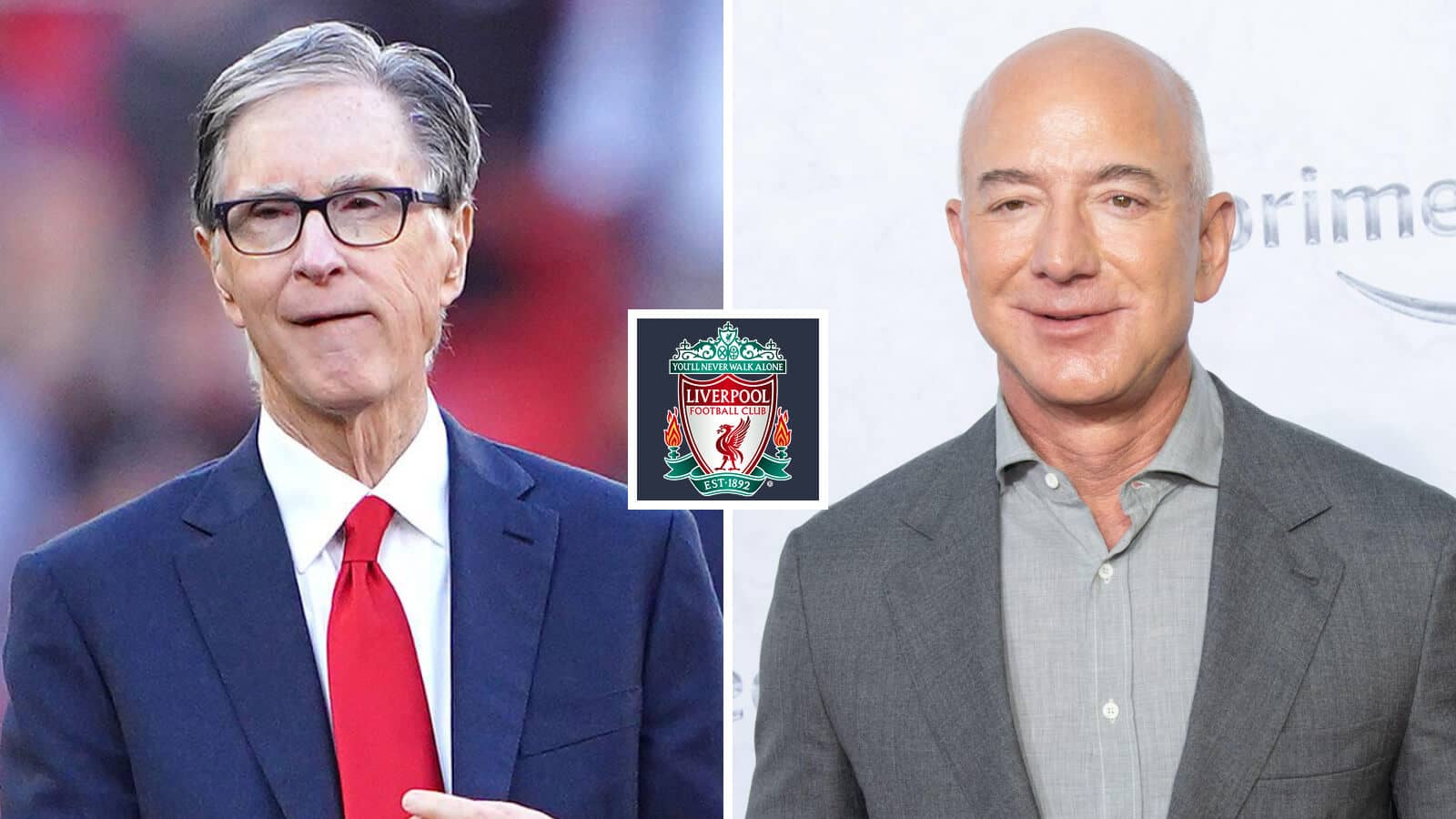
Most people would believe that anything valued at over £4 billion cannot really be considered a bargain.That is the valuation at which a consortium of investors, including Jeff Bezos, seems poised to take a significant minority stake in Liverpool FC. At a reported £4.4 billion ($6 billion), the data suggests that this consortium is getting good value for money.For £4.4 billion, Liverpool remains cheaper than almost any franchise of equivalent size in North America. This is despite the fact that Liverpool generate more revenue than most North American teams, and have a global following which dwarfs the almost exclusively US audience for American sports.Take the NFL as an illustration. Only seven of the 32 NFL teams in 2025 were, according to Forbes, valued below Liverpool’s £4.4 billion ($6 billion) valuation. Liverpool would be valued in the bottom quartile of NFL teams, alongside the likes of the Arizona Cardinals ($5.5 billion) and the Cincinnati Bengals ($5.25 billion).They would be one of the cheapest NFL teams, whilst having the second-highest revenues. Liverpool recorded £703 million ($950 million) in revenue in their title-winning 2024/25 season; the Dallas Cowboys were the only NFL team to generate more revenue – a seismic $1.2 billion (c.£880m) – in the same period. The Arizona Cardinals’ revenue, for context, was almost half of Liverpool’s at $571 million.Compare the Liverpool deal with Josh Kushner and Bob Iger’s purchase of the LA Lakers and this point becomes even clearer. The Lakers look set to be purchased for a reported $12.5 billion (£9.3 billion). The NBA team generated around $550 million (£407 million) of revenue last year. Contrast this to Liverpool – a team which generated almost double the amount of revenue and is available for less than half the price of the Lakers – and the attraction of a £4.4 billion entry price starts to become clearer.The attraction only grows when you consider the global audience that purchasing Liverpool offers. In December 2024 the club reported over 200 million followers across all social platforms – over double the number of the Lakers, the NBA’s most followed team. With well over 1 billion engagements across its social platforms annually Liverpool, like other Premier League clubs, commands an audience in every corner of the globe. Even the biggest American franchises cannot compete with the reach and scale of the club’s following.So, for the new investor consortium, Liverpool arguably represents a bargain when viewed in the context of American sport. They are buying a stake in what would be one of the highest revenue-generating American franchises, at a valuation well below the going rate of a North American team. In addition, they are getting a club that has a potential customer base that transcends borders and reaches into corners of the globe that American sports have as yet struggled to penetrate.The caveat to this is, of course, that European football teams are typically heavily loss-making. Liverpool were one of only four Premier League clubs to post a pre-tax profit in 2024/25, which followed two years of the club posting pre-tax losses of £57 million and £9 million respectively. NFL teams, by contrast, on average post an operating profit of c. $100m (c. £75 million). The Lakers did an estimated $170m in profit last year.The ‘cheaper’ deal which the new investor consortium is getting with Liverpool is a reflection of the greater risk attached to European football clubs. Whilst American teams have salary caps and no promotion/relegation to contend with, European football teams can see costs spiral well beyond even revenues which are growing healthily. The entry price may be lower, but Liverpool will almost certainly require injections of capital to cover the losses that are par for the course with almost all European football investments.Yet, if Liverpool’s valuation continues to grow at the rate it has over the last decade, the club’s annual losses likely won’t overly concern the new investor group. When Fenway Sports Group (FSG) bought into Liverpool in 2010, they did so at a £300m valuation. Sixteen years later, the same club is worth £4.4 billion. The club’s value has increased by over 14x, well above the 7x average valuation increase that NFL teams have enjoyed over the same period.This is the crux of the bet which the new Liverpool investor group, and indeed the numerous other groups that have invested in European football in the last five years, are making. Investors believe that the value of the top European football clubs will continue to grow at a faster rate than American sports franchises, despite the cost pressures of European football. Fenway Sports Group’s experience at Liverpool over the last 16 years certainly supports this thesis.If the club can continue to grow its enterprise value in a similar manner to the last decade, then history will likely look back on the £4.4 billion price as, perversely, a bargain.




Most Popular