
Udinese's bygone golden generation and the fight for relevance in Italy's ultra-competitive Serie A
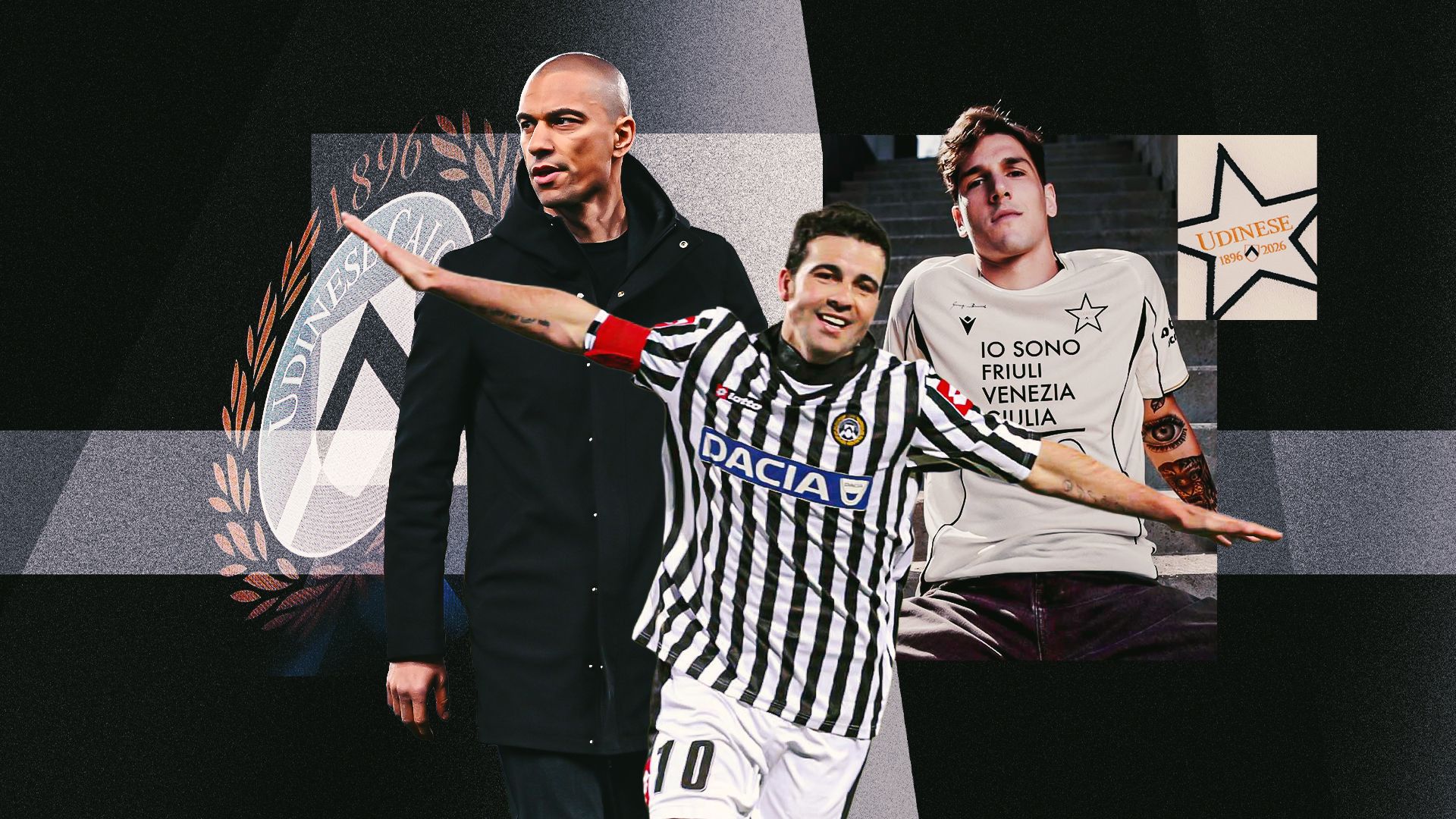
It is becoming a distant memory now, but throughout the noughties and early 2010s, Udinese were among the best of the rest in Serie A and regulars in European competition, qualifying for the Champions League for the first time ever in 2004-05 before reaching the quarter-finals of the UEFA Cup in 2008-09 and pushing as high as third in the league in 2011-12.The club had seven years of sustained, relative success from 2007 onwards, regularly finishing in the European places. It was during that period that a host of the club's most iconic figures in the modern era passed through the doors of the Stadio Friuli, including Fabio Quagliarella, Kwadwo Asamoah and Gokhan Inler, who has since returned as sporting director.They formed the spine of a balanced squad that already featured legendary goalkeeper Samir Handanovic, future Barcelona and Arsenal star Alexis Sanchez and iconic striker, Antonio Di Natale, with that core helping Udinese deliver their best European performance since winning the Intertoto Cup in 2000 as they reached the last eight of the UEFA Cup in 2009, narrowly losing out to eventual finalists Werder Bremen on penalties without the injured Handanovic and Di Natale."We had many really good players, good leaders," Inler tells GOAL. "We had great players like Sanchez, (Mauricio) Isla, Handanovic as the keeper, (Mehdi) Benatia the defender. Many, many names."Year by year we improved, and in the four years I stayed here, the fourth year was the best. We achieved a Champions League place with such a young squad. I'm happy that I had this great time with Udinese."It was Di Natale's goals that formed that backbone of the club's success in the late noughties and early 2010s, and he is a huge part of the reason why anyone's attentions were brought to Udinese outside of Italy during his prolific 12-year spell, as he dedicated his best years to the Friulani.A diminutive, pacey and versatile forward with an absolute rocket of a right foot who could score from virtually anywhere, Di Natale was absolutely prolific in the latter years of his career after joining from Empoli in 2004 and assuming the captaincy three years later.Despite being the wrong side of 30, he scored 25-plus goals in four consecutive seasons between 2009 and 2013, and he was crowned Serie A's capocannoniere (or top scorer) in back-to-back campaigns in 2009-10 (29 goals) and 2010-11 (28 goals). His performances during the former also earned him the Serie A Italian Footballer of the Year award."Di Natale was captain for us, a big brother who helped us manage on the field," former Udinese midfielder turned technical director, Inler, tells GOAL. "He was really there for us, also sometimes harsh to the younger players, but this is the right way to improve."Between 2009 and 2011, modern greats Lionel Messi (82) and Cristiano Ronaldo (86) were the only two players to have scored more league goals than Di Natale's 67. Despite flirting with retirement and fielding various offers to move elsewhere, including from then-serial Scudetto winners Juventus, the veteran striker remained loyally with Udinese until he finally hung up his boots in 2016 aged 38.Udinese's fortunes have changed since their and Di Natale's peak years more than a decade ago. While they are Serie A stalwarts having stayed in the league since their most recent promotion way back in 1995, the Bianconeri have only ended a season in the top half once since 2013, which came in the form of a 10th-placed finish last season.The departure of influential Francesco Guidolin in 2014 certainly had a negative impact, given he had led the club to fourth, third and fifth in the previous three seasons. A succession of unsuccessful managers followed, and that golden generation of Di Natale, Handanovic, Sanchez, Inler and more eventually passed without being properly replaced, while the financial gap to Serie A's biggest clubs has widened significantly.Perhaps unsurprisingly, Udinese have flirted with relegation on multiple occasions, too, narrowly avoiding the drop in 2015, 2016 and 2024. Otherwise they have consistently finished in lower mid-table. After a marginal improvement last term, the objective now is to somehow further close the gap to those above them. That responsibility falls on owners of 40 years, the Pozzo family, and the hierarchy they have built.As current majority shareholders of Watford and ex-proprietors of Granada, the Pozzos are pioneers of the multi-club model, with varying degrees of success. Some have accused them of prioritising their other assets, with Udinese's downturn more or less coinciding with Watford's promotion to the Premier League in 2015.From Inler's perspective, mentality and discipline will be key to closing the gap, rather than spending big on new arrivals to compete with the likes of Napoli, Inter, AC Milan and Juve.Finishing 10th last term was already a significant step forward, while experienced former Bayern Munich and Real Madrid defender David Alaba has joined the club on a free transfer. His leadership will certainly boost Udinese's chances of success."The challenge now is much greater than [it was] before," Inler says. "Before it was very difficult because you had many big players in Serie A, but now in my position as director, I bring the mentality, the discipline that the players need, especially every day because you need to push them every day."In the past, we only played football, we didn't have any social media, and now you have this pressure also from the audience. That's why it's important to talk a lot with the players and also show them how to build a career. That's why, for me, the daily work is important, to show them which way they need to go."Udinese currently sit 13th in Serie A having picked up just one win from their opening five games, including a run of three defeats on the bounce before the lengthy international break. Inler believes things will change."It's still a long season, but game by game we need to try to win," he said. "We haven't had a start like the two previous years I've been here, and the most important thing is stay humble, work hard and reinforce the energy. We need good preparation, mental and physical."That sentiment is echoed by key Udinese defender, Oumar Solet. "We just have to keep focused, every single game. Last season we did quite well for Udinese," the Frenchman tells GOAL. "Our goal is to try to stay on this path, we know we can achieve this. We have to put the work in. The season's already started but I'm very excited to keep on going and to see what happens."The club does not hide the fact its priorities have changed somewhat since the heady days of the late noughties and early 2010s, with off-field targets also taking precedence.Away from the pitch, Udinese have established themselves as the most sustainable team in Italy and among the most sustainable in the whole of Europe courtesy of their green initiatives, which began when they asked kit supplier Macron to make their shirts from recycled materials in 2020. The Friulani's Bluenergy Stadium is entirely powered by a 2,400-panel solar farm on matchdays, while there are also strategies in place to tackle food waste and they have engaged with the Udine community to deliver education on environmental issues.Speaking to GOAL, Magda Pozzo, a club executive and daughter of owner, Giampaolo, says: "We are one of the teams in Italy that are very involved with all the sustainability practices. We try to put into practice activities that promote sustainability - going to the stadium by bike, we are the only club with a solar park in Italy, so we get power from solar energy during matches, so it's an amazing project."She is of the mind that sustainability should be the target on and off the pitch. "We can't forget that Udine is a small town, we have 100,000 people living there, so I think we must be conservative and know that we are stable in the middle of the standings," she says. "But, of course, at the same time [we should be] trying every year to improve, and I think this is the whole idea and whole strategy."We are very careful, and this is why we have been here as a family for 40 years and 30 years in Serie A, and I think it's very important that we apply sustainability in the financial issue as well."For the past four years, Udinese's push for self-promotion has, rather surprisingly, taken the club to Milan Fashion Week. It has now become a tradition for the Friulani to reveal their third kit in that unique setting, and 2026 was no different as the Bianconeri took the opportunity to celebrate their 130th anniversary.A classy, cream-coloured strip featuring a star motif, special anniversary crest and black detailing, it was revealed at an event in central Milan on Tuesday, with first-team players Solet, Maduka Okoye, Nicolo Bertola and Matteo Palma modelling it.The shirt was designed by Milan-based Giuseppe Buccinna and took inspiration from photographer Tina Modotti and poet Pier Paolo Pasolini, both of whom captured the spirit of Friuli, Udinese's home region, through their respective artistic mediums."We have been doing this for four years, thanks to the club and Macron we can be at Milan Fashion Week where there are many people and famous artists," Inler tells GOAL. "Every year we search for one artist to create out shirt, and it's always special to come here. The players like it because it's important to show them not only as footballers on the pitch, but also representing themselves at an event like fashion week."The Udinese 2026-27 third kit is available to buy now from Udinese's official stores or at Macron.com.


Most Popular



Iowa football shocks Michigan in Ann Arbor
8 hours ago