
NZ20 v Big Bash League: Will Black Caps, White Ferns strike over domestic T20 future?

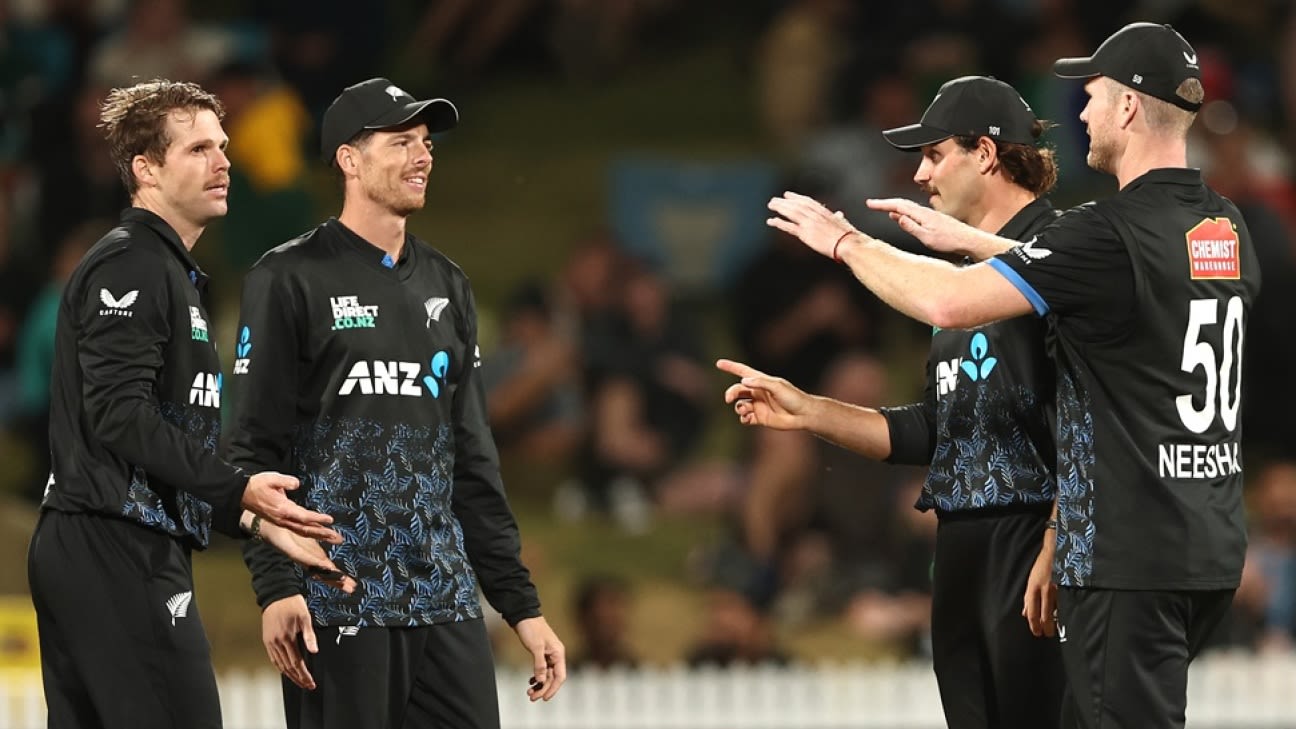
And while strike action is not what the players want, some of New Zealand’s highest-profile stars will not rule it out.“Whenever you’re in a position like this, and there’s decisions to be made, player power is big,” White Fern Suzie Bates said. “We’re not at that point, that would be quite an extreme reaction.“Everyone is trying to figure out what’s best for the game, and you’ve got different stakeholders. Players want what’s best for the game too.“At a point, if there’s a big disagreement, [striking] comes on the cards. But at the moment, I don’t think we’re at that point.”“That’s for conversations post these decisions being made,” Mitchell told the Herald. “We can’t discuss [what happens] after, but for us, we’re really hoping the NZ20 kicks off.”The Herald understands a decision over NZ20 or the Big Bash could come at the end of March.A strike would not be the first of its kind for cricket in New Zealand. In 2002, the NZCPA went on strike to secure improved pay conditions, whereby the players gained a percentage of the sport’s commercial income, rather than a fixed rate.Away from any affirmative action, senior Black Cap Lockie Ferguson warns dilution of local competition could force New Zealand’s best abroad.Last month, the Herald revealed several high-profile players were considering multi-year contracts from leagues in Australia, South Africa and the UAE.Signing those deals would mean having to opt out of NZC central contracts, and leave players as T20 freelancers with no guarantees over national selection.The trickle-down effect of that would be a reduced level of quality for the domestic product in New Zealand, which would potentially flow on to national teams.“[Striking] is pretty excessive, considering the position it’s at,” Ferguson said. “More worrying than a strike is players going overseas for other leagues, rather than harnessing that talent and giving an opportunity for our cricketers to do something in New Zealand.”“If that doesn’t happen, we’re going to lose a lot of players to the franchise world,” Ravindra also warned. “That’s not what we want as a playing group, or for the nation.”Should the NZC board vote in favour of NZ20 it would also give New Zealand’s women a significant opportunity to ply their trade at home.While the franchise world is full of countless opportunities for men, the women’s game offers fewer chances.At present, franchise leagues in India, Australia, England and the West Indies are open for overseas players, while the Women’s Bangladesh Premier League will launch next month.Of the White Ferns’ playing stocks, captain Amelia Kerr and Sophie Devine are constant fixtures across tournaments, while their compatriots are often overlooked.While the NZ20 versus BBL decision remains a “this or that” for the men, Bates, who has played in franchise cricket in Australia, the West Indies and England, said there was room for both in the women’s game, given the windows in which the competitions are played.However, the number of opportunities available to young players through any kind of local tournament should be prioritised, she said.“We need to have a pathway women’s competition that attracts players from overseas, and our best players playing in.“Franchise cricket is great, it pays well and has commercial sponsors. But for me, it’s about the pathway, and having a sustainable competition that we’ve had with the Super Smash.“We need our own competition to build the pathway for young females to look up to. In Otago, having the Sparks playing Super Smash, a young girl who’s 14 sees them as role models.“You’d lose that by taking it to Australia. But if that’s in addition to a pathway programme here, that’s ideal.”The Herald understands the NZ20 proposal would involve a women’s competition operating earlier in the summer, while the men’s contest would be held in January.

Most Popular





Nathan Ellis, Chahal's Chess Prowess & RCB
7 hours ago