
Isolation earthquake strikes Infantino: from absolute legitimacy to threat of exclusion

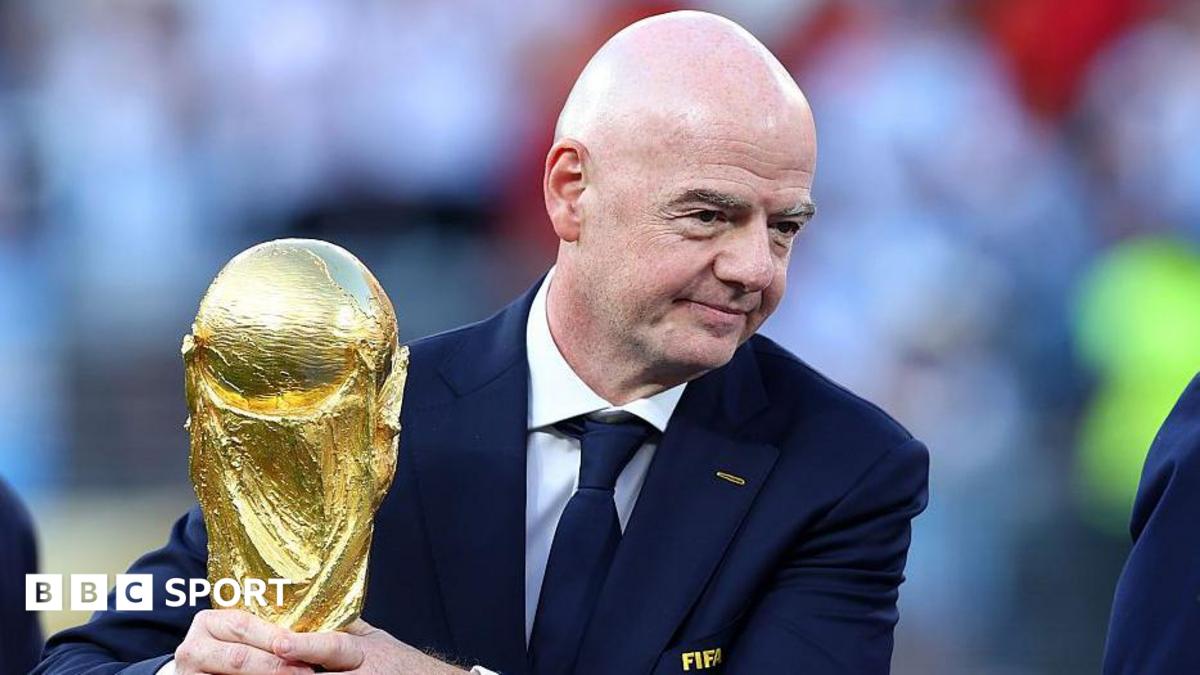
The strongest blow was distinctly political. UEFA declared that FIFA's current leadership had "lost the trust" of the European body and of many members of the football family.UEFA went even further, threatening to boycott all FIFA tournaments, including the World Cup, if the project continued. Other influential confederations backed that stance, most notably CONCACAF, hosts of the 2026 World Cup, along with the Asian Football Confederation. The opposition now covered nearly more than half of the member associations.Inside FIFA, the resignations and criticisms came from the closest circles. Carlos Cordeiro, senior adviser to Infantino and former president of the US federation, resigned and rejected the plan outright, calling it "a bad deal for the member associations and a bad deal for football and its long-term future".Kevin Lamour, FIFA's chief operating officer, went on the attack too, accusing the leadership of having "deceived" the staff and branding the project "a one-man project".All of this has left Infantino's future hanging in the balance, with the presidential elections looming in 2027. Once all but guaranteed re-election, he now cuts an isolated figure facing demands for a comprehensive review of governance.Press reports over the previous two days claimed that close circles had warned him in advance, yet he pressed on with unilateral decisions. That approach made him look like "a dead man walking on the ground", in the words of some observers.The loss here is not merely a retreat from a project. It is an erosion of the political legitimacy on which Infantino built his authority over nearly a decade. He must now rebuild bridges with the major continents, amid an atmosphere of suspicion and calls to hold accountable those responsible for the "secret schemes".The crisis spread beyond politics to damage Infantino's personal and institutional image. Critics quickly branded the project "pure greed", a "bad deal" and a "secret scheme", drawing direct comparisons with the collapse of the European Super League in 2021. As "The Times" and others pointed out, the plan had been drawn up away from the eyes of the member associations, then presented in a way that looked like an attempt to force through a fait accompli in exchange for funding promises.A possible link to investors tied to American political circles, such as the "Thrive Capital" group associated with the Kushner family, deepened suspicions over the motives. Then there was the timing. Coming just weeks after the 2026 World Cup, billed as the most profitable in history, the move struck many as an attempt to exploit that financial success for personal or narrow interests.UEFA pulled no punches. They spoke of a "suspicious deal struck in secret" and "secret schemes on rapid timelines", and noted that Infantino had failed to keep the promises of transparency he made on election. His reputation as a "reformer" after the Joseph Blatter era took a painful blow, and the damage could linger for years. Even after the reversal, reports confirmed that "the damaged reputation will linger for longer".Rob Harris, the well-known journalist at "Sky News", puts it this way: "There, the crisis over Infantino is escalating, and this can be inferred from what the Football Association of Wales did, as it became the first football institution in the world to formally withdraw its support for the re-election of FIFA president Gianni Infantino."On the financial front, Infantino lost the chance to raise billions of dollars, part of which he had hoped to direct towards development programmes, with promises to hand out sums reaching tens of millions to each member association if the plan went through. The project collapsed without generating any return. FIFA already held reserves exceeding 5 billion dollars, which cast major doubt on the need for a partial sale in the first place.Then came the most controversial aspect: the personal one. A journalist from "The Times" revealed that Infantino was in line to receive an annual salary exceeding 30 million euros from running the new company, plus performance-related bonuses. That is around ten times his current salary, estimated at roughly 3 million euros."The Sun" went further, reporting that if the project had been approved, Infantino would have pocketed a salary rivalling those of Haaland, Lewis Hamilton and Steve Kerr. Nobody has officially and categorically denied the figure. It fuelled accusations that the project served personal interests as much as it served the game.Collapse of the deal also means losing the chance to strengthen FIFA's financial influence over the long term, and the possibility of pumping those funds into the expanded "FIFA Forward" programmes. Instead, the federation slipped back to where it started, with less money than had been promised. There are fears, too, that the associations who opposed the plan could feel financially punished in the cycles to come.The project split the global football family down the middle. All 55 European federations stood as one, joined by voices from Asia and North America, while some federations in Africa, South America and Oceania stayed more reserved or offered only partial support. That division exposed the limits of Infantino's authority. Here was a man used to pushing through his decisions on a comfortable majority, propped up by the backing of the smaller federations.Reuniting the ranks now falls to him, something he acknowledged in his second statement. He insisted that "football speaks every language" and called for dialogue. But the damage to trust is done, and the demands to review FIFA's decision-making mechanisms have gone public. The Asian Football Confederation called for an "urgent review" of the consultation processes, while UEFA affirmed that "the real task of rebuilding trust has only just begun".Infantino no longer holds the wide margin he once enjoyed. Any future project will face tougher scrutiny, and his room for political manoeuvre will shrink. Five days of chaos destroyed investment ambitions and battered FIFA's reputation. It served as a reminder, too: world football can still refuse to turn its biggest tournaments into a purely investment commodity.Patrice Motsepe's Confederation of African Football (CAF) has long ranked among Infantino's most important sources of support, built on a close relationship and the generous funding that has flowed into the continent through the "FIFA Forward" programmes. Yet Infantino couldn't convert that historic backing into a decisive stance capable of rescuing his project.CAF simply invited its members to "study and evaluate" the proposal during an executive committee meeting. No explicit endorsement, no outright rejection. UEFA, CONCACAF and the AFC, meanwhile, were declaring firm opposition.That hesitation amounts to a temporary loss. The project collapsed before the potential African alliance could take shape, even though many African associations badly need the extra funding the plan promised, sums that could reach 40 million dollars per association. BBC reports suggested Africa was a candidate to become a "lone voice" of support, driven by loyalty and developmental needs.Buried in that loss, though, lies a genuine strategic opportunity. Once the storm has passed, Infantino can lean on the African front again as a "winning card" to rebuild his project or present a modified, more consultative formula.African associations, the Egyptian and Moroccan ones among them, rushed to praise the withdrawal the moment it happened, branding it "wise" while renewing their confidence in his leadership.Then there's the personal bond between Infantino and Motsepe, whom he once called "a loyal friend of Africa". That remains an asset he can draw on to push through new initiatives centred on development and funding, without stirring the same European fears.Infantino no longer enjoys the wide margin he once had. Any future project will face tougher scrutiny. But keeping the African continent onside gives him room to manoeuvre once the atmosphere settles. A few days destroyed investment ambitions and damaged FIFA's reputation, yet they didn't burn every bridge.Statements from UEFA, FIFA and CAF confirm the losses run deep and the road back to trust will be long. Africa remains one of the most valuable cards left to play.



Most Popular


Everton: From European hopes to relegation form
15 hours ago
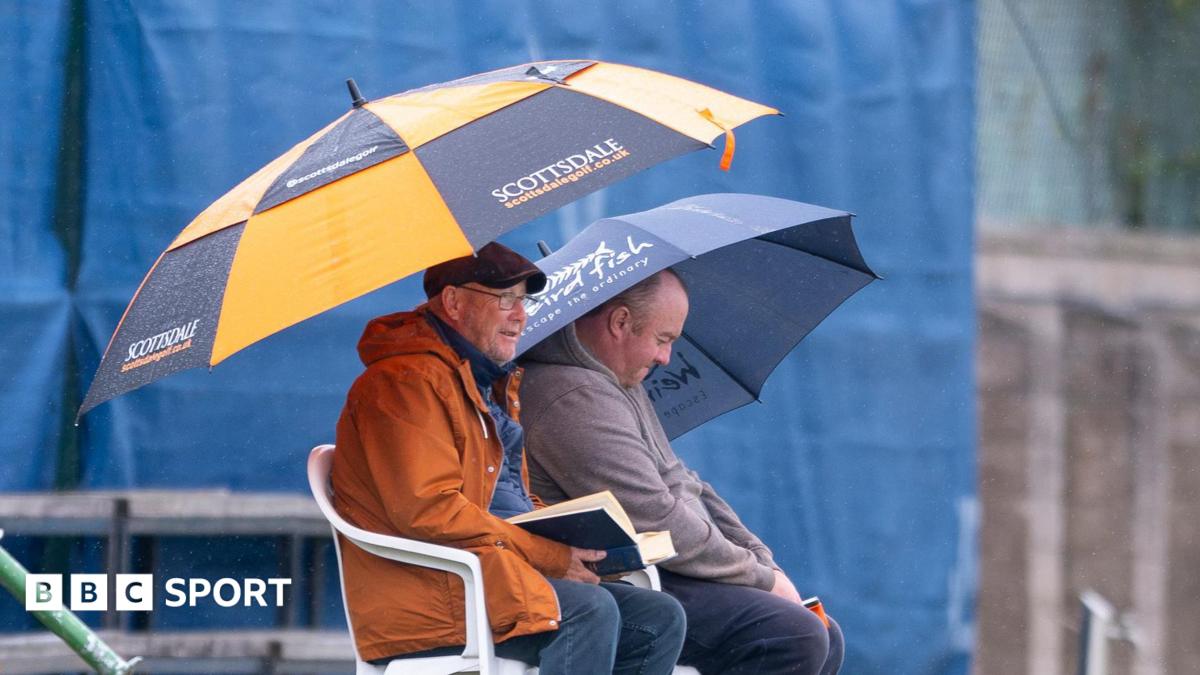
Scotland v UAE ODI washed out at Forthill
6 hours ago

Dzeko, 40, signs contract extension with Schalke
6 hours ago