Australia dominated as usual, but were the new-look Commonwealth Games the way of the future?
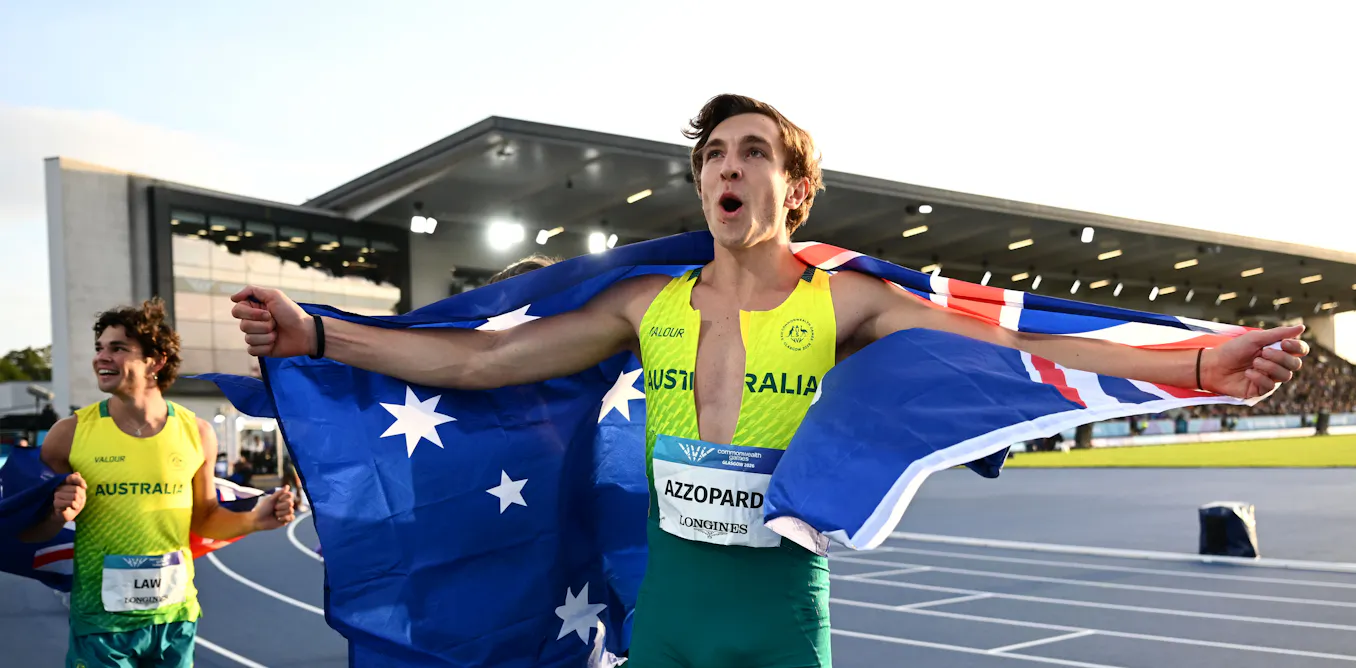
The new-look Commonwealth Games wrapped up in Glasgow this morning (Australian time) with plenty of questions about the stripped-back format and what the future may hold for the event.The 2026 games were originally awarded to the Australian state of Victoria before it baulked at the costs. Glasgow then stepped in – but with a scaled-down version featuring only ten sports (the Birmingham games in 2022 had 20).So, what were the highlights, did the new format work, and what may the future hold for the games?How did the Australians go?Australia again dominated, topping the medal tally for the ninth time in the past ten games.Direct comparisons are difficult due to Glasgow only offering 215 gold medals, down from 280 in 2022.However, Australia won more gold medals this year than in 2022, despite there being nine fewer sports and 65 fewer golds on offer.In fact, Australia won more golds than the next three countries combined.Australia also won medals in every sport.Swimmers were major contributors: the Dolphins had their best Commonwealth Games, winning a record 76 medals.Australia also topped the medal tally in athletics, cycling and 3x3 basketball.Australia captured 17 medals, including seven gold, on the final day of athletics – its most successful day in Commonwealth Games athletics history.Lawn bowler Louise Hoskins became the oldest gold medallist in Commonwealth Games history, at 76.And cyclist Georgia Baker became Australia’s equal-most decorated Commonwealth Games cyclist with five gold medals. She was also the flag bearer for the closing ceremony.How were the games received?The event received both positive and negative reactions.For many, the 2026 event achieved exactly what it needed to. It saved the Commonwealth Games from extinction and provided a template for future host cities looking to host smaller, less expensive games.For others, the games were stripped back too much.Key critiques involved the removal of the athletes’ village and of many sports with long histories in the games, such as rugby, squash and field hockey.The omission of publicly accessible, city-stopping events, such as the triathlon, marathon and road cycling, significantly reduced the visibility and “buzz” of the event for locals.But the games were a TV ratings success in countries such as Australia, Canada and New Zealand.This wasn’t the case in the United Kingdom, where the games were not broadcast on free-to-air television. The BBC, which had broadcast every games since 1954, was outbid by pay TV station TNT.In terms of finances, Birmingham 2022 cost £778 million (A$1.5 billion) – Glasgow’s budget was just £150 million (A$287 million).Early projections are a spend of £162.6 million (A$311 million) – slightly over budget, but still significantly cheaper than past games.Looking to the futureGlasgow was an emergency solution after Victoria withdrew as host. Its most important legacy may be a new principle that the games should be designed around what a host can realistically afford and deliver.Commonwealth Sport calls this approach “Games Reset”. It encourages hosts to use existing facilities and gives them more freedom to shape the program. It also keeps para sports events within the same games and seeks an equal balance of events for women and men.The 2030 event in India will be bigger than Glasgow, but is unlikely to return to the old, one-size-fits-all model.Amdavad, also known as Ahmedabad, in India, has been confirmed as host of the centenary games. It plans to stage between 15 and 17 sports – considerably more than Glasgow’s ten.Under the current policy, the program includes athletics, swimming, table tennis, bowls, weightlifting, artistic gymnastics, netball and boxing.Hosts must also choose at least two of these three sports: field hockey, rugby sevens and Twenty20 cricket.Amdavad’s final program has not yet been confirmed, but sports with large Indian audiences such as cricket and hockey appear likely to be considered.Looking ahead to Australia’s 2028 Olympic campaignThe Olympics are much more competitive than the Commonwealth Games.In Los Angeles in two years’ time, Australia will again be competing against powerhouses such as China and the United States.So, how much of Australia’s Glasgow result predicts success in 2028?Many gold medal-winning performances in Glasgow will likely be outside the medals in Los Angeles, and even outside of the finals, when compared with the world’s leading athletes.However, there is much hope in swimming and athletics.In the pool, Lani Pallister won the women’s 800m freestyle in a games-record time.Pallister swam this event at the Paris Olympics in 2024 and finished outside the medals. Two years on, her Glasgow time would have won her silver.Pallister backed this up with a 400m freestyle time that would have been good enough to claim bronze in Paris.Cameron McEvoy’s dominance continues, with the reigning Olympic champion winning the men’s 50m freestyle in a games record – faster than when he took gold in Paris.Sam Short’s gold in the 400m freestyle would have also won gold in Paris.On the track, Lachlan Kennedy’s silver-medal-winning 100m sprint of 9.85 seconds not only set a national record, it would have won bronze at the Tokyo 2020 games and placed equal-fifth in 2024.The relays told a similar story. Australia beat reigning Olympic champion Canada to win the men’s 4x100m for a surprise gold – its first title in the event since 1974.Eleanor Patterson’s winning high jump of 1.96m was better than her bronze medal jump of 1.95m in Paris.And Paris bronze medallist Matt Denny will be a strong chance for another medal in the discus in 2028, following his gold medal in Glasgow.



Most Popular