Heat, humidity and the Kookaburra ball - India's mental opponents in Sri Lanka

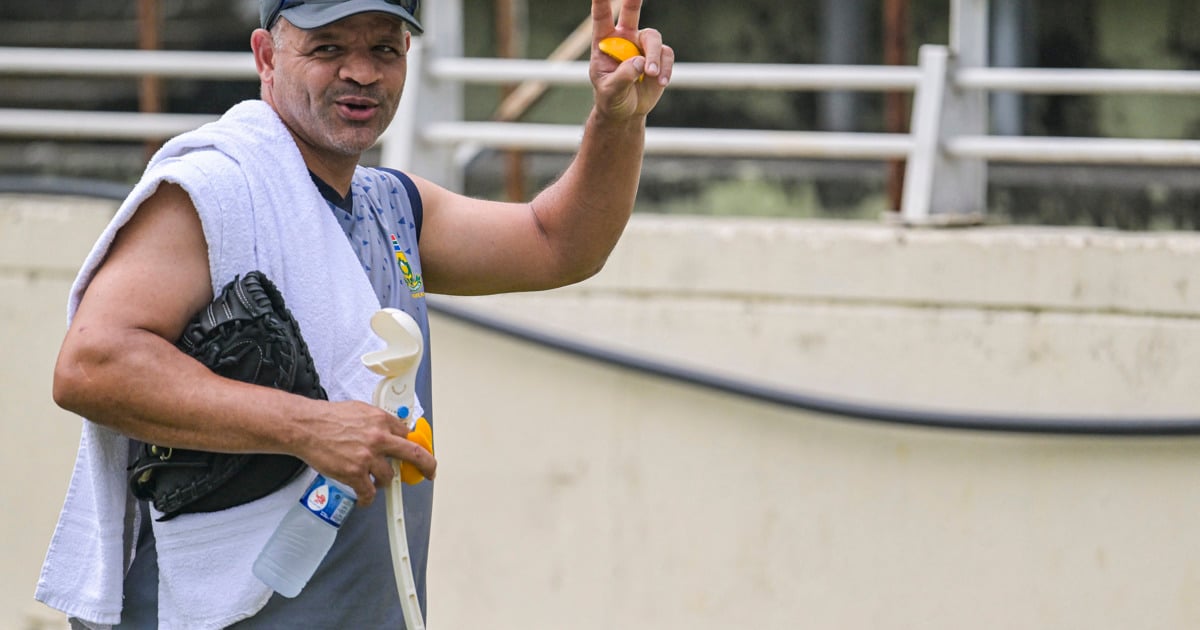
India have made their way to Sri Lanka with a reputation to repair and a Test standing to improve. There are the pressures of the World Test Championship standings, where they currently sit fifth, and the recent new reality of being vulnerable even in the sub-continent. A touring Simon Harmer turned their batters inside out and South Africa played India at their own game the last time they featured in a WTC series. But Galle offers no space for that mental baggage to be carried forward. It has its own hurdles to throw India's way."I think coming here, our skill is there, the planning will be there, but the biggest challenge will be the heat and humidity," Morne Morkel said two days out from the first Test. The majestic Galle Fort sits in the backdrop of cricket ground, with the Indian Ocean surrounding it on the other sides. The humidity this brings can be relentlessly draining, as the players experienced first-hand in their opening nets session at the venue on a sweltering Thursday morning.And then there's ball dynamics to grapple with. In last year's tour of England, both India and the hosts had trouble adjusting to a soft batch of Dukes balls that kept losing shape. The machine-stitched Kookaburra balls, that will be used in Sri Lanka, bring similar problems. The seam on it tends to flatten out and they too go soft soon. The window of opportunity to make most of a new Kookaburra ball can be suffocatingly narrow."It is a venue or a country where your mindset is very, very key," Morkel said. "The [Kookaburra] ball will go softer after 20-35 overs, I always expect that. But then what is our next step? And to be street smart in terms of how we're going to use the crease, how we're going to use our short ball. All those conditions and all those sort of situations we need to be able to sum up quite quickly. And then, yeah, execute it with a lot of energy."The fixture that kicks off on Saturday will be only India's second in red-ball cricket this year. The one other game they played in 2026 was a two-and-a-half-day affair against Afghanistan in June. It was hardly the sort of workout that tested India's ability to sustain pressure for long spells."[It's about] How we can stack up overs together with intensity and create that pressure. Because we haven't played a lot of red-ball cricket in the last couple of months, and going back into that is going to be a challenge. That's something I'm quite excited about.We're quite excited to see how these guys can stand up and form those partnerships and create that pressure."How long India spend toiling away in the heat will depend on how precisely their bowlers can operate, but the bigger course-correction may have to come with the bat.Only once in the two Tests against South Africa did India stitch an innings longer than the tourists. In Guwahati, their two innings lasted 83.5 and 63.5 overs respectively. South Africa's first innings alone stretched to 151.1 overs."For us, we've prepared basically for all that can come our way. And like I said, for us, it's more about the mental challenge now, facing these conditions, batting time, bowling those spells..," Morkel said."We had, this morning, quite a big shower. So sometimes that will make the outfield a little bit softer and so it takes a little bit longer for the ball to reverse," Morkel offered. "In these conditions, it's all about your mindset. You know, if you're a fast bowler, if you're going to bowl shorter spells, the energy you put in the ball, [whether] they're into the areas where there's an opportunity... "Even with Nitish Reddy and Washington Sundar nursing injuries, India have four quicks and four spinners to pick and choose from to define their attack. Given the history of the venue, India's decision seems straightforward as far as combination goes."Traditionally, if you look at the venue, the stats, and how it's been played up, that's sort of the way to go," Morkel said of picking three spinners. "I think the way that we go with our spin bowling attack, our spinners, it's a very attacking option. And then you can sort of create pressure with seam from one side and always allow yourself with spin to operate from the other end."The mystery lies in the sub-plot of this selection. The returning Ravindra Jadeja and Kuldeep Yadav could make up two-thirds of the spin triumvirate,with India essentially left to pick between Manav Suthar and Saransh Jain.Suthar was impressive on India debut against Afghanistan (6/33) and the SLC XI in the warm-up match in Colombo last week, but like Jadeja, is another left-arm spinner. Jain brings variety as right-arm off-spinner who can bat - just like the player he replaced (Washington Sundar), for his maiden Test call-up. Both bowled long spells in the nets on Thursday."I think for us they're all different in their ways. They're left-arm spinners, but what they do with the ball is slightly more accurate.I don't think it's a massive concern for us," Morkel said of having multiple left-arm spinners in the final XI. "It's just how Shubman is going to use those guys at certain times. They've got the skill there to get the 20 wickets."


Most Popular
Chwalińska loses Beijing WTA 1000 doubles match
10 hours ago