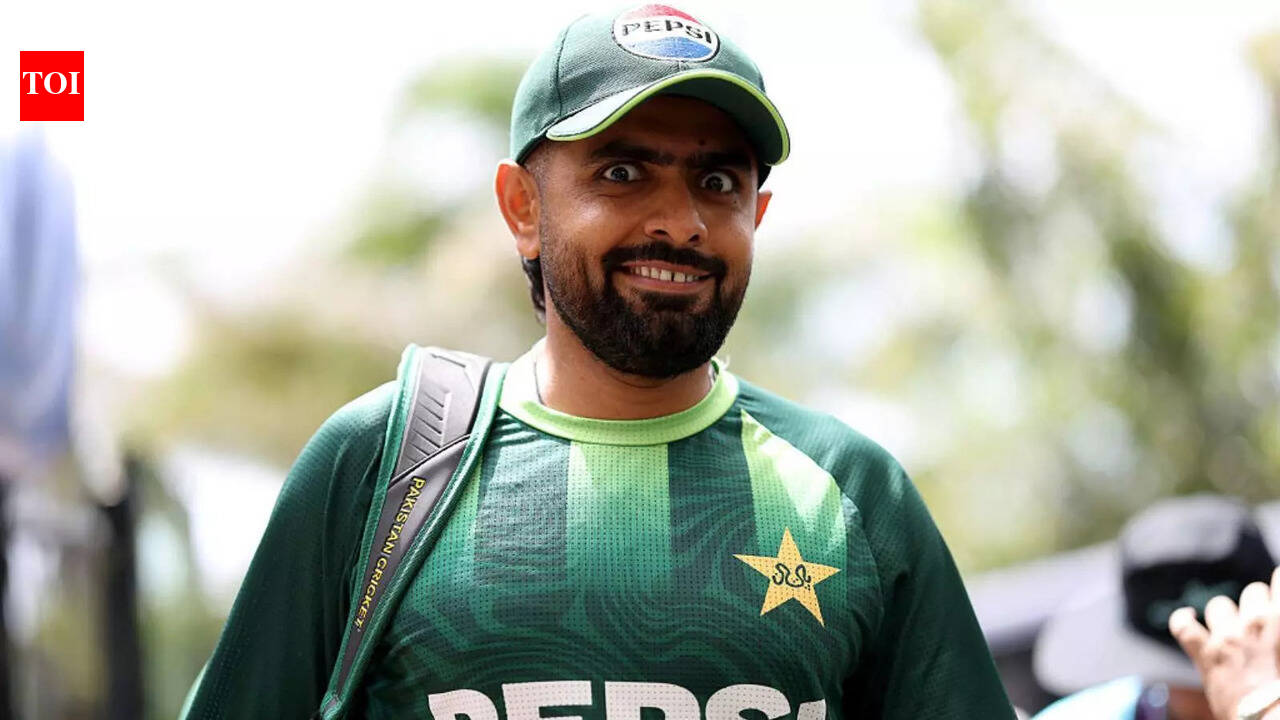
Faf du Plessis on Babar Azam’s T20 reset

Babar Azam’s T20 World Cup has unfolded under a microscope.With 66 runs in four matches and a shift away from his customary opening slot, Pakistan’s premier batter has become the focal point of debate around strike rates, role clarity and modern T20 demands. Former South Africa captain Faf du Plessis believes the path forward may not be technical alone — it may be psychological.Speaking on ESPNcricinfo’s Time Out, du Plessis framed Babar’s situation through the lens of personal evolution rather than public criticism.The internal battle established players faceDu Plessis began by reflecting on the mental tug-of-war experienced by seasoned players when confronted with change.“The question that you ask yourself is, ‘it’s worked for me up until now, so why must I change?’ That’s the guy on one shoulder. But what I always looked at was where I could get better? And one of the obvious things that was standing out from a stats perspective was that in my 15 first balls against spin, my strike rate was 120, and against seam it was 180. So one guy on your shoulder would go, ‘but that’s good. You’re striking at 140 [overall]? Why would you want to change?’ But [the other guy] would go, ‘you can do better, you can work on this.'”He acknowledged that acting on that internal voice is rarely smooth.“The challenge with that is what you then go through is uncomfortable. Because now you’re doing something for the first time which you’ve never done in your entire career. I had to do that against spin. But it’s very easy in the nets because there’s no consequence. I went to the Hundred and I tried to replicate what I did in the nets, and I failed. And the guy on my shoulder said, ‘why are you doing this, you’re successful.’ But the other guy goes ‘stick with it.’ Growth happens when you’re uncomfortable,” du Plessis added.For a player like Babar — 31 years old, 144 T20Is and 347 T20 matches into his career — that discomfort may represent the next frontier rather than a regression.Why honest dialogue mattersFor du Plessis, the conversation between coach and player is as important as technique.“It starts with honesty,” Faf du Plessis said on ESPNcricinfo’s Time Out.He elaborated on that principle: “That’s the groundwork of any conversation that happens. Once you’re honest in your conversation [as a coach] then everything flows from that, whereas if you are hopping around and not telling the truth as a coach or a captain, it leads to holes that a player can jump onto. So the nature of the conversation is always really important,” he added.He stressed that tone determines whether a player embraces feedback or resists it.“It comes in the tone that you speak. If you are aggressive or you’re pointing fingers, no one in the world will accept that. So it’s almost like a partnership in a conversation of how can we get the best of you and also where can you improve to get the best result for the game,” he stated.The implication was clear: any recalibration between Babar and Pakistan head coach Mike Hesson must be collaborative rather than confrontational.Numbers do not lie in modern T20 cricketDu Plessis believes statistics should anchor those discussions.“For a coach, it’s like, ‘listen, these are the numbers. The numbers are suggesting this. This is where the game is at the moment. In order for us to be successful as a team at this World Cup or this tournament, these are the areas that we want to be the best in. Or the areas where we feel we’re perhaps a little bit weak so we have to address that.'”Once data enters the conversation, he suggested, resistance becomes difficult.“Once the stats are in front of a player, it’s pretty difficult to go ‘I’m not agreeing with you.’ Then as a player, you’ve got two choices. Either you put up a massive fight and you throw your toys or you go, ‘Okay, I need to get better, I need to improve and this is an area in my game that I can improve.'”In Babar’s case, the numbers in focus revolve around powerplay scoring rates and overall tempo — metrics that have evolved rapidly across global T20 cricket.The strike-rate shift redefining elite battersDu Plessis acknowledged that Babar’s standing as a world-class batter remains intact, but argued that the format’s acceleration has reshaped expectations.“I think all great players evolve their careers at different points,” Faf du Plessis said on ESPNcricinfo’s Time Out.He continued, “We know Babar as one of the world’s best players for a very long time. I think the game of T20 cricket has moved so fast forward into strike rates that he’s found himself a little bit behind in terms of strike rates.”Powerplay benchmarks that once hovered around 120-130 have surged dramatically.“The game has moved too far forward to be at 120-130. Now, you need to be 160 to 190 to 200-plus for you to maximise that first six,” du Plessis noted.Why Sri Lanka conditions may change the equationPakistan’s World Cup matches in Sri Lanka, however, present a different tactical landscape from flatter batting venues.“At this venue and in the specific conditions where there’s going to be a lot of spin, there can be a lot of value from someone like him in the middle and making sure that he anchors the innings,” he stated.In other words, context matters. While global T20 trends reward explosive starts, slower surfaces can still justify an anchoring presence — provided the balance within the batting unit is calibrated correctly.For du Plessis, the solution is neither blind faith nor abrupt overhaul. It lies in honest dialogue, statistical clarity and a willingness to embrace discomfort. Whether Babar Azam chooses evolution over familiarity may shape not only his own trajectory, but Pakistan’s direction in modern T20 cricket.



Most Popular

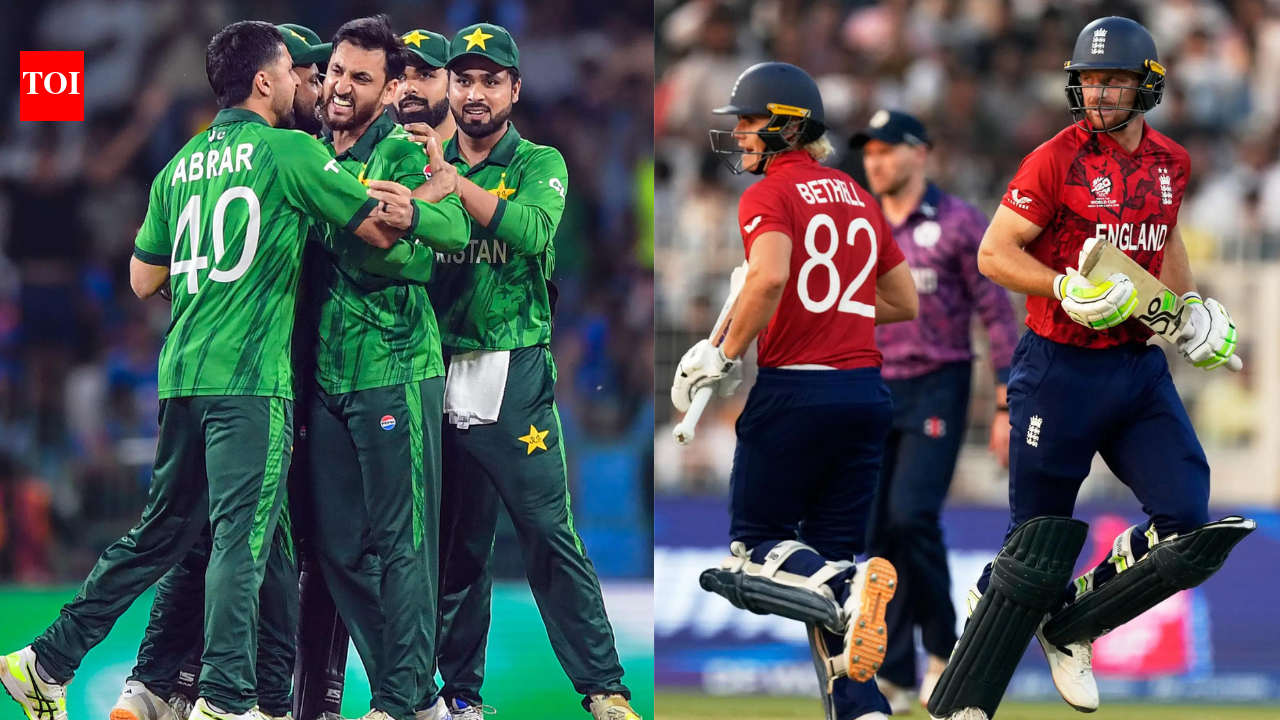


England vs Pakistan LIVE: ICC T20 World Cup 2026
6 hours ago