
Even the club’s own city has taken legal action against it! Perhaps the most dramatic rollercoaster ride in German football
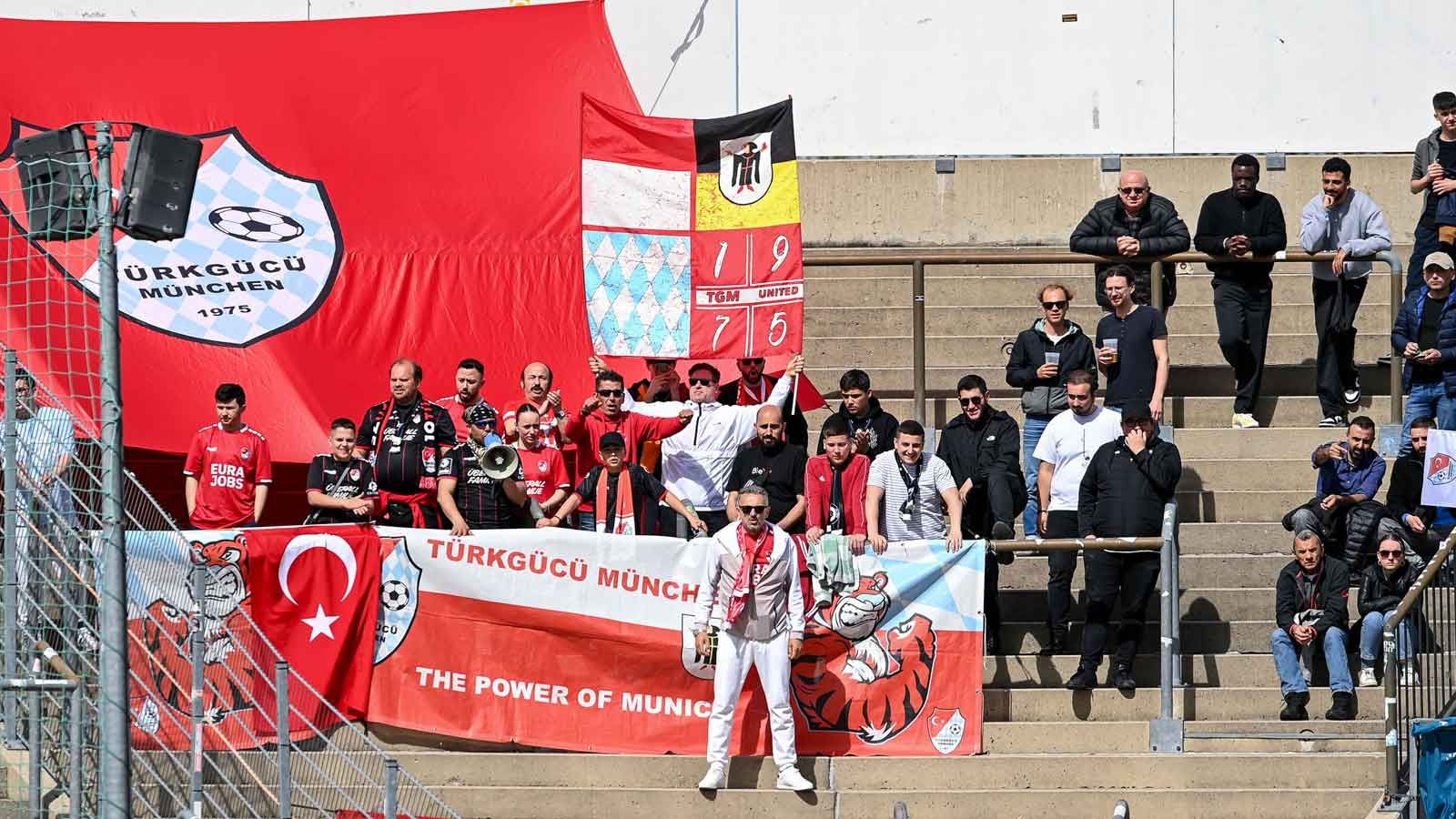
In 1975, a group of Turkish migrants founded SV Türk Gücü. In English: Turkish Strength. After several years in the Bayernliga, then the third tier, and a bankruptcy in 2001, relegations and mergers followed. Then came Hasan Kivran. The German-Turkish businessman joined the club in 2016 while it was in the sixth tier and led Türk Gücü to the 3. Liga in record time, marking the club’s first-ever entry into professional football. In their 3. Liga debut season in 2020/21, the strengthened squad held their own in the upper mid-table for a long time. Kivran wanted more: he dreamed of promotion to the 2. Bundesliga.In the summer of 2021, Türkgücü spun off its professional division and, as the third football club in Germany after Borussia Dortmund and SpVgg Unterhaching, planned to go public. The plan failed; Kivran ended his financial involvement shortly afterwards, the club was forced to file for insolvency once again, and even ceased match operations during its second third-division season in early 2022. The insolvency proceedings are still ongoing but could be concluded in 2026.Following their spectacular relegation from the 3. Liga, Türkgücü spent three years playing in the Bavarian Regionalliga. The long-standing stadium issue remained unresolved. The club’s local sports ground on Heinrich-Wieland-Straße in Perlach is unsuitable for matches at Regionalliga level or above, and suitable alternative venues are few and far between in Munich.Since the start of their rise through the ranks, Türkgücü have played most of their home matches at the Grünwalder Stadium, which is too large, too expensive and, moreover, overburdened (not only by TSV 1860). In the 3rd Division, some matches took place at the Olympic Stadium, which, however, had to remain mostly empty due to Covid-19 restrictions. In the Regionalliga, Türkgücü returned at times to the historic Dantestadion – thereby fulfilling a long-cherished dream, at least for Germany’s groundhoppers.Groundhoppers are football fans who want to watch as many matches as possible in different and, ideally, very special stadiums. Stadiums like the Dantestadion, where no football matches had been played for more than 20 years. Groundhoppers flocked there from near and far, consistently making up a significant proportion of the crowd at Türkgücü’s home matches at the Dantestadion, and were even welcomed by the stadium announcer on occasion.The additional ticket revenue must have come in very handy for Türkgücü. However, the club does not seem to have been particularly diligent when it came to settling its bills. In October, the *Süddeutsche Zeitung* reported that the City of Munich had filed a lawsuit against Türkgücü. The reason for this is alleged debts of around €112,000, largely due to unpaid stadium rent from the 2022/23 Regionalliga season. Türkgücü lodged an appeal, and the legal dispute is still ongoing. This Friday, Munich Regional Court I is due to deliver its verdict.Meanwhile, debts owed to the Bavarian State Sports Association (BLSV) have already had immediate consequences this season. Because Türkgücü paid its membership fees late, the players were no longer covered by accident insurance – and were therefore temporarily barred from playing. A league match scheduled for mid-October against FC Pipinsried was cancelled and recorded as a 0-2 defeat without a match being played.It is also reported that further debts exist towards the employers’ liability insurance association and the Bavarian Football Association (BFV). Moreover, there have been regular reports of outstanding player salaries for several years now. In 2024, FIFA imposed a transfer ban because Türkgücü allegedly paid only part of the agreed transfer fee when signing Törles Knöll from the Croatian club Slaven Belupo in 2021. A few weeks later, the clubs finally reached an agreement and the ban was lifted.Last season, the Munich side were relegated from the Regionalliga after finishing bottom of the table. Slaven Skeledzic, who had previously worked in FC Bayern’s youth setup and as Miroslav Klose’s assistant coach, took over as manager. Having taken a detour via Türkgücü, Skeledzic had hoped to return to top-flight football, or at least to the Regionalliga, but things turned out quite differently.Four defeats from four games led to his premature departure. “From the very start of my tenure, there were massive structural shortcomings within the club,” Skeledzic told Kicker at the time. “There was no clear organisation; instead, there was disorder, misinformation and a high degree of chaos. In this environment, working professionally was nowhere near possible.”Club legend Ünal Tosun then took over as player-manager with similarly little success, before moving to league rivals TSV Landsberg at the end of the year. His successor, and thus the third coach of the season, is a familiar face: Rainer Elfinger, who previously managed Türkgücü in 2016. In his second spell in charge, he is still waiting for his first win. They are 18 points adrift of the first non-relegation spot and five points from the relegation play-off zone. No club has scored fewer goals, and none have conceded more.Instead of returning to the Regional League, Türkgücü now faces relegation to the sixth tier – the very place where this rollercoaster ride began a decade ago. However, due to financial problems, things could get even worse, and Türkgücü may have to start all over again at the very bottom.Home matches have been taking place at the local district sports ground again since this season – provided the players are insured. Groundhoppers no longer come, and hardly anyone else does either – recently averaging fewer than 100 fans per match. As Türkgücü announced in December, chairman Taskin Akkay will leave the club this spring – and with him goes the last official who was once involved in the club’s rapid rise. In every respect, it’s back to square one for Türkgücü.



Most Popular